
MX-5 Miata
Introduced at the Chicago Auto Show in February 1989, the Mazda MX-5 Miata is a two-seat, front-engine, rear-wheel-drive roadster built around a straightforward idea: bringing back the direct pleasure of a light, open sports car. It is sold as the Miata in North America, the MX-5 in many markets, and the Roadster in Japan. The original formula combined two seats, a manually operated soft top, a naturally aspirated four-cylinder engine, and a manual transmission. Mazda chose balance, compact dimensions, and responsive controls instead of pursuing outright power. From 1989 through 2017, the model developed through the NA, NB, NC, and ND generations. The third generation added an available power retractable hardtop, while the fourth introduced the retractable fastback RF, giving buyers a more coupe-like alternative without abandoning the roadster’s rear-wheel-drive layout.
Variants by year
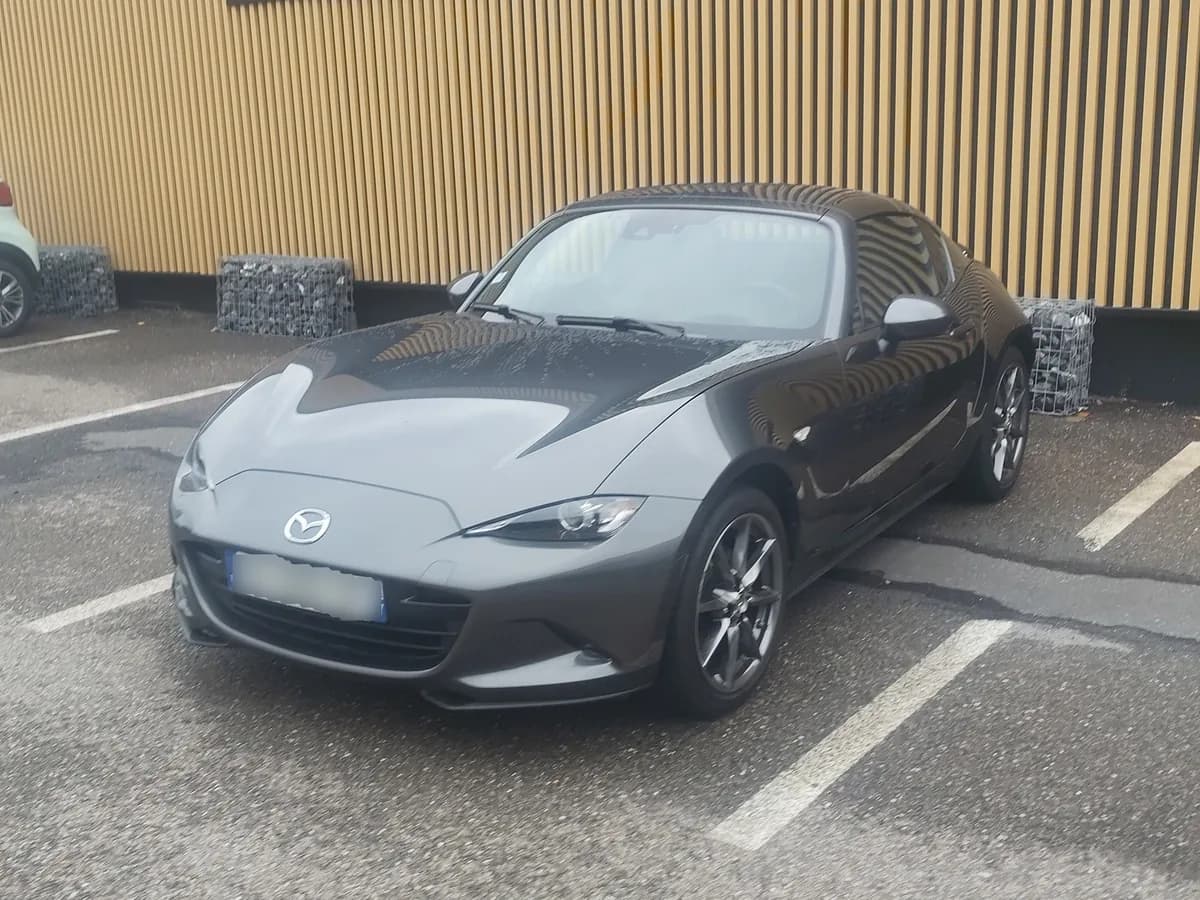
2017
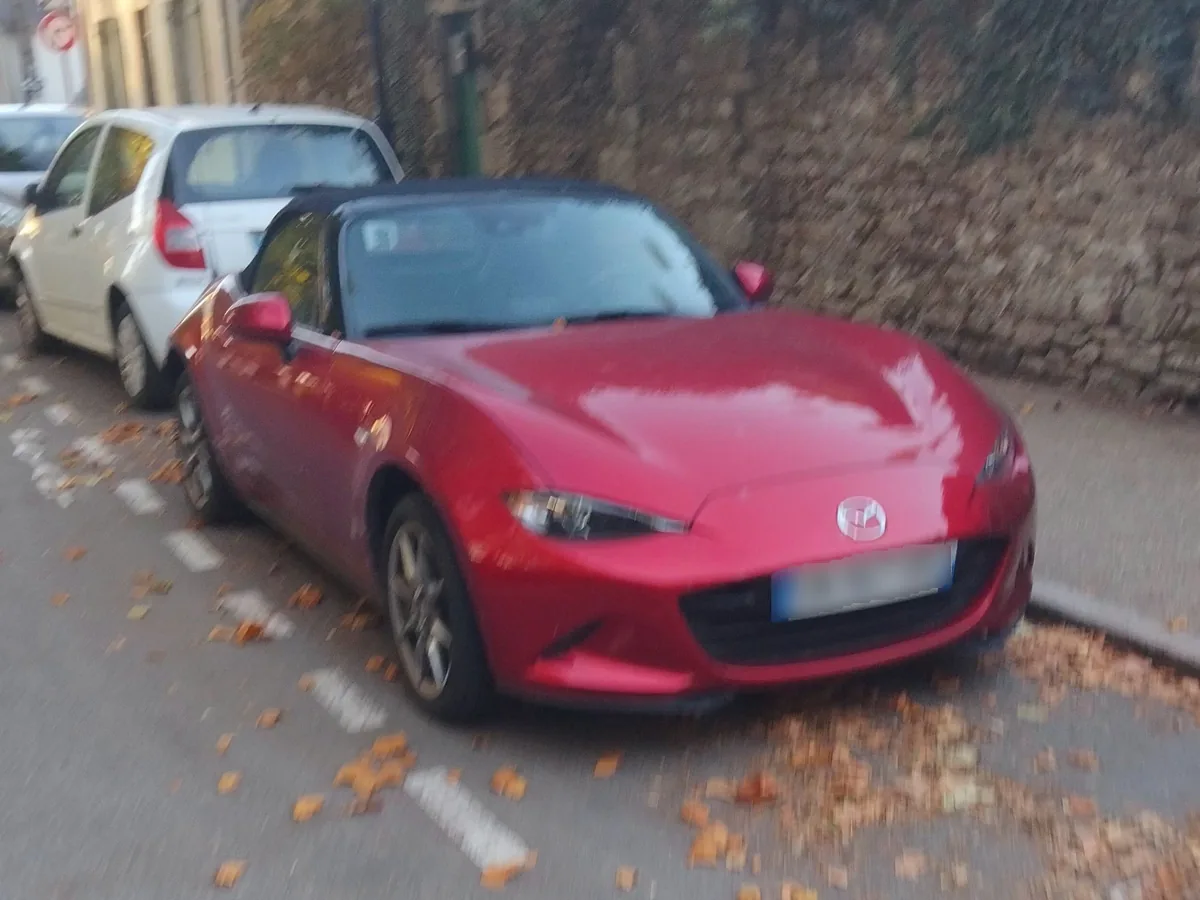
2015
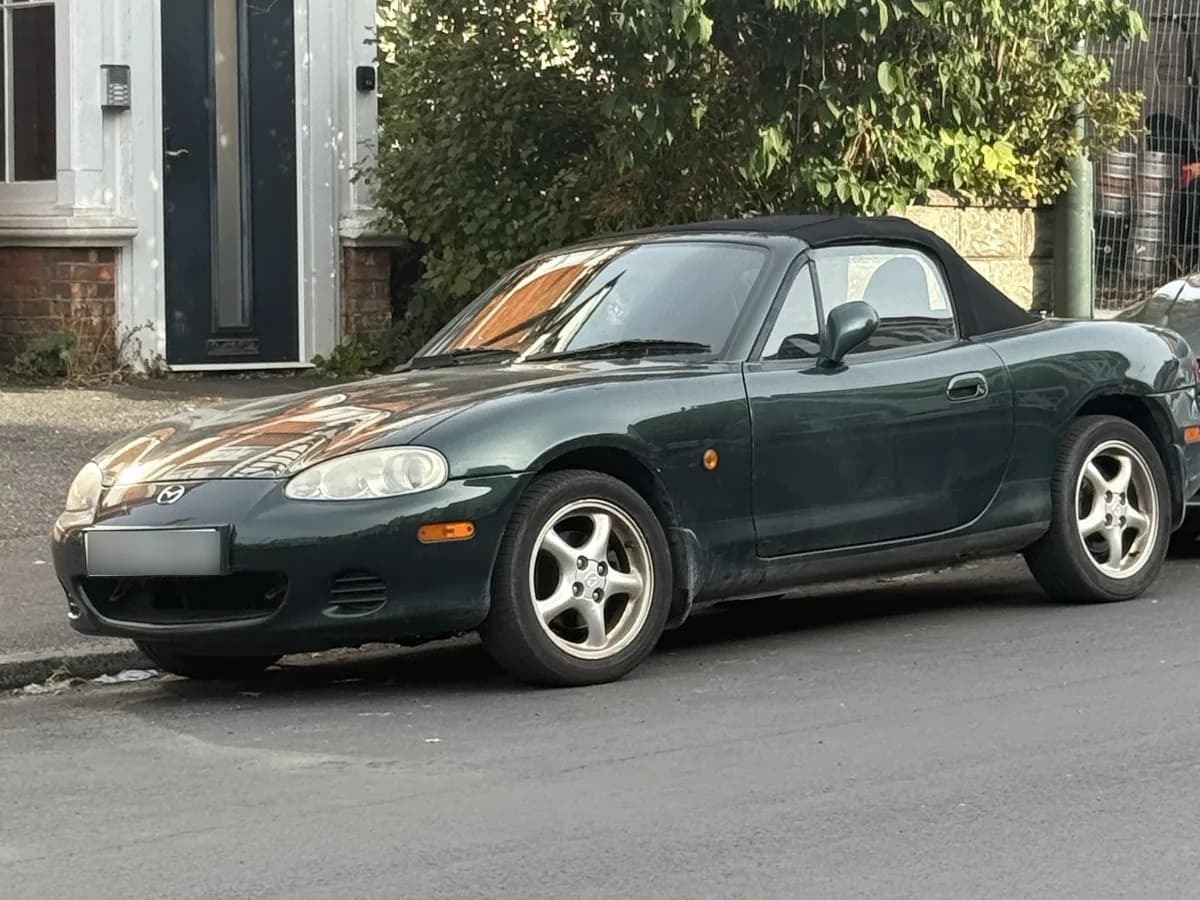
2005
1998
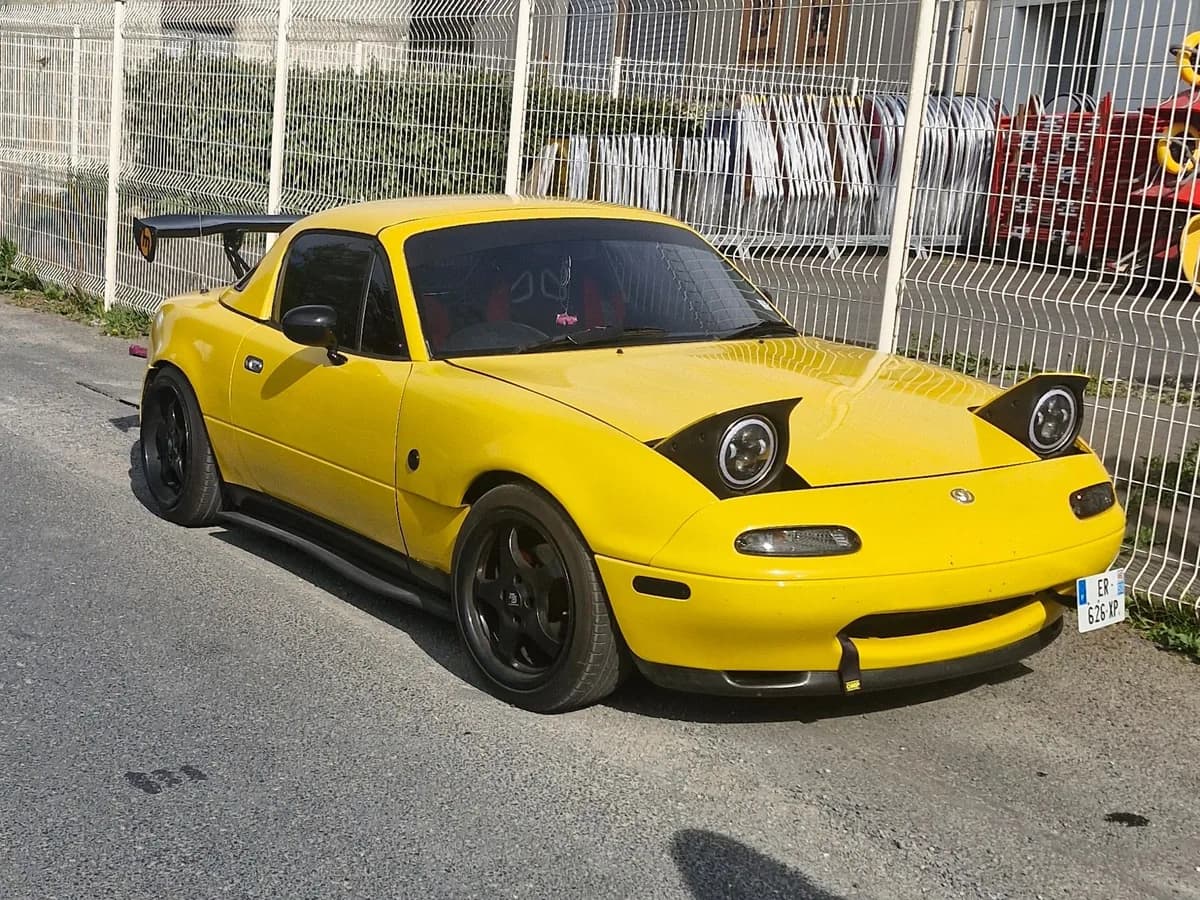
1989
Model summary
Data from the ScanRacer library, organized to compare versions quickly.
Model introduction
Introduced at the Chicago Auto Show in February 1989, the Mazda MX-5 Miata is a two-seat, front-engine, rear-wheel-drive roadster built around a straightforward idea: bringing back the direct pleasure of a light, open sports car. It is sold as the Miata in North America, the MX-5 in many markets, and the Roadster in Japan. The original formula combined two seats, a manually operated soft top, a naturally aspirated four-cylinder engine, and a manual transmission. Mazda chose balance, compact dimensions, and responsive controls instead of pursuing outright power. From 1989 through 2017, the model developed through the NA, NB, NC, and ND generations. The third generation added an available power retractable hardtop, while the fourth introduced the retractable fastback RF, giving buyers a more coupe-like alternative without abandoning the roadster’s rear-wheel-drive layout.
History
The MX-5 project grew from a Mazda North America study conducted at a time when small British and Italian roadsters were disappearing from the market. Development later moved to Japan, where Mazda committed to a strictly two-seat layout. Engineers rejected a 2+2 configuration, retained a manually operated soft top, and selected a naturally aspirated 1.6-liter four-cylinder engine to keep the car light and predictable. The production model was unveiled at the Chicago Auto Show in February 1989, went on sale in the United States that spring, and reached Japan in September as the Eunos Roadster. Its reception exceeded Mazda’s expectations. The MX-5 helped revive interest in compact open sports cars during the 1990s. The NB generation, introduced in 1998, brought a more modern body while preserving the original rear-wheel-drive concept. The NC generation arrived in 2005 with greater refinement and the option of a power retractable hardtop. In 2014, Mazda revealed a 25th Anniversary Edition and outlined the SKYACTIV chassis intended for the next model. The fourth-generation ND followed, with the RF retractable fastback joining the range for the 2017 model year and providing a more enclosed, coupe-like interpretation of the roadster.
Generations
The first generation, known by the NA chassis code, covers cars launched from 1989 and generally sold through 1997. Its most recognizable features are pop-up headlights, rounded bodywork, and a deliberately simple interior. Early cars used a naturally aspirated 1.6-liter four-cylinder engine, while later versions received a 1.8-liter engine in certain markets and model years. The NB generation appeared in 1998 in some markets and continued into the middle of the 2000s. Fixed headlights, revised bodywork, and a glass rear window are its clearest visual identifiers. Although the NB retained the basic rear-wheel-drive roadster architecture, Mazda improved structural stiffness, safety equipment, and refinement compared with the NA. The NC generation arrived in 2005 with a broader and more contemporary shape. It introduced the option of a power retractable hardtop, known as the Power Retractable Hard Top, giving the MX-5 a more substantial alternative to its fabric roof. The ND began reaching markets from 2015 and 2016, depending on market and model-year conventions. It returned to a more compact visual character while retaining the lightweight philosophy. The 2017 RF is part of the fourth generation and is identified by its retractable fastback roof and fixed rear buttresses.
Key differences
The differences between generations are easy to see, but they also involve structure and equipment. The NA is identified by its pop-up headlights, low stance, and generally slim bumper design. The NB replaces the pop-up units with fixed headlights and uses more sculpted bodywork. Model-year changes and market-specific equipment mean that engines, transmissions, and trim details should be checked against the vehicle’s documentation rather than inferred from appearance alone. The NC looks wider and more modern, with a more equipped cabin and the availability of the Power Retractable Hard Top, a feature not offered on earlier generations. The ND returns to a more compact visual profile and sharper surfacing. Its SKYACTIV chassis was developed with an emphasis on lower mass and improved rigidity. The RF is not a separate generation; it is an ND body style with a retractable fastback roof and fixed rear buttresses. The conventional ND roadster uses a fabric soft top. Trim names, engine specifications, and option packages varied by country, so the badge alone is not always enough to identify a precise configuration.
Photo recognition
Start identification with the roof and headlights. Pop-up headlights almost always indicate an NA, the first generation. A car with fixed headlights but proportions close to the original is generally an NB; its glass rear window and revised body help confirm that direction, although they do not establish an exact model year. The NC appears wider, with fuller body sides and a more contemporary front end. If the hard roof folds electrically behind the seats, the car has the NC’s Power Retractable Hard Top. The ND has a lower, tighter-looking profile, narrow headlights, and rounded rear lamps. The RF is immediately distinguishable from the soft-top ND by its fixed rear buttresses and retractable fastback roof. For a dependable identification, verify the VIN, manufacturer plate, original paperwork, and trim details. Paint, wheels, bumpers, and interior parts may have been changed over time, especially on NA and NB cars that are frequently modified. Market differences also mean that a badge or engine size should not be treated as conclusive evidence by itself.
Important versions
The key versions to distinguish are the four body generations: NA, NB, NC, and ND. The NA represents Mazda’s return to the compact two-seat roadster and remains the only generation with pop-up headlights. The NB substantially modernizes the design while keeping the same basic philosophy. The NC expands the range with the Power Retractable Hard Top, an option that is especially useful when comparing listings and specifications. The ND brings back more compact proportions and introduces a new SKYACTIV-based platform. In 2017, the RF adds a retractable fastback body style to the ND range. Mazda also produced numerous special editions, including the 10th Anniversary and 25th Anniversary models. Their equipment, production numbers, and availability varied by market, so a special-edition name should be confirmed through factory documentation rather than assumed from color or trim alone.
Technical specifications
Structured data available for versions linked to this model.
| Version | Power | Torque | Top speed | Drivetrain | Fuel |
|---|---|---|---|---|---|
| Base | 117.7 KW @ 6000 RPM160 HP @ 6000 RPM158 BHP @ 6000 RPM | 148 lb-ft @ 4600 RPM200 Nm @ 4600 RPM | 133 mph (214 km/h) | Rear Wheel Drive / 6-speed manual | Gasoline |
Frequently asked questions
- What years was the Mazda MX-5 Miata produced?
- ScanRacer's referenced versions cover 1989 - 2017.
- How many Mazda MX-5 Miata examples are documented on ScanRacer?
- 31 published scans from 26 members, with the latest photo added in September 2026.
- What is the power output of the Mazda MX-5 Miata?
- The sourced technical data lists 117.7 KW @ 6000 RPM160 HP @ 6000 RPM158 BHP @ 6000 RPM.