Maserati MC12 2005
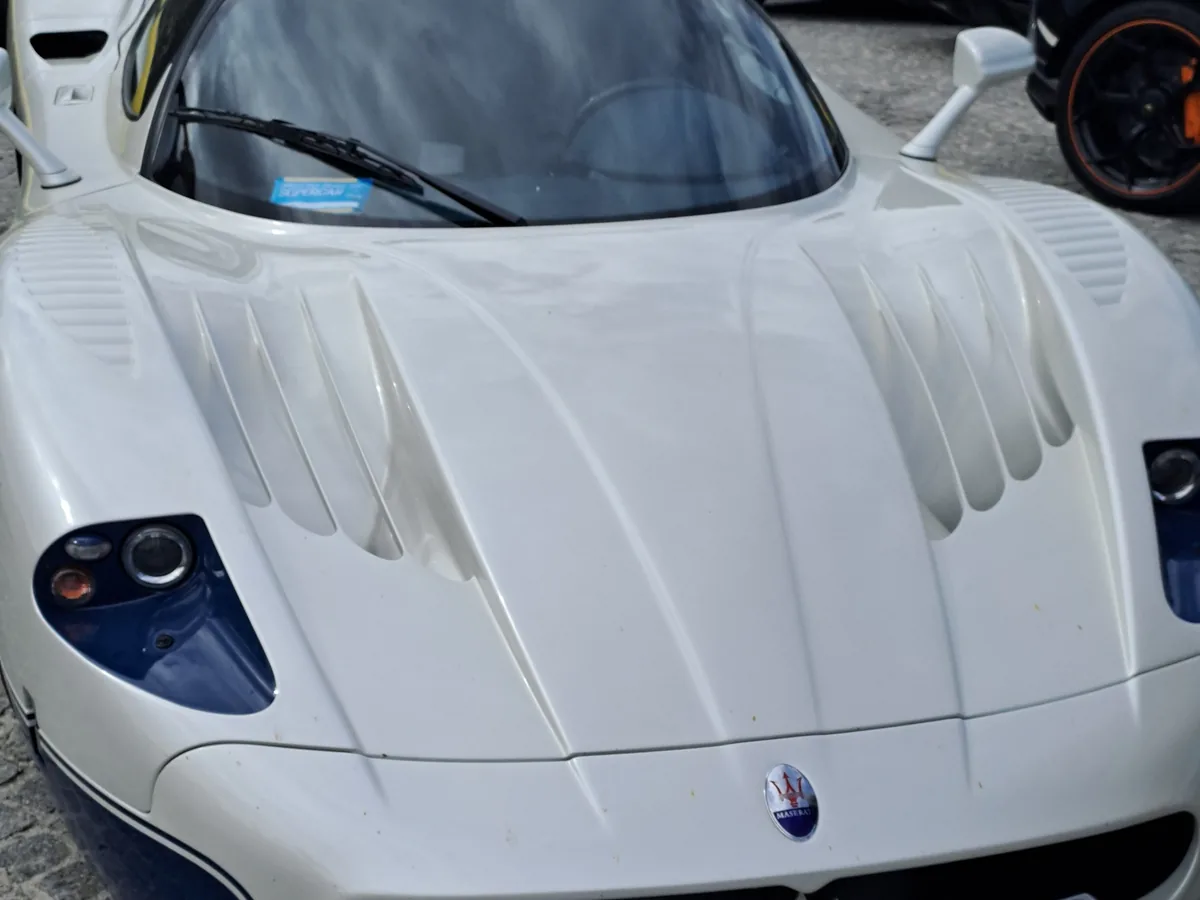
The 2005 Maserati MC12 Base is a two-seat mid-engine supercar developed to enable Maserati’s return to international GT racing. Produced between 2004 and 2005, it combines an exceptionally long body with a naturally aspirated 5,998 cc V12 and a six-speed sequential transmission. Its composite structure is related to the Ferrari Enzo’s architecture, but the MC12 received its own bodywork, aerodynamic package, and chassis tuning. With only 50 road cars built, it remains one of Maserati’s rarest production models. The 2005 model year represents the second production batch, completed after the homologation requirements for the associated racing program were revised.
History
The MC12 was developed for a specific purpose: to homologate a car eligible for international grand touring competition. Maserati was preparing a racing version for the FIA GT Championship, and the road car had to provide the production basis required by the regulations. The project was initially associated with the MCC name for competition and MCS for the road version before becoming MC12, commonly understood as Maserati Corse and twelve cylinders. The body was shaped around demanding aerodynamic requirements, including a long nose, front-mounted radiators, and a prominent rear wing. Frank Stephenson completed most of the final styling, while the overall form was developed through wind-tunnel work connected with an idea from Giorgetto Giugiaro. The road-going MC12 was assembled in Modena in two batches of 25 cars, built in 2004 and 2005. The racing version subsequently gave Maserati a major presence in international GT competition.
Latest scans
Photos added by the community for this page.
Anecdotes
The MC12 name reflects the car’s purpose: “MC” refers to Maserati Corse and “12” to its V12 engine. The road car was not developed as an entirely separate supercar before being adapted for racing; it formed part of a homologation program created to make the MC12 GT1 eligible for competition. That approach helps explain its unusual proportions and its unmistakably race-inspired appearance.
Production
Maserati states that 50 road-going MC12s were produced between 2004 and 2005, divided into two batches of 25 cars. The first batch belongs to 2004, while the second was built in 2005 after the homologation rules were revised. The MC12 was assembled in Modena and used a two-seat coupé-spyder body with a removable hardtop. Racing-car numbers should be kept separate from this road-car total: the figure of 50 refers to customer cars and does not represent every competition chassis built for the MC12 program.
Press reception
Contemporary road tests generally emphasized the MC12’s extreme character while noting that the road version received more approachable settings than the racing car. Car and Driver described a mid-engine, rear-wheel-drive supercar and measured 624 horsepower for its test car, while highlighting the influence of FIA and ALMS requirements on the design. MotorTrend likewise focused on the technical relationship with the Ferrari Enzo and on the engine changes made for road use. Reviews praised the car’s stability, precision, and aerodynamic efficiency, but also recognized that its road-going compromises were strongly shaped by its competition origins.
Evolution
Variants
References
- MC12 Stradale (2004-05)Maserati
Supports the production years, 50-car road production, body description, engine configuration, displacement, power, chassis construction, and top speed.
- Maserati MC12 First Drive ReviewCar and Driver
Supports the mid-engine rear-wheel-drive layout, road-test context, design constraints, 624-hp test specification, and contemporary press impressions.
- MC Hammered: Road Testing the Ferrari-Enzo-Based Maserati MC12MotorTrend
Supports the relationship with the Ferrari Enzo, road-car development, six-speed automated manual transmission, V12 specifications, and period road-test observations.
- Maserati MC 12 Historic HomologationFédération Internationale de l'Automobile
Supports the FIA GT homologation identity, homologation number, cylinder capacity, and relevant homologation dates.
- Frank Stephenson Design PortfolioFrank Stephenson Design
Supports Frank Stephenson’s role in the design of the Maserati MC12.
- https://en.wikipedia.org/wiki/Maserati_MC12en.wikipedia.org
Source found by OpenAI web search for this vehicle page.
- https://www.whichcar.com.au/reviews/2005-maserati-mc12-review-classic-motorwhichcar.com.au
Source found by OpenAI web search for this vehicle page.
- https://www.maserati.com/it/it/brand/auto-storiche/speciali/mc12-stradalemaserati.com
Source found by OpenAI web search for this vehicle page.