Maserati Ghibli 2013
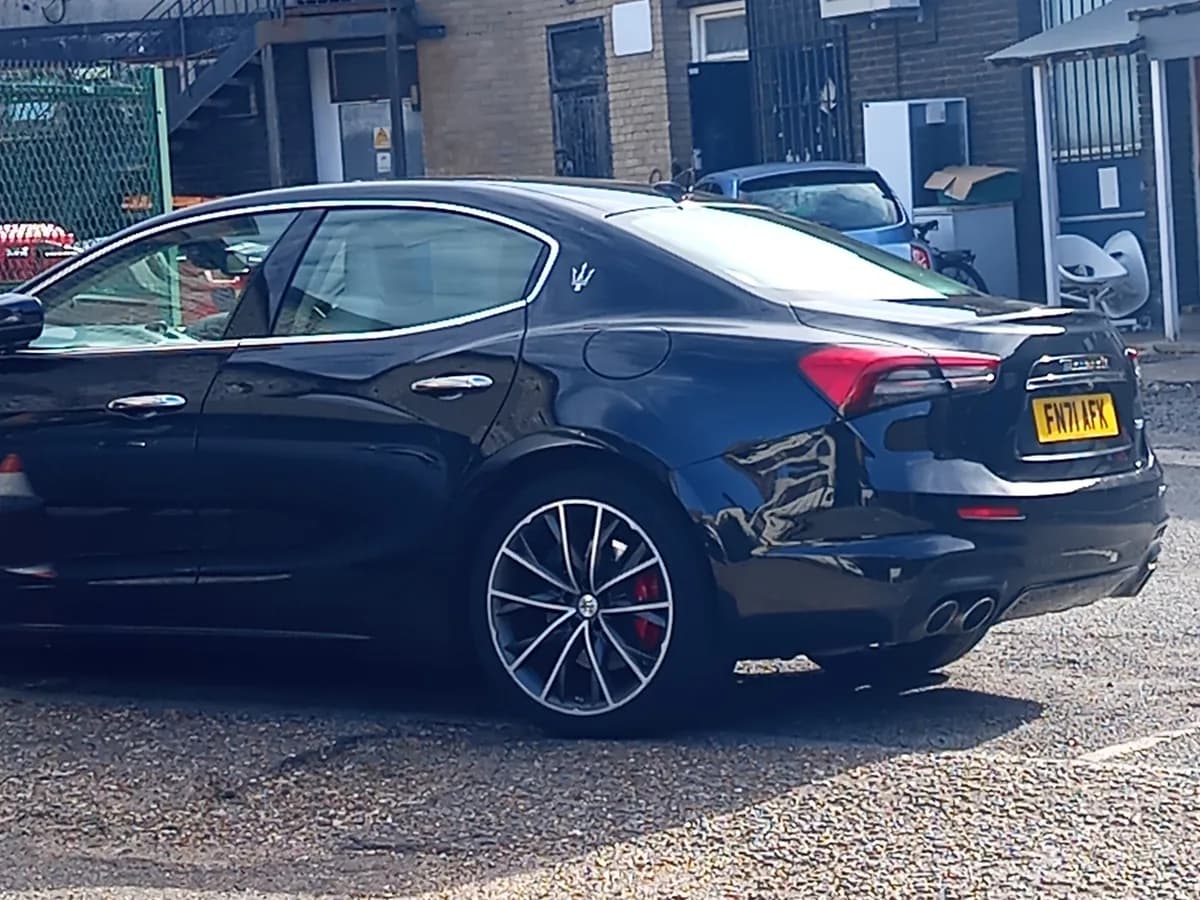
The Maserati Ghibli introduced for 2013 is a four-door sports sedan positioned below the Quattroporte. Unveiled at the Shanghai Motor Show in April 2013, it brought Maserati’s luxury-sedan formula into a smaller, more dynamic and more accessible package. The base Ghibli uses a 3.0-liter twin-turbocharged V6 producing 330 hp, paired with a ZF eight-speed automatic transmission. Depending on the market, the wider launch range also included all-wheel drive and a diesel engine. Its fastback-like profile, long hood and sharply defined side surfacing give the car a distinctly coupé-inspired appearance despite its practical four-door body. The Ghibli became an important part of Maserati’s expansion strategy during the early 2010s, adding a sportier alternative to the larger Quattroporte.
Curious about this car?
Explore Ghibli, then try your own photo.
No account needed for the result · Publish only if you choose
History
The M157 Ghibli was unveiled at the 2013 Shanghai Motor Show, a few months after the new-generation Quattroporte. Maserati was presenting two four-door sedans at the same time for the first time in its history. Shorter and lighter than the Quattroporte, the Ghibli was intended to deliver a sportier character while retaining the luxury identity associated with the marque. Its styling combines a vertical grille, a distinctive rear pillar, a long hood and a coupé-influenced roofline. The car shares parts of its architecture, engines and chassis technology with the Quattroporte, but uses more compact proportions. The original range included two 3.0-liter twin-turbocharged petrol V6 engines and a diesel V6 of the same displacement. The standard petrol Ghibli produced 330 hp, while the Ghibli S developed 410 hp. Maserati also offered Q4 all-wheel drive on selected versions. European sales began in 2013, followed by the North American rollout at the Los Angeles Auto Show in November of that year.
Latest scans
Photos added by the community for this page.
Anecdotes
The 2013 Ghibli holds a distinctive place in Maserati history because it was the marque’s first production car offered with a diesel engine. The 3.0-liter V6 was presented as a project developed with the involvement of Paolo Martinelli, a former Ferrari Formula One engine chief. The Ghibli name itself was not new: Maserati had already used it for a coupé unveiled in 1966, but the 2013 generation was the first to carry the name on a four-door sedan.
Production
Maserati introduced the Ghibli as part of a major product-expansion program during the early 2010s. The manufacturer stated that the model would support a broader industrial goal of producing 50,000 vehicles annually by 2015. The available public sources confirm the 2013 launch, the gradual European market introduction and the North American rollout late that year. They do not provide a separate, verifiable production figure for the 2013 base-specification Ghibli. Assigning a precise number to that variant would therefore be unreliable. Production totals for the wider Ghibli family should also be kept separate from one-year sales, order figures or total Maserati output.
Press reception
Early road tests generally recognized the Ghibli’s distinctive styling and strong visual identity. CompleteCar gave it an overall rating of 4/5 in 2013, praising its coupé-influenced shape, perceived cabin quality and acceptable rear-seat headroom. The same review noted that rear legroom and luggage capacity were less generous than in some competing models. Journalists also focused heavily on Maserati’s decision to introduce a diesel engine, an unusual move for a performance-oriented marque but one that supported its plan to reach a broader customer base. These observations apply mainly to the launch Ghibli range rather than exclusively to the standard base model.
Evolution
In 2013, the Ghibli launched with a comparatively broad lineup for a new Maserati sedan. The base model used the 330-hp twin-turbocharged petrol V6, while the Ghibli S focused on higher performance with 410 hp. Q4 all-wheel drive was available on selected petrol models, including the S Q4. A 3.0-liter, 275-hp diesel version completed the range in several European markets. Every launch specification announced by Maserati used a ZF eight-speed automatic transmission. This structure allowed the Ghibli to serve different priorities: rear-wheel-drive balance in the standard car, greater performance in the S, additional traction in Q4 form and lower claimed fuel consumption in the diesel. Equipment, drivetrain availability and model names could vary between countries.

Variants
References
- International Press Launch GhibliMaserati / Stellantis Media
Supports the 2013 launch, Shanghai debut, positioning below the Quattroporte, core architecture, engine range and Maserati production-growth objective.
- Maserati Ghibli Makes UK Debut At 2013 Goodwood Festival Of SpeedMaserati / Stellantis Media
Supports the 330 hp petrol Ghibli, 410 hp Ghibli S, 275 hp Diesel, eight-speed automatic transmission and first Maserati diesel claim.
- Maserati Ghibli On Stage In Los AngelesMaserati / Stellantis Media
Supports the North American rollout, the two-sedan strategy, rear- and all-wheel-drive availability, engine outputs and Ferrari Powertrain production statements.
- Maserati Ghibli reviewCompleteCar.ie
Supports the contemporary press assessment, 4/5 rating, styling comments, interior observations and discussion of the first Maserati diesel.
- The Maserati Ghibli: A powerful car named for a powerful wind celebrates 55 yearsMaserati
Supports the historical use of the Ghibli name for Maserati’s 1966 coupé and the name’s connection with the Ghibli wind.
- https://www.maserati.com/us/en/shopping-tools/catalogues/ghibli-cataloguesmaserati.com
Source found by OpenAI web search for this vehicle page.
- https://www.maserati.com/us/en/models/ghiblimaserati.com
Source found by OpenAI web search for this vehicle page.
- https://onlymanuals.com/maserati/ghiblionlymanuals.com
Source found by OpenAI web search for this vehicle page.