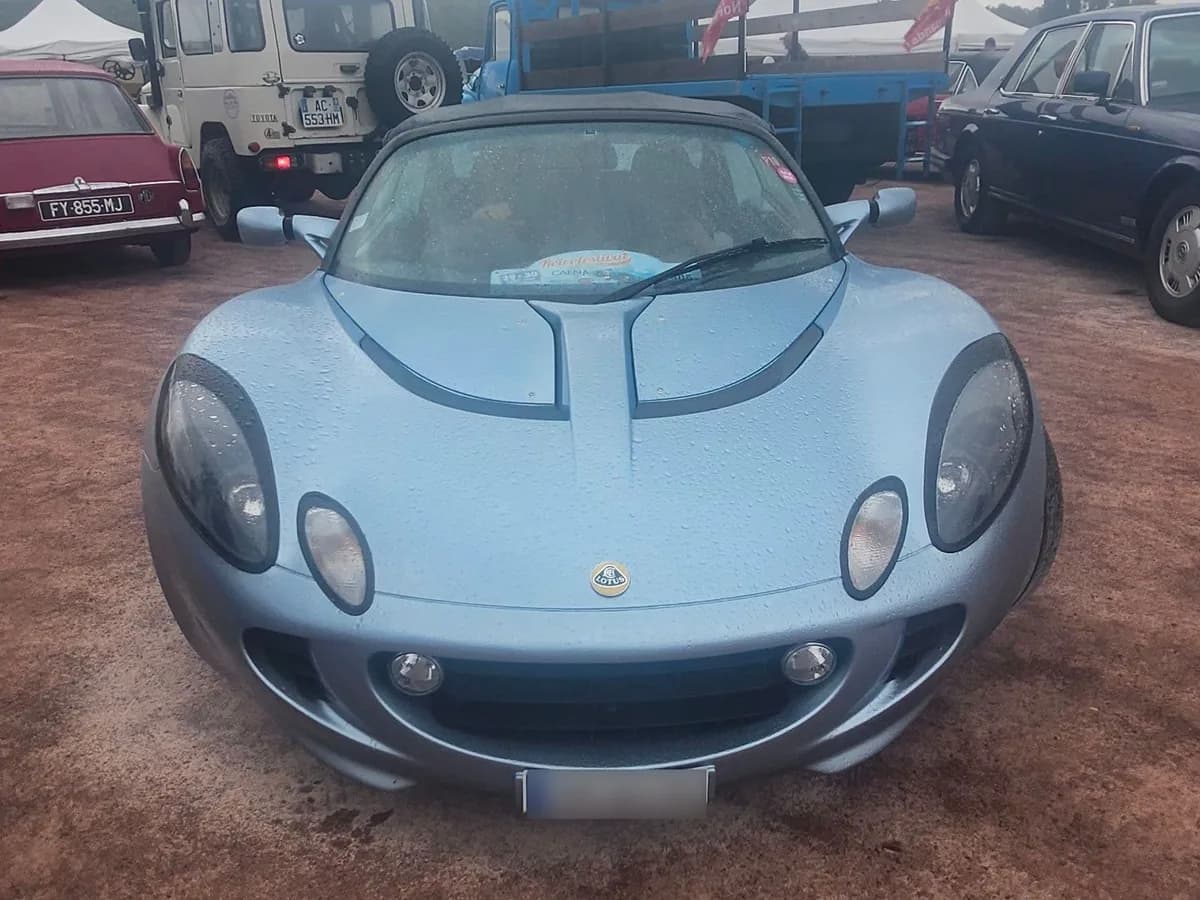
Lotus Elise Series 2 2001
In 2001, the Lotus Elise Series 2 marked a new stage for the brand’s compact mid-engined roadster. It kept the lightweight, pared-back spirit that defined the Elise, but gained a fully redesigned body and a layout aimed at broader market appeal. Its lizard-eye headlamps, larger-diameter wheels and more usable cabin clearly set it apart from the Series 1. Even so, it remained true to the original concept, built around a bonded aluminium chassis and a very light composite body.
Curious about this car?
Explore Elise, then try your own photo.
No account needed for the result · Publish only if you choose
History
The Elise began as Lotus Type 111, a project launched in the early 1990s as Lotus sought a return to a compact, relatively affordable sports car. Its 1995 debut was a turning point for the company, because it showcased a highly innovative layout: a bonded aluminium central chassis paired with a lightweight composite body. Lotus also used aluminium components for the suspension, and the first cars even featured metal-matrix disc brakes. The name Elise pays tribute to Elisa Artioli, granddaughter of Romano Artioli, who was then Lotus chairman.
Demand quickly outstripped initial expectations, and the line expanded with derivatives such as the 111S and several Sport versions. Against that backdrop, the Series 2 emerged as both a technical and commercial response. Unveiled in 2000 and sold from 2001, it adopted a new body designed to better meet regulatory requirements and Lotus’s international ambitions. The underlying structure still stemmed from the original concept, but the styling, settings and some mechanical details changed. The Series 2 also underpinned the Opel Speedster and Vauxhall VX220.
Latest scans
Photos added by the community for this page.
Anecdotes
The Elise name refers to Elisa Artioli, granddaughter of Romano Artioli, who was Lotus chairman at the time. It is a frequently mentioned detail in the model’s history because it links the car directly to the brand’s 1990s story.
Production
The Series 2 was unveiled in 2000 and went on sale from 2001. It was developed to answer stricter regulatory requirements and to support Lotus’s international expansion. The supplied dossier does not specify production volumes for the 2001 version.
Evolution
Variants
References
- Lotus Elise – Iconic Sports CarLotus Cars
Supports the 1995 Frankfurt debut, the Elise name, bonded and extruded aluminium chassis, launch engine, model evolution, production periods and major engine changes.
- Lotus Elise is crowned Icon of Icons at Autocar Awards 2019Lotus Cars Media
Supports the historical importance of the Elise's lightweight philosophy and bonded aluminium chassis technology.
- First and last: tracing the evolution of the Lotus EliseAutocar
Supports the comparison between early Series 1 and later Elise models, including the Rover and Toyota powertrains and the continuity of the chassis philosophy.
- Lotus Elise reviewAutocar
Supports the Series 1, Series 2 and Series 3 chronology, visual distinctions, suspension and usability changes, and the transition from Rover to Toyota engines.
- Lotus Elise S1 Used Car Buying GuideAutocar
Supports early Series 1 construction, low weight and the absence of bulky assistance systems on early examples.
- https://www.carcollectorinternational.com/research/buyers-guides/lotus/elise-s1carcollectorinternational.com
Source found by OpenAI web search for this model page.
- https://www.simonandschuster.com/books/Lotus-Elise-and-Exige-1995-2020/John-Tipler/9781785008429simonandschuster.com
Source found by OpenAI web search for this model page.