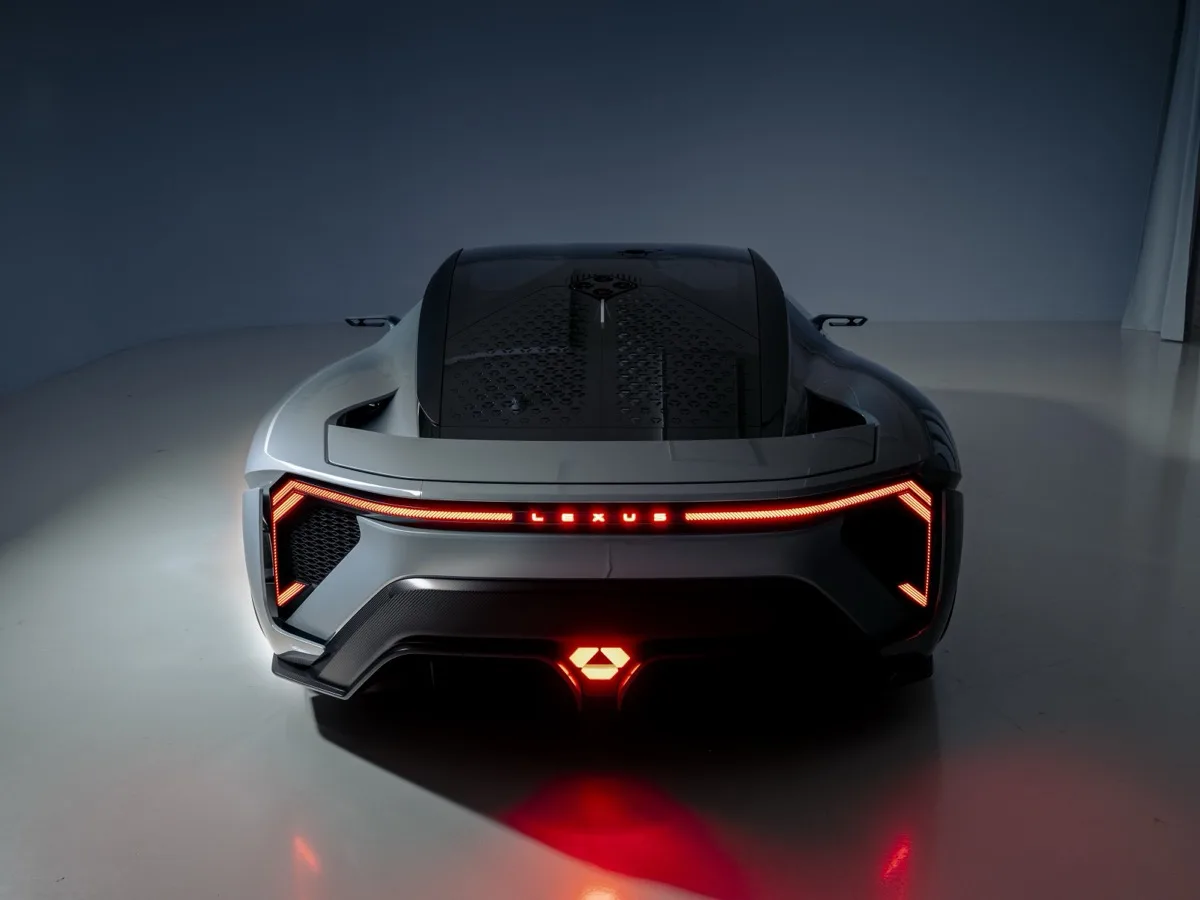
Lexus LFA Concept 2025
The Lexus LFA Concept 2025 belongs to the story of a supercar that began development in the early 2000s under the TXS codename and later reached production form in 2009. For this Concept version, no dedicated technical data is provided in the dossier, but the name clearly places it within the LFA universe: a machine associated with a low, wide, highly aerodynamic silhouette and instantly recognizable design cues. The LFA became a landmark for Lexus thanks to its exclusivity and its role as a technological showcase. In that context, a 2025 Concept variant should be understood primarily as a design statement and an expression of direction rather than as a fully specified mechanical model.
History
The Lexus LFA project took shape in the early 2000s, first under the TXS codename. A first prototype was completed in June 2003, and regular testing followed on the Nürburgring Nordschleife from October 2004 onward. Early concept cars then helped establish the model within Lexus’ image, with the first public presentation in January 2005 at the North American International Auto Show. The production version was eventually unveiled at the Tokyo motor show in October 2009, coinciding with Lexus’ 20th anniversary. Production began in December 2010 at the Motomachi plant in Aichi, Japan, and ended with a total of 500 units in December 2012. The 2025 Concept derivative therefore fits naturally into a line that has long been associated with prototypes and showcase appearances.
Latest scans
Photos added by the community for this page.
Editorial photos
Manufacturer press photos, relayed by ScanRacer until the community shoots this car.
Production
Production of the road-going Lexus LFA began in December 2010 at the Motomachi plant in Aichi, Japan. The dossier states that 500 units were produced in total through December 2012. No production details are provided for the 2025 Concept version, so its volume, location, and manufacturing format cannot be described. Within the model’s history, however, the limited and specialized production of the original LFA remains an important reference point for any later derivative.
Evolution
Variants
References
- Lexus LFA - PrésentationLexus France
Présentation officielle de la Lexus LFA
- Lexus LFA - RésuméLexus France
Résumé des caractéristiques de la Lexus LFA
- Lexus LFA - Annonce du prixLexus USA
Annonce du prix de la Lexus LFA aux États-Unis
- Lexus LFA - Page officielleLexus Corée
Page officielle de la Lexus LFA en Corée
- Lexus LFA - Page d'actualitésLexus Europe
Actualités et informations sur la Lexus LFA
- https://media.lexus.ca/en/releases/2009/lexus-debuts-lfa.htmlmedia.lexus.ca
Source found by OpenAI web search for this model page.
- https://www.autoevolution.com/lexus/lfa/autoevolution.com
Source found by OpenAI web search for this model page.