
LC
Revealed as a production model at the Detroit auto show in January 2016, the Lexus LC is the grand touring coupe that marked a major change in the brand’s design and engineering direction. Developed from the 2012 LF-LC concept, it uses the rear-wheel-drive GA-L platform and a low, wide 2+2 body. The LC 500 combines a naturally aspirated 5.0-liter V8 with a 10-speed automatic transmission, while the LC 500h uses Lexus’s Multi Stage Hybrid System. The range later expanded with the LC 500 Convertible, a soft-top model unveiled in 2019 and sold as a 2021 model in the United States. Within the model coverage considered here, the coupe is represented by 2018 and the Convertible by 2021.
Variants by year
2021
2018
Model summary
Data from the ScanRacer library, organized to compare versions quickly.
Model introduction
Revealed as a production model at the Detroit auto show in January 2016, the Lexus LC is the grand touring coupe that marked a major change in the brand’s design and engineering direction. Developed from the 2012 LF-LC concept, it uses the rear-wheel-drive GA-L platform and a low, wide 2+2 body. The LC 500 combines a naturally aspirated 5.0-liter V8 with a 10-speed automatic transmission, while the LC 500h uses Lexus’s Multi Stage Hybrid System. The range later expanded with the LC 500 Convertible, a soft-top model unveiled in 2019 and sold as a 2021 model in the United States. Within the model coverage considered here, the coupe is represented by 2018 and the Convertible by 2021.
History
The LC story began with the LF-LC concept, shown in Detroit in 2012. Lexus was exploring how a luxury coupe could express a more emotional identity than the sedans that had traditionally defined the brand. Four years later, the production LC 500 was revealed at the same auto show. Its styling retained much of the concept’s visual drama, while its engineering introduced a production architecture developed for Lexus front-engine, rear-wheel-drive vehicles. The coupe went on sale for the 2018 model year. Depending on the market, buyers could choose between the V8-powered LC 500 and the hybrid LC 500h. Lexus described the latter as the first model to use its Multi Stage Hybrid System, while the broader LC program introduced the GA-L platform and Direct Shift-10AT transmission to the brand’s flagship coupe range. The LC therefore served as both a halo model and a showcase for Lexus design and chassis development. A convertible project emerged as a concept at Detroit in 2019. The production LC 500 Convertible made its global debut at the Los Angeles auto show in November 2019, followed by sales from 2020 and its designation as a 2021 model in the United States. It retained the coupe’s V8 and automatic transmission, but used additional structural bracing and a retractable fabric roof to create an open-air version of the LC formula.
Generations
The Lexus LC belongs to a single model generation across the period covered here. It is not a case of several successive generations carrying the same name; instead, the family began with the coupe and later expanded with a convertible based on the same technical foundation. This distinction matters because the Coupe and Convertible are body styles within one LC generation, not separate generations. The coupe introduced for 2018 uses a front-engine, rear-wheel-drive layout and a 2+2 cabin. Its design is defined by a long hood, a rear-set passenger compartment and a very low roofline. The range includes the V8-powered LC 500 and the hybrid LC 500h, which use different powertrain concepts. Equipment, trim names and engine availability can vary by market, so regional specifications should not automatically be treated as universal. The Convertible, represented here by the 2021 model year, keeps the coupe’s main design language but replaces the fixed roof with an electrically operated fabric top. Lexus developed additional bracing to support body rigidity, and the rear deck and luggage area were redesigned around the roof mechanism. It is therefore best understood as a later body-style development within the same generation, rather than as an independent successor. The coupe and convertible share the LC’s grand-touring character, rear-drive layout and flagship positioning, while offering distinctly different roof and rear-body structures.
Key differences
The clearest difference is the roof: the Coupe has a fixed roof, while the Convertible uses a fabric soft top. The coupe retains a continuous roofline and integrated rear glass; the convertible has a redesigned rear deck and tonneau area to accommodate the folded roof. The change also affects the body structure, so Lexus added specific bracing and connecting elements to support the required level of rigidity. The LC 500 Convertible uses the naturally aspirated 5.0-liter V8 and 10-speed automatic transmission, while the coupe could also be specified as an LC 500h hybrid depending on the market. The convertible is therefore more than a coupe with its roof removed. Its rear bodywork, luggage arrangement, weight and chassis tuning are specific to the open-top design. Exact equipment, suspension settings, dimensions and powertrain availability may vary by country and model year. Reliable identification should combine the body style with the engine designation and market-specific trim information rather than relying on appearance alone.
Photo recognition
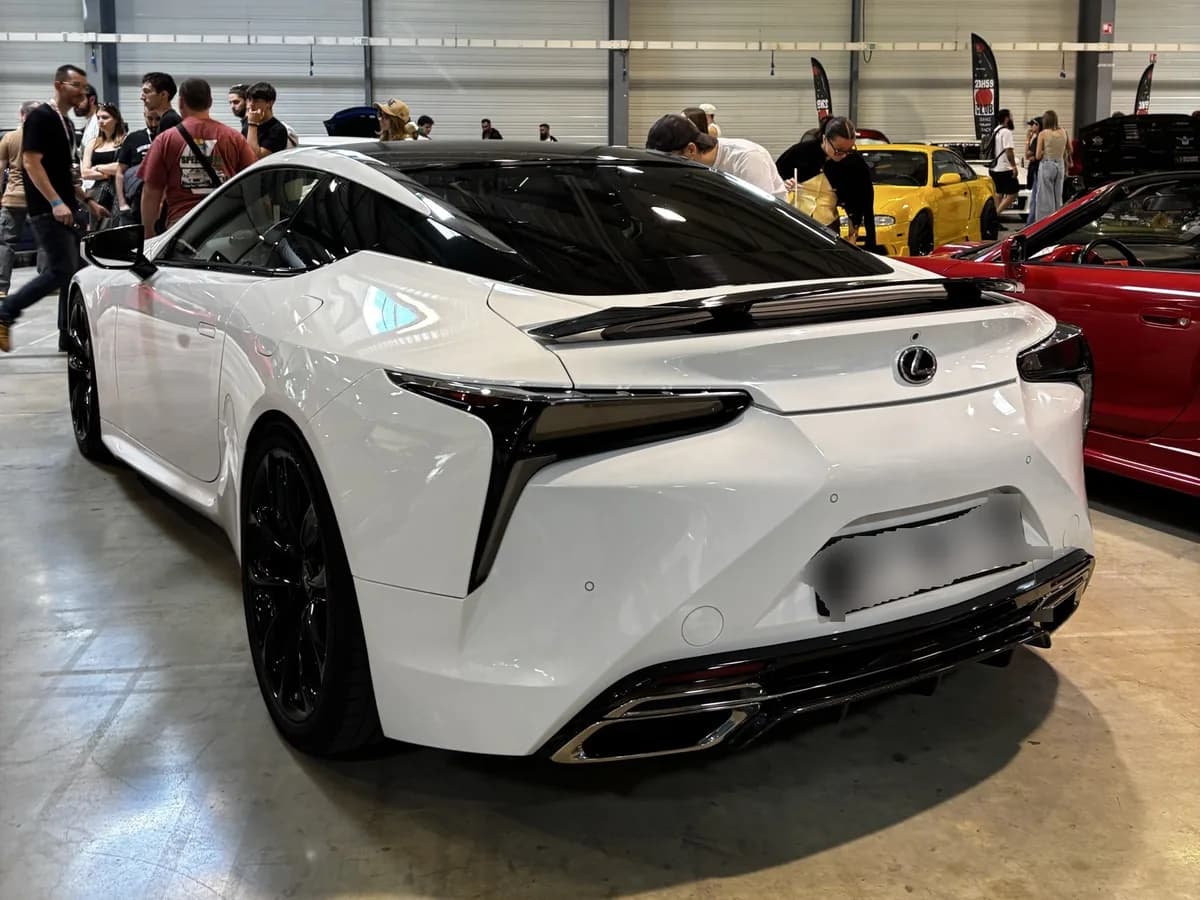
The LC is first identified by its very low, stretched proportions: a long hood, rear-set cabin and short overhangs. Lexus’s large spindle grille dominates the front end, with slim headlamps and distinctive hook-shaped daytime running lights. The rear haunches are heavily sculpted, while the rising side character line makes the car appear wide even when stationary. At the rear, the horizontal lamps with a three-dimensional appearance and integrated exhaust outlets are useful clues, although details can vary with trim level. The Coupe has a fixed roof; the Convertible has a fabric top and a tonneau cover behind the seats. With the roof raised, the convertible keeps a profile close to the coupe, so the rear roof mechanism and bodywork are more reliable identifiers than the general silhouette alone. To distinguish engines, look for the LC 500 or LC 500h designation and confirm it against the vehicle documentation. Badges are not always sufficient because model names, trim packages and equipment can differ by market. The body style, model year and powertrain should be checked together when cataloguing a specific car.
Important versions
The LC 500 is the signature naturally aspirated V8 version. For 2018, it represents the family’s grand-touring coupe and, in the U.S. specification, combines a 5.0-liter V8 with a 10-speed automatic transmission. The LC 500h provides the other major coupe direction, using Lexus’s Multi Stage Hybrid System, although its availability and equipment depend on the market. The LC 500 Convertible, revealed in 2019 and introduced from 2020, became the open-air member of the family. The 2021 model represented here is a rear-wheel-drive convertible with the naturally aspirated V8, automatic transmission and electrically operated fabric roof. It preserves the LC’s design identity while using specific rear bodywork, structural reinforcement and comfort features for roof-down driving. The versions included in the supplied coverage are therefore the 2018 Coupe and the 2021 Convertible.
References
- Global Debut of the All-New Lexus LC 500 at the 2016 NAIASToyota Global Newsroom
- Lexus Launches the New 'LC' Luxury CoupeToyota Global Newsroom
- All-New Lexus LC Performance Coupe Opens New Chapter in Brand HistoryLexus USA Newsroom
- Lexus LC Convertible Concept Makes World Debut in DetroitToyota Global Newsroom
- The stunning Lexus LC 500 Convertible makes its global debut at the 2019 Los Angeles Auto ShowToyota Global Newsroom
- 2021 Lexus LC 500 Convertible Makes Global Debut at the 2019 Los Angeles International Auto ShowLexus USA Newsroom
- Tested: 2021 Lexus LC500 Convertible Puts a Price Tag on MaturityCar and Driver
- https://www.caranddriver.com/reviews/a33450721/2021-lexus-lc500-convertible-drive/caranddriver.com
Technical specifications
Structured data available for versions linked to this model.
| Version | Power | Torque | Top speed | Drivetrain | Fuel |
|---|---|---|---|---|---|
| — | LC 500 : 471 ch ; LC 500h : 354 ch de puissance totale du système | — | — | Propulsion arrière / LC 500 : boîte automatique Direct Shift à 10 rapports ; LC 500h : transmission hybride multistade avec CVT à commande électronique | — |
Frequently asked questions
- What years was the Lexus LC produced?
- ScanRacer's referenced versions cover 2018 - 2021.
- How many Lexus LC examples are documented on ScanRacer?
- 5 published scans from 5 members, with the latest photo added in September 2026.
- What is the power output of the Lexus LC?
- The sourced technical data lists LC 500 : 471 ch ; LC 500h : 354 ch de puissance totale du système.