KTM X-Bow Track-version 2017
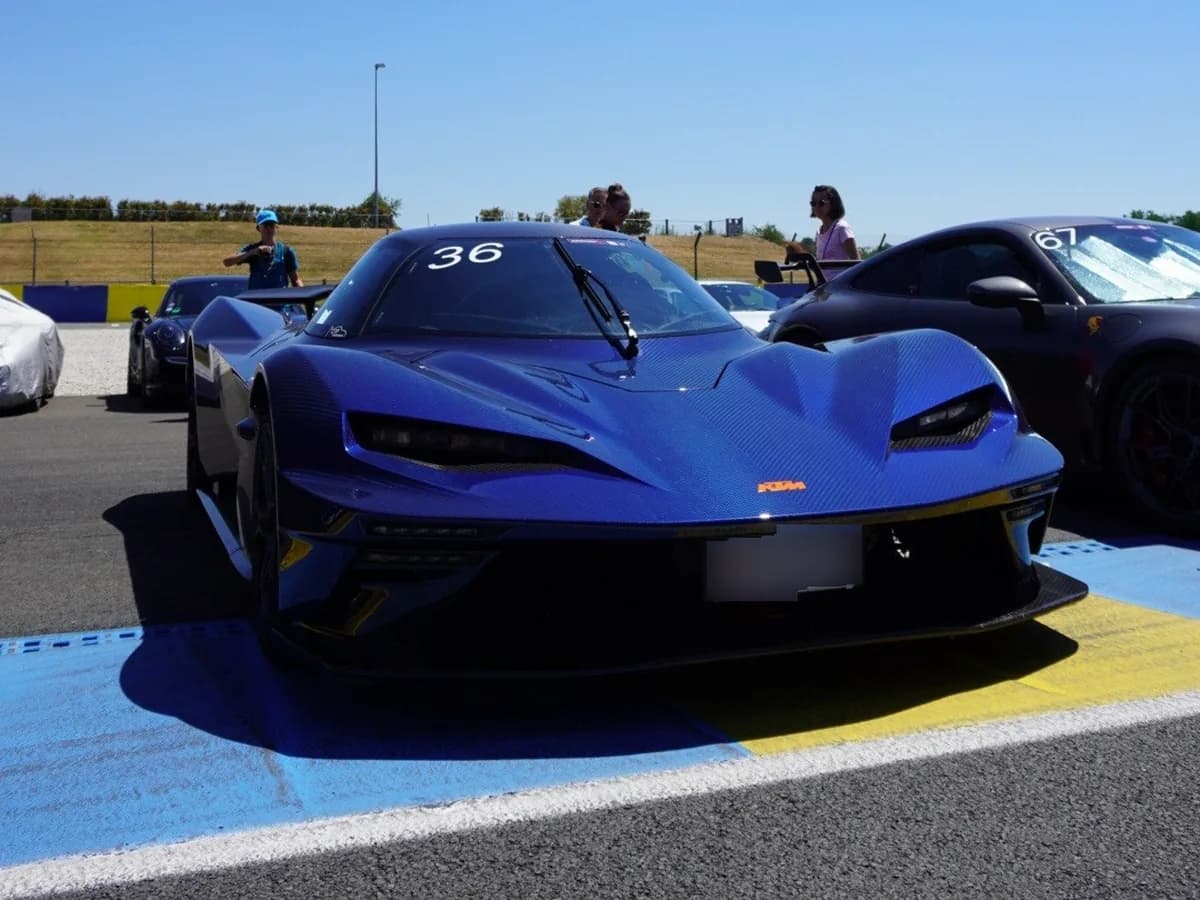
The 2017 KTM X-Bow Track-version belongs to a sports-car family designed first and foremost around lightness, rigidity, and high-speed efficiency. The X-Bow line is based on a carbon monocoque, a centrally mounted rear engine, and a very stripped-back layout that moves away from traditional grand-touring conventions. For 2017, the Track-version label should be understood as a catalog designation or a circuit-oriented configuration, without being enough on its own to identify a precise X-Bow derivative with certainty. Within the X-Bow range, it therefore sits on the more radical side of the model family, distinct from more protective versions such as the GT.
History
The X-Bow project was developed by KTM with support from several technical partners, including Dallara for the chassis architecture, Wethje for carbon parts, KTM Technologies for composites, and Audi for the powertrain. The production car was unveiled in 2008, following the first prototypes and an early limited Dallara special series. From the outset, KTM chose a philosophy very different from that of a conventional sports car: the goal was low mass, high rigidity, and strong aerodynamic efficiency rather than comfort or a traditional touring-car equipment level.
The first X-Bows were open cars with very limited protection from the elements, reinforcing their track-like character. The X-Bow R, announced for 2011, pushed performance further. In 2013, the X-Bow GT added a more versatile response with a windscreen, doors, and a removable soft top, while keeping the R’s technical base. Between 2013 and 2017, the range mainly expanded through diversification, with road versions and competition derivatives such as the RR and GT4. In that context, the 2017 Track-version belongs to an already highly specialized family, without by itself marking a new generation.
Latest scans
Photos added by the community for this page.
Production
The dossier does not provide production figures specific to the 2017 Track-version. Within the X-Bow timeline, however, 2017 falls in a period when the family was already established and diversified. The Track-version should therefore be understood as a catalog entry associated with that period, without allowing any firm conclusion about volume, assembly location, or specific industrial details. Confirming the exact identity still requires the VIN plate, original documents, and photographs.
Evolution
Variants
References
- Official World Premiere of the KTM X-Bow GTXKTM
Supports the 2008 production start, KISKA design involvement, carbon monocoque architecture, and the distinction between the road-going X-Bow concept and later racing derivatives.
- KTM X-Bow 1,000th Vehicle Press InformationLand Steiermark / KTM press information
Supports the development partnership with Dallara, Wethje, KTM Technologies, and Audi, as well as the early 2008 launch and carbon monocoque description.
- KTM to Show Production X-Bow at Geneva ShowAutoweek
Provides contemporary reporting on the 2008 production model, Dallara Edition, carbon-fibre monocoque, Audi powertrain, and early performance positioning.
- KTM X-Bowevo
Supports the description of the X-Bow as a lightweight two-seat sports car built around a carbon-fibre tub developed with Dallara.
- https://www.scribd.com/document/529534077/Ktm-X-bow-Folder-R-rr-2021-en-Copiascribd.com
Source found by OpenAI web search for this model page.
- https://www.motorauthority.com/news/1082864_2013-ktm-x-bow-gt-full-specsmotorauthority.com
Source found by OpenAI web search for this model page.
- https://www.ktm.com/en-us/X-BOW/contact.htmlktm.com
Source found by OpenAI web search for this model page.