Jaguar E-type roadster Convertible 1961
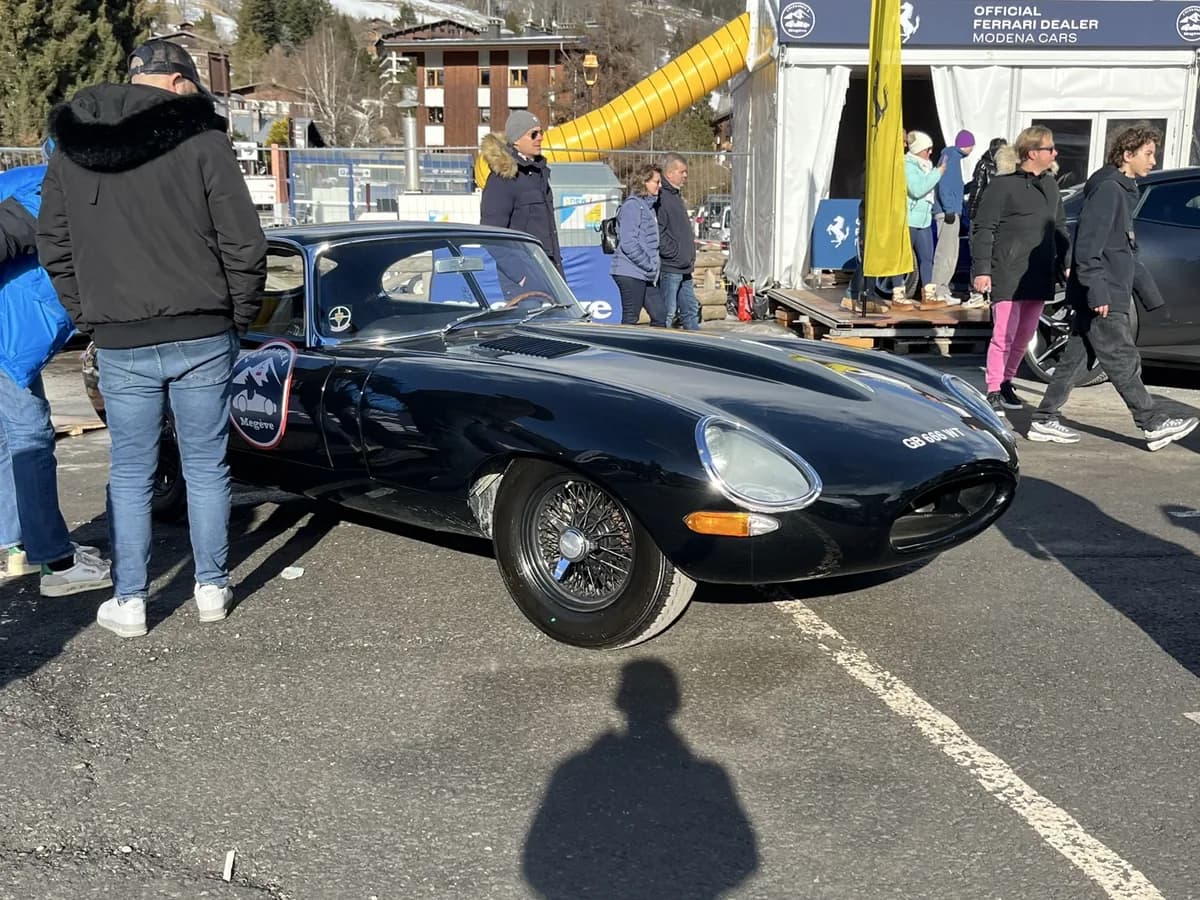
Unveiled in Geneva on 15 March 1961, the Jaguar E-type roadster introduced a new generation of British sports cars. Known in Jaguar documentation as the Open Two Seater, or OTS, it combined a two-seat convertible body with engineering rooted in the company’s racing experience. Its long bonnet, covered headlamps and aerodynamic proportions, developed under Malcolm Sayer’s direction, created an immediately distinctive silhouette. The 1961 model belongs to the earliest Series 1 production and used Jaguar’s 3.8-litre XK straight-six with a four-speed Moss gearbox. With a price below many European competitors and performance approaching 150 mph, the E-type roadster quickly became both a technical statement and a design landmark. Its combination of advanced chassis engineering, open-air appeal and accessible pricing defined Jaguar’s sports-car image for the decade that followed.
Curious about this car?
Explore E-type roadster, then try your own photo.
No account needed for the result · Publish only if you choose
History
The Jaguar E-type was presented to the press at Geneva’s Parc des Eaux Vives on 15 March 1961. Jaguar initially displayed a Fixed Head Coupé, but the demand for demonstration drives led the company to send a second open car from Coventry. The roadster registered 77 RW, driven by Norman Dewis, became closely linked with the model’s debut. The E-type incorporated ideas developed through Jaguar’s competition programme, including a monocoque structure with a front subframe and independent rear suspension with inboard-mounted rear brakes. Jaguar’s launch specification used the 3.8-litre XK engine, rated at 265 bhp in the company’s published figures. Its ability to approach 150 mph, combined with a price below many comparable sports cars, gave the E-type unusual commercial appeal. At introduction, buyers could choose between the two-seat roadster and the fastback Fixed Head Coupé. The earliest 1961 cars are now valued for their launch-period details, including the flat-floor construction used on the first production examples.
Latest scans
Photos added by the community for this page.
Anecdotes
Roadster 77 RW became one of the defining cars of the E-type launch. After the coupé 9600 HP reached Geneva, demand for demonstration drives encouraged Jaguar to send another car from Coventry. Norman Dewis was instructed to leave immediately and drove the open E-type to Switzerland so journalists could experience it. 77 RW was later used by The Motor for its road test, published on 22 March 1961. The Jaguar Daimler Heritage Trust now identifies it as the oldest surviving open E-type, giving the early roadster a particularly important place in Jaguar’s history.
Production
The Jaguar E-type was produced from 1961 to 1975, covering several series and body styles. Jaguar states that more than 70,000 examples were built during that period, making it a relatively high-volume sports car for its class. The 1961 model belongs to the earliest Series 1 production and combined the 3.8-litre XK engine with the roadster and Fixed Head Coupé body styles. A precise production total for the 1961 roadster alone is not included here because the consulted sources do not provide a sufficiently consistent figure for that exact configuration. The earliest cars, including flat-floor examples, represent a particularly early phase of the E-type’s production history and are now distinguished by their launch-period construction and equipment.
Press reception
The E-type’s reception in 1961 was immediate and unusually intense. At Geneva, public and press demand quickly exceeded what a single demonstration car could handle, prompting Jaguar to rush the roadster 77 RW from Coventry. Its claimed performance, approaching 150 mph, was especially striking because the purchase price remained below that of many comparable European sports cars. The Motor tested 77 RW shortly after the launch, helping establish the car’s performance reputation. The design also received lasting institutional recognition. New York’s Museum of Modern Art included an E-type roadster in its collection, reflecting the importance of Malcolm Sayer’s shape and the car’s broader influence on automotive design.
Evolution
Variants
References
- 1961 Jaguar E-type Series 1 3.8 litre 77 RWJaguar Daimler Heritage Trust
Supports the 1961 launch context, 77 RW history, 3.8-litre engine, 265 bhp, body styles, price and model evolution.
- Jaguar Classic Reveals E-type 60 CollectionJaguar Classic Media Newsroom
Supports the 15 March 1961 Geneva debut, the 9600 HP and 77 RW launch cars, and Norman Dewis’s drive to Geneva.
- Jaguar Celebrates 50 Years of Iconic E-typeJaguar Media Newsroom
Supports the launch date, performance claims, 3.8-litre engine output, design attribution and overall production period and volume.
- The Class of 1961Jaguar Daimler Heritage Trust
Supports early flat-floor production details, period performance context and the Moss four-speed manual gearbox.
- E-Type RoadsterMuseum of Modern Art
Supports the roadster’s design date, steel unibody construction, fabric top and recognition by a major design museum.
- AutoBodies: JaguarMuseum of Modern Art
Supports the roadster body description, its 1961 performance status and the design relationship between competition-car ideas and production use.
- https://www.reddit.com/r/ClassicCarAuctionsUK/comments/1thhrof/fixed_price_1973_jaguar_etype_s3_convertible/reddit.com
Source found by OpenAI web search for this vehicle page.
- https://www.ultimatecarpage.com/spec/1010/Jaguar-E-Type-Roadster.htmlultimatecarpage.com
Source found by OpenAI web search for this vehicle page.