
Capri
Introduced in 1969, the Ford Capri was a European sports coupe designed to make grand-tourer styling and performance more attainable. It used familiar Ford engineering, sharing important components with the Cortina, but gave them a more dramatic long-hood, short-tail body influenced by the spirit of the Mustang. The original Capri developed through three main periods: Capri I from 1969 to 1974, Capri II from 1974 to 1978, and Capri III from 1978 to 1986. After almost four decades away, the name returned in 2024 on an all-electric sports crossover for the European market. ScanRacer’s coverage therefore spans both the classic combustion-powered car, including the Base variant, and the modern EV Crossover. (nationalmotormuseum.org.uk)
What about the car you photographed?
Upload a photo to get a suggested make, model and likely year.
No account needed for the result · Publish only if you choose
Variants by year
Make: Ford · Model: Capri
5 / 5 versions shown
2024
1989
1978
1974

1969
Ford Capri photos
Model summary
Data from the ScanRacer library, organized to compare versions quickly.
Model introduction
Introduced in 1969, the Ford Capri was a European sports coupe designed to make grand-tourer styling and performance more attainable. It used familiar Ford engineering, sharing important components with the Cortina, but gave them a more dramatic long-hood, short-tail body influenced by the spirit of the Mustang. The original Capri developed through three main periods: Capri I from 1969 to 1974, Capri II from 1974 to 1978, and Capri III from 1978 to 1986. After almost four decades away, the name returned in 2024 on an all-electric sports crossover for the European market. ScanRacer’s coverage therefore spans both the classic combustion-powered car, including the Base variant, and the modern EV Crossover. (nationalmotormuseum.org.uk)
History
The Ford Capri was unveiled at the Brussels Motor Show in 1969. Ford positioned it as an attainable sports coupe, drawing on the commercial appeal of the Mustang while adapting the concept for European buyers. The car used a technical foundation related to the Cortina, but its distinctive body and broad choice of engines and trim levels gave it a separate identity. The National Motor Museum notes that the Capri offered multiple engine sizes and numerous equipment combinations from the beginning. (nationalmotormuseum.org.uk) The Capri II arrived in 1974 with revised styling and a hatchback tailgate, making the car more practical without abandoning its sporty proportions. In 1978, the Capri III introduced a sharper appearance, including four round headlamps connected by a horizontal grille. Motorsport and performance variants became central to the model’s image: the RS2600 won the European Touring Car Championship in 1971 and 1972, while the RS3100, RS Turbo and final Capri 280 became notable late-period versions. Ford’s historical timeline and the National Motor Museum place total production at roughly 1.9 million cars through 1986. (media.ford.com) In July 2024, Ford officially revived the Capri name for an all-electric sports crossover. It is not a direct continuation of the classic coupe’s body style, but a modern interpretation that carries selected visual and emotional references into a battery-electric vehicle. (media.ford.com)
Generations
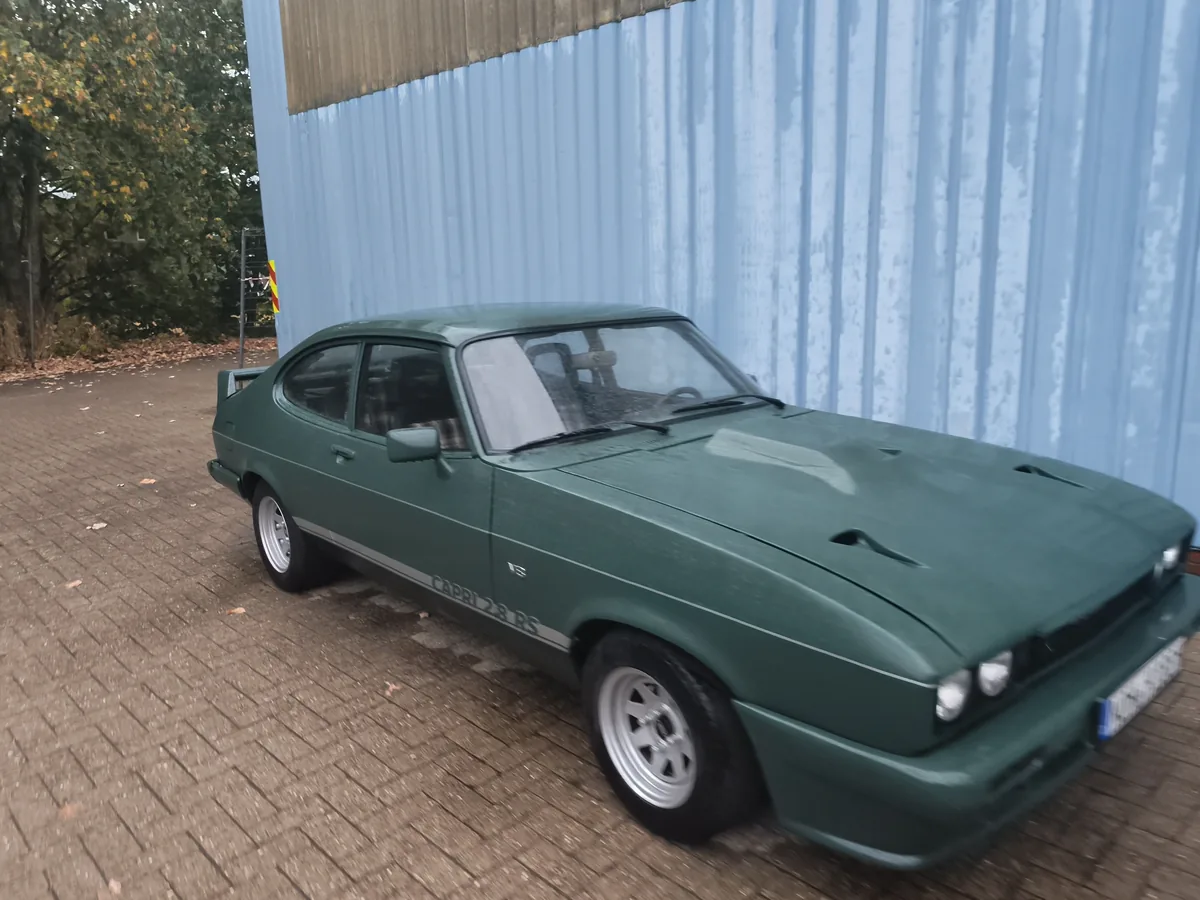
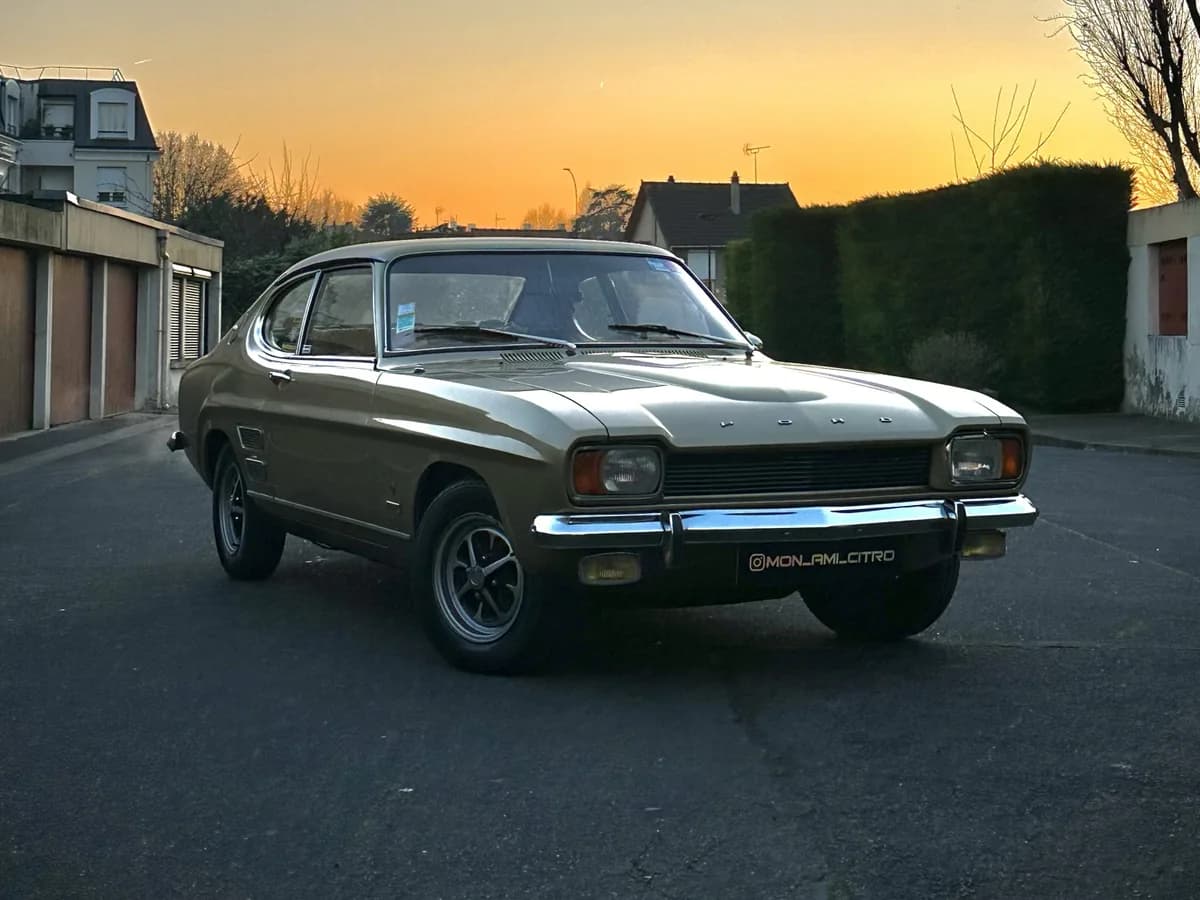
The Capri I, produced from 1969 to 1974, is defined by classic sports-coupe proportions: a long bonnet, relatively low roof, extended side glass and short rear deck. It was closely related to the Cortina mechanically, but Ford gave it a distinctly sportier presentation. The RS2600 and RS3100 belong to this first period and underline the Capri’s competition credentials. (nationalmotormuseum.org.uk) The Capri II arrived in 1974 with a more practical hatchback tailgate. Its styling became straighter and more restrained, with a simpler front treatment. Ford’s historical timeline places this generation between 1974 and 1978. (media.ford.com) The Capri III, introduced in 1978, was a substantial evolution of the Capri II rather than a completely unrelated model. Its most recognizable features are the four round headlamps, horizontal grille bars and integrated front spoiler. During the 1980s, Ford strengthened the car’s performance image with versions such as the 2.8i, RS Turbo and final Capri 280. (media.ford.com) The 2024 model changes category entirely. It is an all-electric sports crossover, offered at launch with rear-wheel drive or all-wheel drive depending on specification. It should therefore be treated as a modern revival of the Capri name, not as a straightforward fourth generation of the historic coupe. (media.ford.com)
Key differences
The classic Capri generations are easiest to separate by body design. The Capri I has the most traditional coupe proportions and a relatively slim early front end. The Capri II is identified by its hatchback tailgate and more angular styling, with a stronger emphasis on everyday practicality. The Capri III has a more aggressive appearance, led by four round headlamps and horizontal grille bars. (nationalmotormuseum.org.uk) Mechanical differences depend on market, model year and trim, so no single engine specification should be assigned to every car within a generation. RS, 2.8i, RS Turbo and Capri 280 versions represent more performance-focused interpretations, but their equipment and specifications should be checked against the exact variant. (media.ford.com) The 2024 model is clearly separate from the historic cars: it uses electric propulsion, a crossover body and modern battery architecture. Range, output and drivetrain depend on the selected battery and equipment configuration. (media.ford.com)
Photo recognition
To identify a Capri I, look for the long bonnet, flowing coupe profile and short rear deck. Trim details vary between markets, but the overall proportions are usually the most reliable clue. A Capri II is primarily distinguished by its rear hatchback and straighter body surfaces. That full-opening tailgate is the clearest exterior feature separating it from the first generation. (nationalmotormuseum.org.uk) The Capri III is generally identified by four round headlamps grouped into a lower, more purposeful front end. Horizontal grille bars and an integrated front spoiler reinforce the identification, although modifications, restorations and replacement parts can blur the visual differences. (media.ford.com) RS, 2.8i, Turbo and Capri 280 badges may point to significant versions, but badges alone cannot always authenticate a restored car. Identification plates, period documentation and matching equipment should also be checked. The 2024 model is immediately distinct through its crossover body, electric powertrain and modern EV-specific design features. (media.ford.com)
Important versions
The Capri RS2600 is one of the most historically significant versions: Ford states that it won the European Touring Car Championship in 1971 and 1972. The RS3100 also belongs to the first period and was developed with competition in mind. (media.ford.com) During the 1980s, the 2.8i introduced fuel injection to a 2.8-litre engine and strengthened the Capri’s performance character. The RS Turbo provided another high-performance interpretation, while the Capri 280 marked the end of production in 1986. Ford says just over 1,000 examples of the Capri 280 were built, all finished in Brooklands Green. (media.ford.com) Within the ScanRacer context, EV Crossover identifies the 2024 electric revival, while Base covers part of the referenced classic period. These labels should be read alongside the relevant year and exact trim rather than treated as complete historical generation names.
References
- Ford Capri 1600LNational Motor Museum
- 2024 Ford Capri TimelineFord Media Center
- La nouvelle Ford Capri : Sport Crossover 100 % électriqueFord Media Center
- New Electric Ford Capri is on its Way to CustomersFord Media Center
- https://www.motor1.com/news/726104/ford-capri-1969-1986-history/motor1.com
- https://media.ford.com/content/fordmedia/feu/ch/de/news/2024/07/10/Der-neue-Ford-Capri.htmlmedia.ford.com
- https://media.ford.com/content/dam/fordmedia/Europe/en/2024/07/Capri/PDFS/2024FordCapri_factsheet_EU_final.pdfmedia.ford.com
Technical specifications
Structured data available for versions linked to this model.
| Version | Power | Torque | Top speed | Drivetrain | Fuel |
|---|---|---|---|---|---|
| Base | 103 KW @ 5300 RPM140 HP @ 5300 RPM138 BHP @ 5300 RPM | 173 lb-ft @ 3000 RPM235 Nm @ 3000 RPM | 123 mph (198 km/h) | Rear Wheel Drive / 4-speed manual | Gasoline |
Frequently asked questions
- What years was the Ford Capri produced?
- ScanRacer's referenced versions cover 1969 - 2024.
- How many Ford Capri examples are documented on ScanRacer?
- 6 published scans from 6 members, with the latest photo added in September 2026.
- What is the power output of the Ford Capri?
- The sourced technical data lists 103 KW @ 5300 RPM140 HP @ 5300 RPM138 BHP @ 5300 RPM.
What about the car you photographed?
Upload a photo to get a suggested make, model and likely year.
No account needed for the result · Publish only if you choose