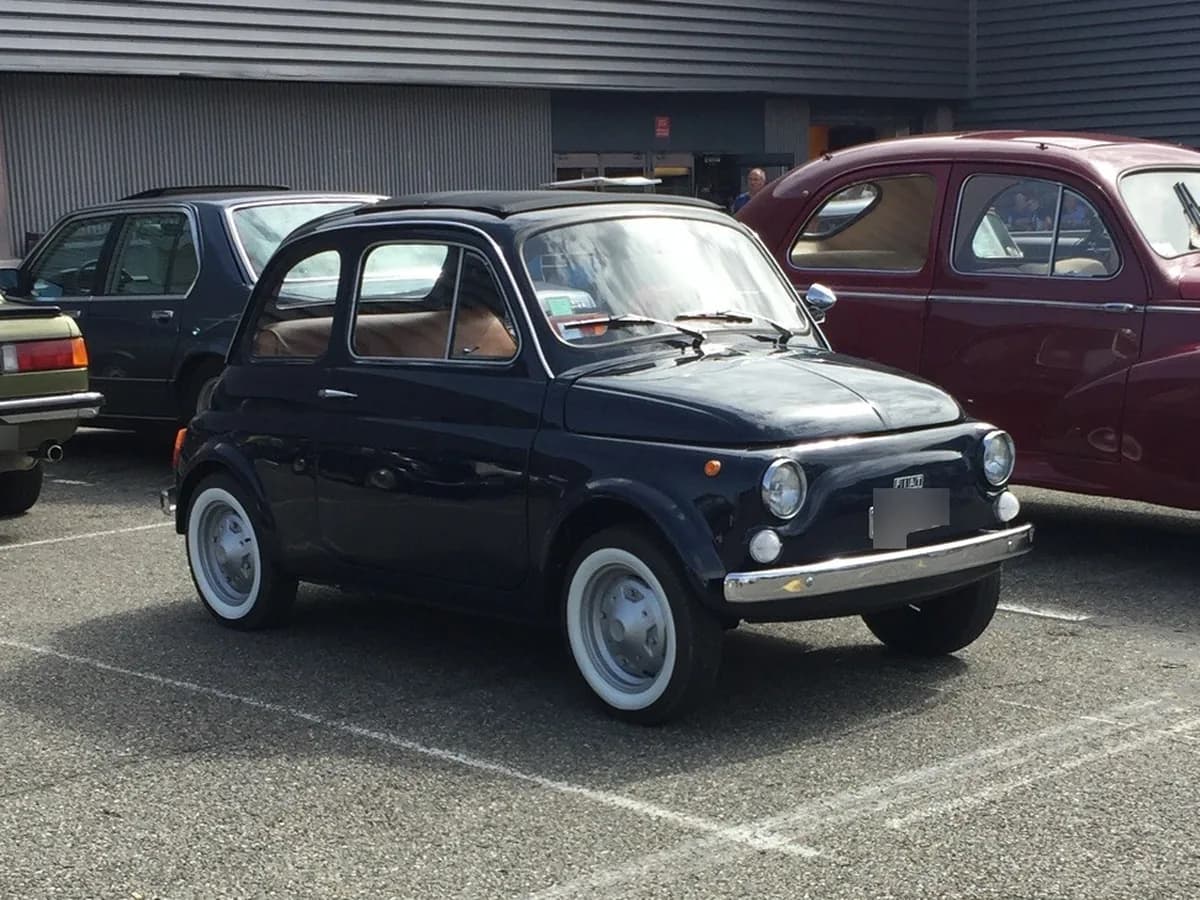
FIAT 500 500R 1972
Presented at the Turin Motor Show in November 1972, the Fiat 500 R was the final evolution of the Nuova 500 introduced fifteen years earlier. The letter R referred to Rinnovata, meaning renewed. Although the Fiat 126 had arrived as the company’s newer small car, the 500 R retained the compact rear-engine, rear-wheel-drive layout that had made the model successful. It was updated with a 594 cc engine derived from the 126 unit, detuned to 18 hp, along with revised mechanical and exterior details. More basic than the 500 L it replaced, the R used black plastic interior components, visible wheel bolts and Fiat’s newer corporate badge. Production ended in 1975, closing a remarkable chapter that had seen more than three million Nuova 500s built since 1957.
Curious about this car?
Explore 500, then try your own photo.
No account needed for the result · Publish only if you choose
History
The Fiat 500 R arrived during a transition period for Fiat. Designed under the direction of Dante Giacosa, the Nuova 500 had helped drive mass car ownership in Italy since 1957. By the early 1970s, however, Fiat was preparing a newer generation of small cars, led by the Fiat 126 introduced in 1972. The 500 was not withdrawn immediately: the R was launched alongside the 126 to extend the older model’s career without requiring a completely new development program.
Its most important change was mechanical. Displacement increased to 594 cc, matching the 126, but output was reduced to 18 hp to preserve a clear distinction between the two cars. The gearbox also retained the older 500 design and was initially not fully synchronized. Compared with the 500 L, the R used simpler equipment, including black instrumentation, smooth vinyl upholstery, a fixed rear-seat backrest and less elaborate exterior trim. Production moved from Turin to Desio, where Autobianchi assembled cars, and later to Termini Imerese. The final example left the production line on August 1, 1975.
Latest scans
Photos added by the community for this page.
Anecdotes
The 500 R and the Fiat 126 were launched at the same Turin Motor Show in November 1972. The letter R did not indicate a sporting trim level; it referred to the Italian word Rinnovata, meaning renewed. Another distinctive detail was the use of wheels similar in design to those of the 126, with exposed bolts and no chrome hubcaps. The result was a car that retained the familiar appearance of the Nuova 500 while quietly introducing a newer mechanical package.
Production
The Fiat 500 R was produced from 1972 to 1975. Fiat’s historical material records more than 340,000 examples of the R, while the complete Nuova 500 program exceeded 3.8 million cars according to figures published by the manufacturer. Assembly took place at several facilities during the model’s life, including Turin, the Autobianchi plant in Desio and finally Termini Imerese in Sicily. The Sicilian factory handled the closing phase of production. The last 500 R saloon left the assembly line on August 1, 1975, bringing the career of the Nuova 500, introduced in 1957, to an end.
Press reception
Retrospective automotive sources generally describe the 500 R as a transitional model rather than a completely new generation. Its strengths were continuity and simplicity: it retained the Nuova 500’s compact dimensions, straightforward mechanical layout and accessible character while gaining a newer 594 cc engine. Commentators also note its more basic specification compared with the 500 L and its simultaneous launch with the Fiat 126. The 500 R was not intended to replace the 126, but it extended the commercial life and cultural importance of the 500 until 1975.
Evolution
Variants
References
- Preview: The New Fiat 500FIAT / Stellantis Media
Supports the 500 R launch in 1972, production period, production volume, 594 cc engine, 18 bhp output, retained gearbox, 100 km/h top speed and total Nuova 500 production.
- Heritage Hub Hosts the Exhibition “The Italy We Love: Welcome to the Home of the Fiat 500”Stellantis Heritage Hub
Supports the Rinnovata name, Turin debut, 594 cc engine, 18 hp at 4,000 rpm, mechanical revisions, interior details, exterior changes and more than 168,000 units produced at Termini Imerese.
- La piccola utilitariaMuseo della 500 sui Nebrodi
Supports the November 1972 introduction, unsynchronized gearbox, simplified trim, black instrumentation, fixed rear backrest, wheel design, production-site changes and the August 1, 1975 end of production.
- The Fiat Nuova 500Lane Motor Museum
Supports the 500 R’s place as the final Nuova 500 version, its simultaneous production with the Fiat 126, shared 594 cc engine and major visual distinctions.
- 1957-77 Fiat 500Hemmings
Supports the broader model history, the 500 R’s introduction in 1972, its relationship with the Fiat 126 and its retrospective automotive significance.
- Fiat 500 Chassis Number ListRicambio International
Provides chassis-number ranges by year and assembly plant for 500 R production, used as supplementary production context rather than as the primary total-production source.
- https://www.automobile-catalog.com/make/fiat/500_typ_110_120/500_typ_110_series_v_500r/1972.htmlautomobile-catalog.com
Source found by OpenAI web search for this vehicle page.
- https://www.automobile-catalog.com/car/1972/48410/fiat_500r.htmlautomobile-catalog.com
Source found by OpenAI web search for this vehicle page.