Power
660 CV (486 kW) at 8,000 rpm
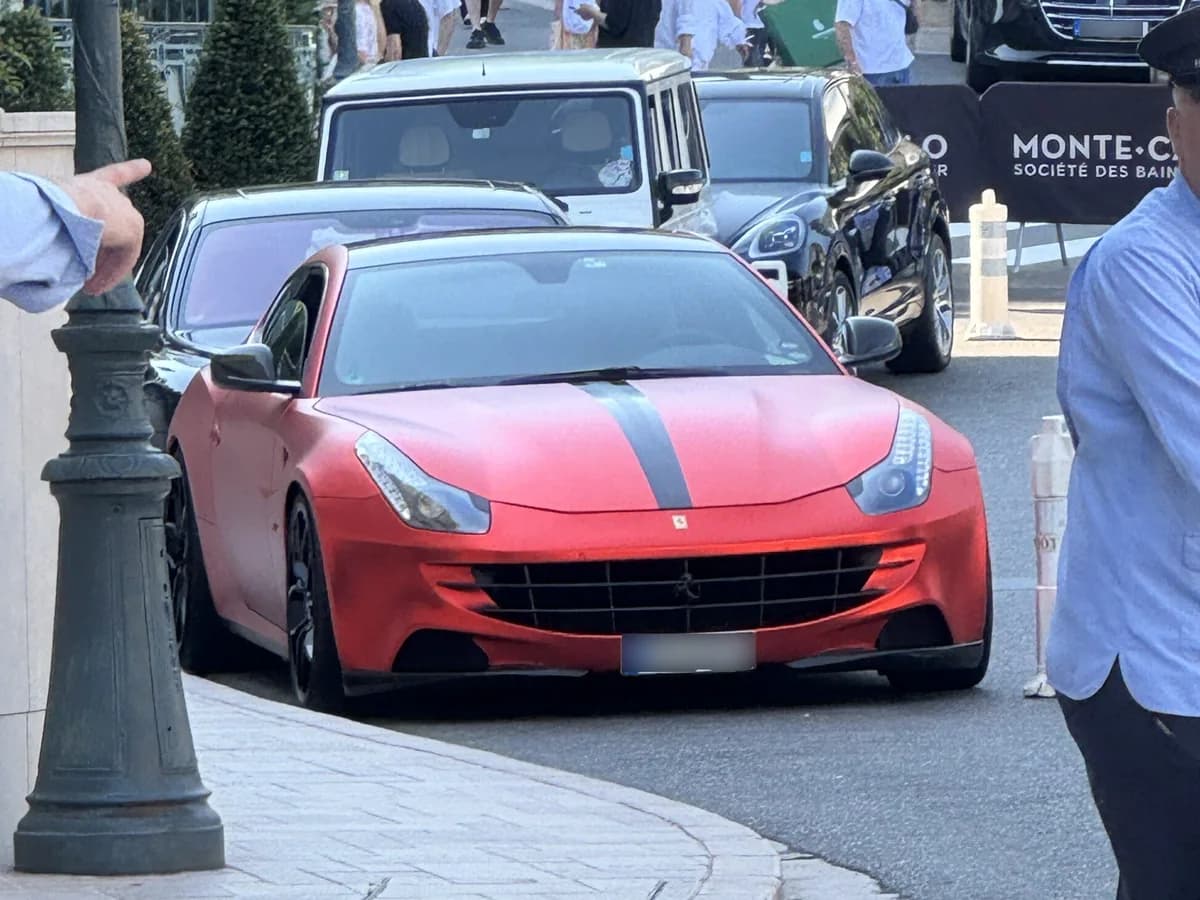
Introduced in 2011, the Ferrari FF is a four-seat grand tourer powered by a naturally aspirated 6,262 cc V12 and equipped with Ferrari’s 4RM all-wheel-drive system. Its name stands for “Ferrari Four,” referring to its four seats and four driven wheels. Styled by Pininfarina, it uses a hatchback coupé body shape that was unusual for Ferrari at the time. The FF produces 660 hp at 8,000 rpm, reaches a claimed 208 mph, and accelerates from 0 to 62 mph in 3.7 seconds according to Ferrari’s official specifications. It combines the performance expected from a Ferrari V12 with the ability to carry four occupants and useful luggage.
Curious about this car?
Explore FF, then try your own photo.
No account needed for the result · Publish only if you choose
The Ferrari FF was revealed at the beginning of 2011 and made its public debut at the Geneva Motor Show in March of that year. It followed the 612 Scaglietti as Ferrari’s four-seat grand tourer, but introduced a far more unconventional concept. Its long-roof profile, designed by Pininfarina, creates greater luggage access and everyday usability while retaining the proportions of a high-performance GT. Ferrari described it as the company’s first production four-wheel-drive model.
The central technical innovation is the 4RM system. Instead of using a conventional and relatively heavy all-wheel-drive layout, the FF retains a front-mid-mounted engine and a rear dual-clutch transaxle. A compact Power Transfer Unit takes a portion of the engine’s torque and sends it to the front wheels when additional traction is required. Its operation is coordinated with the car’s electronic systems, including F1-Trac and the electronic differential. The arrangement was intended to preserve a rear-biased weight distribution and the character of a front-engined Ferrari while improving grip on low-traction surfaces.
Photos added by the community for this page.
Source: Ferrari
The FF name summarizes the car’s concept: “Ferrari Four” refers both to its four seats and its four driven wheels. Ferrari had previously explored all-wheel drive with the 408/4RM prototypes in the late 1980s, but the FF became the first production Ferrari to apply the technology. Its 4RM system was designed to intervene mainly when the rear tires needed additional traction, rather than operating like a conventional permanent all-wheel-drive layout.
The Ferrari FF was sold as a single-generation model from 2011 to 2016, before the arrival of the GTC4Lusso. Ferrari positioned it as a production grand tourer able to carry four occupants and their luggage, rather than as a limited series or a road-legal competition derivative. The selected sources clearly document the model’s production period and purpose, but they do not provide a sufficiently documented official production total to state a definitive number.
Early specialist road tests focused on the contrast between the FF’s V12 performance and its unusually usable grand-tourer character. Top Gear praised its composure on wet and snow-covered roads, along with the speed of the dual-clutch gearbox and the accuracy of its handling. Car and Driver examined the unusual two-transmission 4RM system and highlighted the strength of the engine. Reviews also recognized the practical advantage of seating for four and a hatchback-accessed luggage area, while noting the car’s considerable size and high price.
Supports the body concept, engine, 660 CV output, performance figures, seven-speed dual-clutch transmission, and 4RM system.
Supports the 2011 model context, 6,262 cc V12, 660 hp output, and 335 km/h top speed.
Supports the development history of Ferrari 4RM, the lightweight architecture, the dual-clutch V12 layout, and the relationship with the 408/4RM prototypes.
Supports the Geneva 2011 presentation context, the Ferrari Four name, the four-seat concept, the Pininfarina design, and the operating principle of the 4RM system.
Supports contemporary press impressions concerning wet- and snow-road traction, acceleration response, handling, comfort, rear seating, and luggage usability.
Supports the technical explanation of the front Power Transfer Unit, separate transmission elements, and torque distribution strategy.
Supports the 2011–2016 model period, four-adult touring concept, and the FF’s place as a practical Ferrari grand tourer.
Source found by OpenAI web search for this vehicle page.