
FF
Introduced in 2011, the Ferrari FF combined a naturally aspirated 6.3-liter V12, four seats, and Ferrari’s 4RM all-wheel-drive system in a shooting-brake body. The name stood for “Ferrari Four,” referring to both its seating capacity and driven wheels. With 660 hp, a seven-speed dual-clutch transmission, and a claimed top speed of 335 km/h, the FF occupied an unusual position in Ferrari’s range. It replaced the 612 Scaglietti but moved away from the conventional grand-tourer profile, using a long-roof body with a rear hatch and flexible luggage space. Its specially developed 4RM system allowed Ferrari to retain a front-mid-engine layout while adding traction on low-grip surfaces. Production ran from 2011 to 2016, after which the closely related GTC4Lusso became Ferrari’s four-seat, four-wheel-drive V12 grand tourer.
What about the car you photographed?
Upload a photo to get a suggested make, model and likely year.
No account needed for the result · Publish only if you choose
Variants by year
Make: Ferrari · Model: FF
1 / 1 versions shown
2011
Ferrari FF photos
Model summary
Data from the ScanRacer library, organized to compare versions quickly.
Model introduction
Introduced in 2011, the Ferrari FF combined a naturally aspirated 6.3-liter V12, four seats, and Ferrari’s 4RM all-wheel-drive system in a shooting-brake body. The name stood for “Ferrari Four,” referring to both its seating capacity and driven wheels. With 660 hp, a seven-speed dual-clutch transmission, and a claimed top speed of 335 km/h, the FF occupied an unusual position in Ferrari’s range. It replaced the 612 Scaglietti but moved away from the conventional grand-tourer profile, using a long-roof body with a rear hatch and flexible luggage space. Its specially developed 4RM system allowed Ferrari to retain a front-mid-engine layout while adding traction on low-grip surfaces. Production ran from 2011 to 2016, after which the closely related GTC4Lusso became Ferrari’s four-seat, four-wheel-drive V12 grand tourer.
History
The Ferrari FF was unveiled at the Geneva Motor Show in March 2011 as Maranello’s new flagship grand tourer. It succeeded the 612 Scaglietti, but its brief was substantially different: Ferrari wanted V12 performance combined with the ability to carry four occupants and their luggage. The three-door shooting-brake body departed from the brand’s more familiar 2+2 coupe shape. Pininfarina was responsible for the exterior design, while the 4RM drivetrain became the model’s defining engineering feature. The FF was also the first production Ferrari with all-wheel drive. Instead of using a conventional, heavy central differential, Ferrari fitted a compact power-transfer unit ahead of the engine. This PTU could drive the front wheels when extra traction was required, while the main transmission continued to send power to the rear wheels through a seven-speed dual-clutch gearbox. The arrangement was intended to preserve the character of a rear-driven GT while improving grip on wet, snowy, or otherwise low-traction roads. The model remained in production until 2016. It was followed by the GTC4Lusso, which developed the same broad formula with more power, revised styling, and an evolved four-wheel-drive system on its V12 version.
Generations
The Ferrari FF represents a single model generation. Ferrari did not divide the name into separate generations, and available manufacturer material does not indicate a major mid-cycle change that altered the car’s fundamental body, engine, or drivetrain identity. The series therefore retained the same basic formula throughout its career: a four-seat, three-door V12 GT with a rear hatch and Ferrari’s 4RM all-wheel-drive system. Launch specifications provide the clearest reference point for identifying the model: a 6,262cc 65-degree V12, 660 hp at 8,000 rpm, 683 Nm of torque, a seven-speed dual-clutch transmission, and a claimed top speed of 335 km/h. Ferrari also listed 450 liters of luggage capacity, with additional space available when the rear seatbacks were folded. Exact figures can vary by market, equipment, and testing method, so they should not be treated as evidence of a separate generation. The important change came in 2016 with the GTC4Lusso. That car was the FF’s successor rather than a renamed FF variant. Historically, the FF is best understood as one production series from the early 2010s, without an official generational split comparable to some other Ferrari model lines.
Key differences
The FF differs from the 612 Scaglietti first through its shape and intended use. The 612 was a conventional 2+2 coupe with a separate trunk, while the FF used a shooting-brake body with a rear hatch and more accessible luggage space. Its drivetrain was also fundamentally different: the FF became Ferrari’s first production all-wheel-drive car, using the 4RM system and a compact PTU, whereas the 612 was rear-wheel drive. Compared with the GTC4Lusso introduced in 2016, the FF has more angular styling and an earlier-generation cabin. The GTC4Lusso retained the concept of a four-seat Ferrari with a rear hatch, but added revised bodywork, more power in its V12 form, and an evolved 4RM system combined with rear-wheel steering. An FF with factory personalization should not be confused with a GTC4Lusso. The two cars share a broad grand-touring philosophy, but they are separate model designations and production series.
Photo recognition
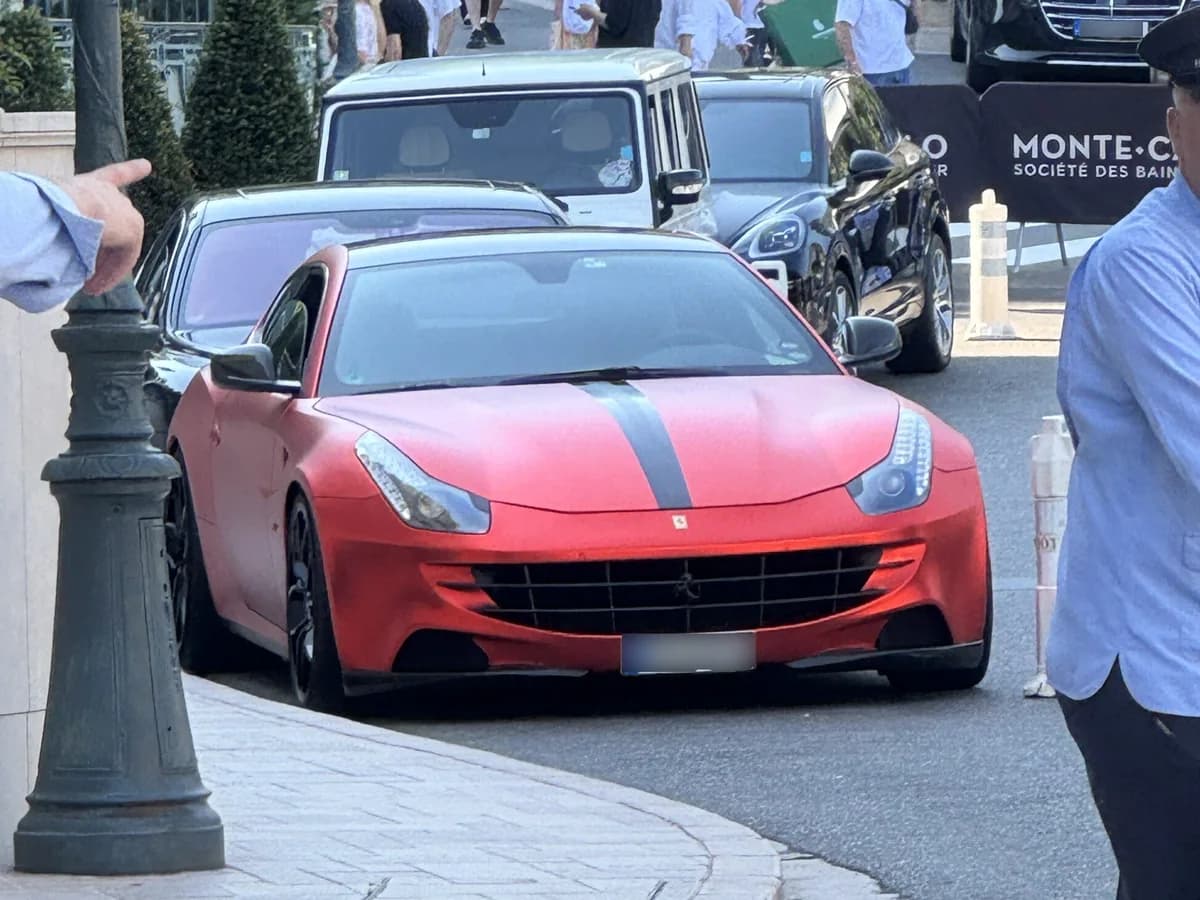
The Ferrari FF is identifiable by its long three-door body and extended rear section, which is closer to a shooting brake than to a conventional coupe. The roofline tapers gradually toward a hatchback-style tail, while the rear quarters create a broad, muscular stance. At the front, the car has a low, wide grille, narrow headlamps, and a long hood that reflects the presence of a front-mid-mounted V12. In side view, the long wheelbase, two side doors, and uninterrupted roofline are useful identification clues. The cabin contains four individual seats, and the rear hatch helps distinguish the FF from the 612 Scaglietti. Large-diameter wheels, carbon-ceramic brakes, and four exhaust outlets are common, but equipment can vary with specification and should not be used alone to authenticate a car. To separate an FF from the later GTC4Lusso, focus on the rear light treatment, tail design, and side surfaces. The FF generally appears taller and more restrained in its body volumes, while the GTC4Lusso has a more developed and streamlined rear design.
Important versions
The FF was built around one core mechanical formula: a naturally aspirated 6.3-liter V12, four seats, a seven-speed dual-clutch transmission, and Ferrari’s 4RM all-wheel-drive system. Ferrari’s documentation emphasizes equipment and personalization possibilities rather than a broad range of separate body styles or engines. Differences between individual cars therefore mainly concern specification, trim, wheels, colors, comfort equipment, and infotainment options. Each car should be verified through its vehicle identification number, Ferrari documentation, and original equipment record. The GTC4Lusso, launched in 2016, is not an FF version but the model’s successor.
References
- Ferrari FF (2011) - official model pageFerrari
- Ferrari FF: Ferrari HistoryFerrari
- Used Ferrari FF 2011-2016 reviewAutocar
- https://www.hagerty.com/valuation-tools/Ferrari/FF/2011/2011-Ferrari-FFhagerty.com
- https://www.autocar.co.uk/car-review/ferrari/ffautocar.co.uk
- https://www.mag.autocar.co.uk/car-review/ferrari/ff-2011-2016mag.autocar.co.uk
- https://www.topgear.com/car-reviews/ferrari/ff-coupe-2011/2dr-auto/first-drivetopgear.com
Technical specifications
Structured data available for versions linked to this model.
| Version | Power | Torque | Top speed | Drivetrain | Fuel |
|---|---|---|---|---|---|
| — | 660 CV (486 kW) at 8,000 rpm | — | — | Ferrari 4RM all-wheel drive with Power Transfer Unit, F1-Trac, and electronic differential / Seven-speed dual-clutch F1 gearbox | — |
Frequently asked questions
- What years was the Ferrari FF produced?
- ScanRacer's referenced versions cover 2011.
- How many Ferrari FF examples are documented on ScanRacer?
- 13 published scans from 8 members, with the latest photo added in October 2026.
- What is the power output of the Ferrari FF?
- The sourced technical data lists 660 CV (486 kW) at 8,000 rpm.
What about the car you photographed?
Upload a photo to get a suggested make, model and likely year.
No account needed for the result · Publish only if you choose