
Daytona SP3
Unveiled in November 2021, the Ferrari Daytona SP3 is a mid-rear-engined two-seat berlinetta developed as part of Ferrari’s Icona series. Its name refers to Ferrari’s 1-2-3 finish at the 1967 24 Hours of Daytona, while its bodywork draws inspiration from the marque’s sports-prototype racers, including the 330 P3/4, 330 P4, 412 P and 512 S. Beneath its highly sculpted exterior is a naturally aspirated 6.5-liter V12 rated at 840 hp in Ferrari’s technical information. Production is limited to 599 cars. In the model structure considered here, the Daytona SP3 is represented for the 2022 model year by a single variant identified as Base.
What about the car you photographed?
Upload a photo to get a suggested make, model and likely year.
No account needed for the result · Publish only if you choose
Variants by year
Make: Ferrari · Model: Daytona SP3
1 / 1 versions shown
2022
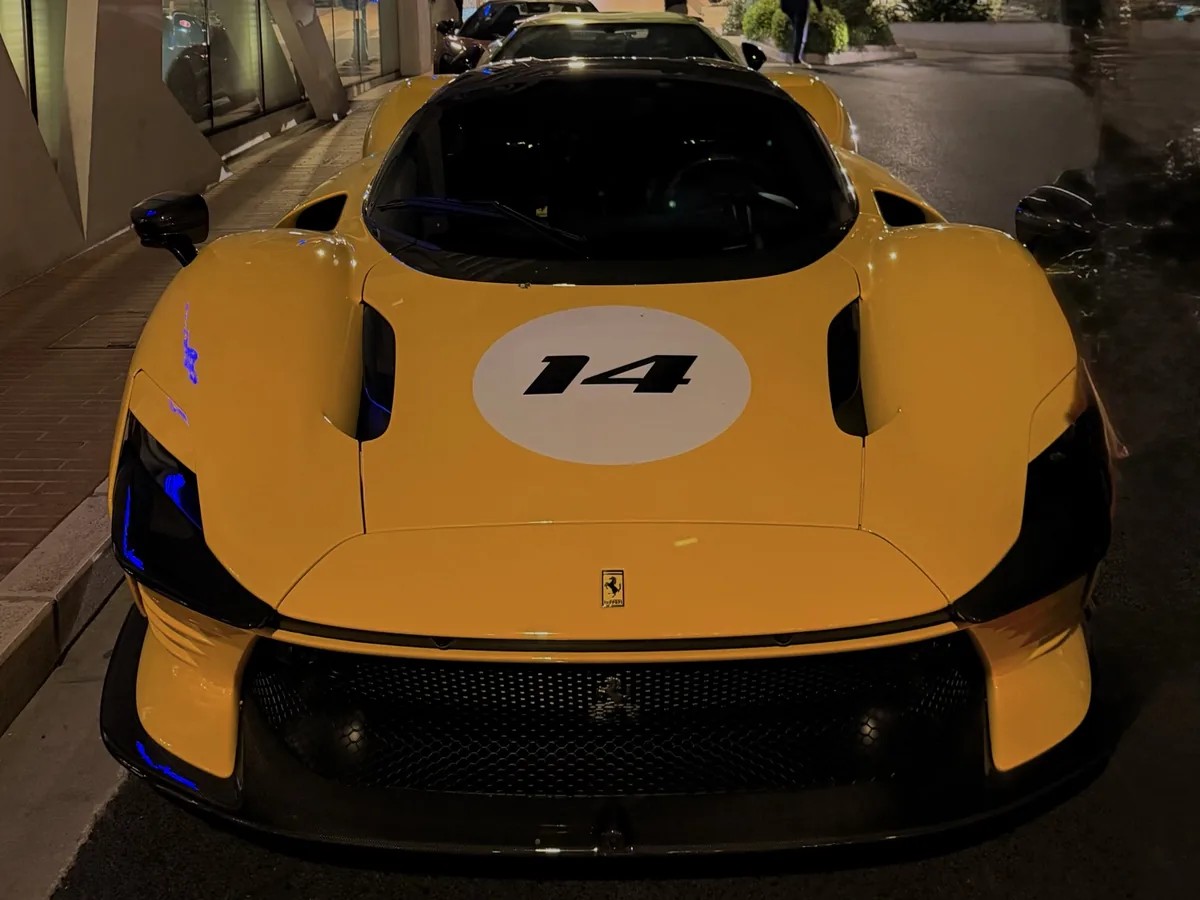
Ferrari Daytona SP3 photos
Model summary
Data from the ScanRacer library, organized to compare versions quickly.
Model introduction
Unveiled in November 2021, the Ferrari Daytona SP3 is a mid-rear-engined two-seat berlinetta developed as part of Ferrari’s Icona series. Its name refers to Ferrari’s 1-2-3 finish at the 1967 24 Hours of Daytona, while its bodywork draws inspiration from the marque’s sports-prototype racers, including the 330 P3/4, 330 P4, 412 P and 512 S. Beneath its highly sculpted exterior is a naturally aspirated 6.5-liter V12 rated at 840 hp in Ferrari’s technical information. Production is limited to 599 cars. In the model structure considered here, the Daytona SP3 is represented for the 2022 model year by a single variant identified as Base.
History
The Daytona SP3 was revealed on November 20, 2021, as the third creation in Ferrari’s Icona family, following the Monza SP1 and SP2. The series revisits important periods in Ferrari’s competition history through modern design and engineering rather than reproducing individual racing cars literally. For the SP3, the central reference is Ferrari’s 1967 Daytona result, when three Ferrari sports prototypes finished first, second and third. That result became one of the defining images of the marque’s endurance-racing heritage. Designed by Ferrari’s Design Centre, the SP3 uses rounded front fenders, broad rear haunches and a rear deck marked by horizontal slats. These elements recall Ferrari sports prototypes from the 1960s and 1970s while serving the requirements of a contemporary road car. Its naturally aspirated 6.5-liter V12 is related to the engine used in the 812 Competizione and receives model-specific calibration, with a stated 9,500-rpm redline. Ferrari quotes 840 hp, a 0–100 km/h time of 2.85 seconds and 0–200 km/h in 7.4 seconds. Production is restricted to 599 examples.
Generations
The Ferrari Daytona SP3 is not an extended model family with several clearly separated generations. It is a single limited-production series developed as an Icona automobile. References to earlier Ferrari prototypes describe its design and historical inspiration, not previous generations of the Daytona SP3. Its timeline begins with the official unveiling in November 2021, followed by the 2022 model year represented in the ScanRacer structure. For that model year, one designation is identified: Base, covering 2022–2022. This label should be treated as a catalog classification rather than evidence of a technically simplified specification. The sources reviewed do not establish separate production versions with different engines, body styles or performance levels. Individual customer specifications, including personalization through Ferrari’s Tailor Made program, should not automatically be counted as generations or distinct mechanical variants. The Daytona SP3 is therefore best understood as a consistent model series defined by its mid-rear-engine layout, naturally aspirated V12 and tightly limited production run.
Key differences
The Daytona SP3 differs from the Monza SP1 and SP2 through its more enclosed and road-usable body: it has a windshield, a removable hardtop and a conventional two-seat cockpit. The Monza models take a much more open barchetta approach and do not use a traditional windshield. Compared with the 812 Competizione, whose naturally aspirated V12 provides the engine family reference, the SP3 uses a mid-rear-engine layout and a dedicated carbon-fiber body. It should also not be confused with the LaFerrari Aperta. Some structural relationships exist, but the Daytona SP3 has its own styling, calibration and a powertrain described in Ferrari’s technical material without hybrid assistance. No additional series-production distinction is established for the Base designation in the 2022 model year.
Photo recognition
The Daytona SP3 is first identified by its very low proportions, mid-mounted cockpit and broad rear haunches. At the front, the body surfaces are rounded and flowing rather than dominated by sharp creases. In profile, the car has a wraparound windshield and a removable hardtop, two features that immediately separate it from the Monza SP1 and SP2. The rear view provides the strongest visual clue. Several horizontal slats run across the rear deck, recalling the ventilation themes of Ferrari’s historic sports prototypes. The body also has a relatively clean appearance, with little emphasis on visibly attached aerodynamic devices. The V12 sits behind the passenger compartment, creating the forward-set cabin and substantial rear bodywork. Reliable identification should use several details together. Paint colors, wheels and customer personalization can differ, and other modern Ferraris may share isolated design elements. The combination of the wraparound windshield, removable roof, horizontal rear slats and prototype-inspired body is the most dependable visual signature.
Important versions
Production of the Ferrari Daytona SP3 is limited to 599 examples, making it considerably more exclusive than a regular-series Ferrari. The sources reviewed do not describe multiple production power levels or body styles. In the catalog structure considered here, the only listed entry is the Base variant associated with the 2022 model year. Individual cars can still differ substantially in paint, trim materials, seats, wheels and personalization choices. These customer specifications are configuration details and should not automatically be treated as separate mechanical versions. Ferrari’s Tailor Made program can create visually distinctive examples while leaving the fundamental identity of the Daytona SP3 unchanged.
References
- Ferrari Daytona SP3 – Technical SpecificationsFerrari
- The Ferrari Daytona SP3 Awarded Grand Prize: Most Beautiful Supercar 2022Ferrari
- Ferrari Daytona SP3 Wins Red Dot: Best of the Best 2022Ferrari Magazine
- 2024 Ferrari Daytona SP3 Review, Pricing, and SpecsCar and Driver
- Ferrari Daytona SP3 ReviewAutocar
- https://www.roadandtrack.com/reviews/a41505122/2023-ferrari-daytona-sp3/roadandtrack.com
- https://www.motortrend.com/cars/ferrari/daytona-sp3motortrend.com
Technical specifications
Structured data available for versions linked to this model.
| Version | Power | Torque | Top speed | Drivetrain | Fuel |
|---|---|---|---|---|---|
| — | 618 kW (840 cv) at 9,250 rpm | — | — | Rear-wheel drive / Seven-speed F1 dual-clutch gearbox | — |
Frequently asked questions
- What years was the Ferrari Daytona SP3 produced?
- ScanRacer's referenced versions cover 2022.
- How many Ferrari Daytona SP3 examples are documented on ScanRacer?
- 15 published scans from 12 members, with the latest photo added in October 2026.
- What is the power output of the Ferrari Daytona SP3?
- The sourced technical data lists 618 kW (840 cv) at 9,250 rpm.
What about the car you photographed?
Upload a photo to get a suggested make, model and likely year.
No account needed for the result · Publish only if you choose