Power
530 kW (720 cv) at 8,000 rpm
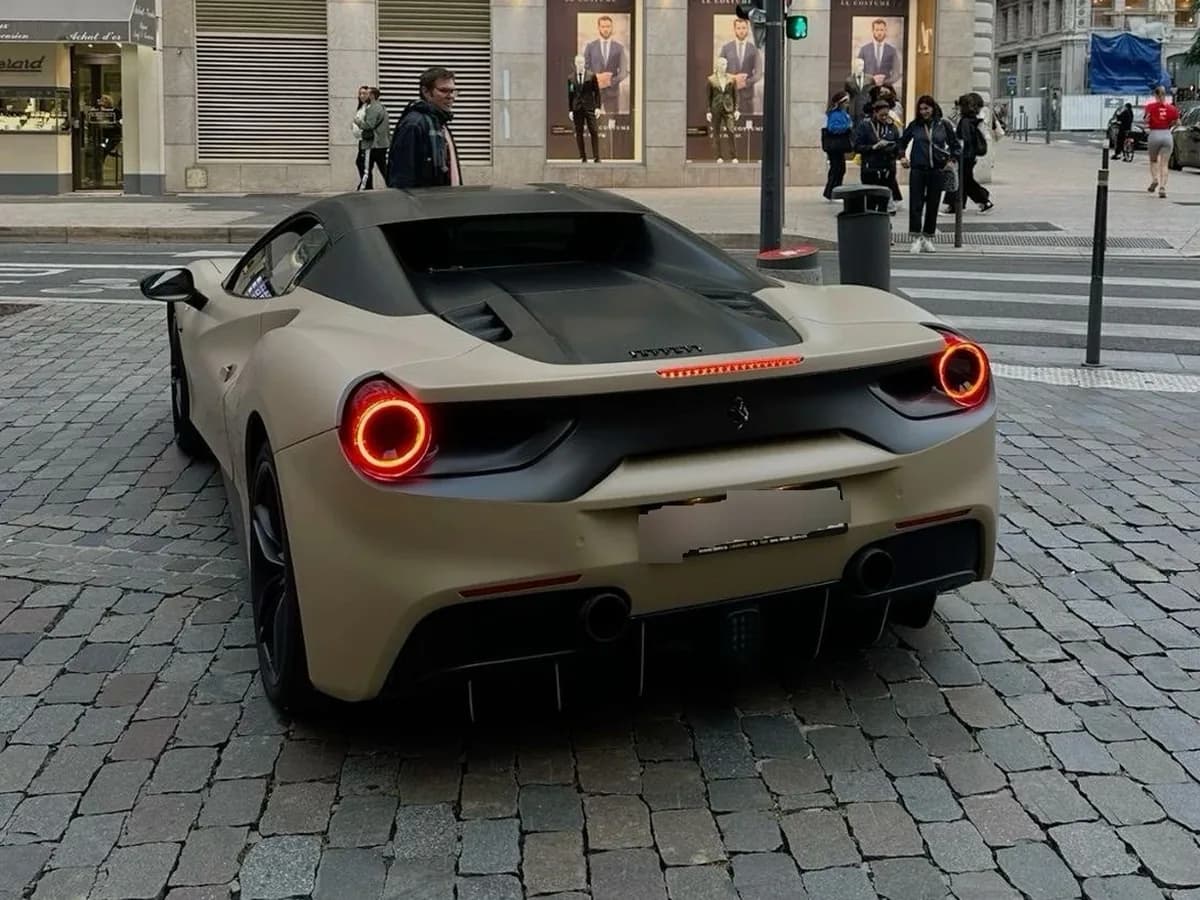
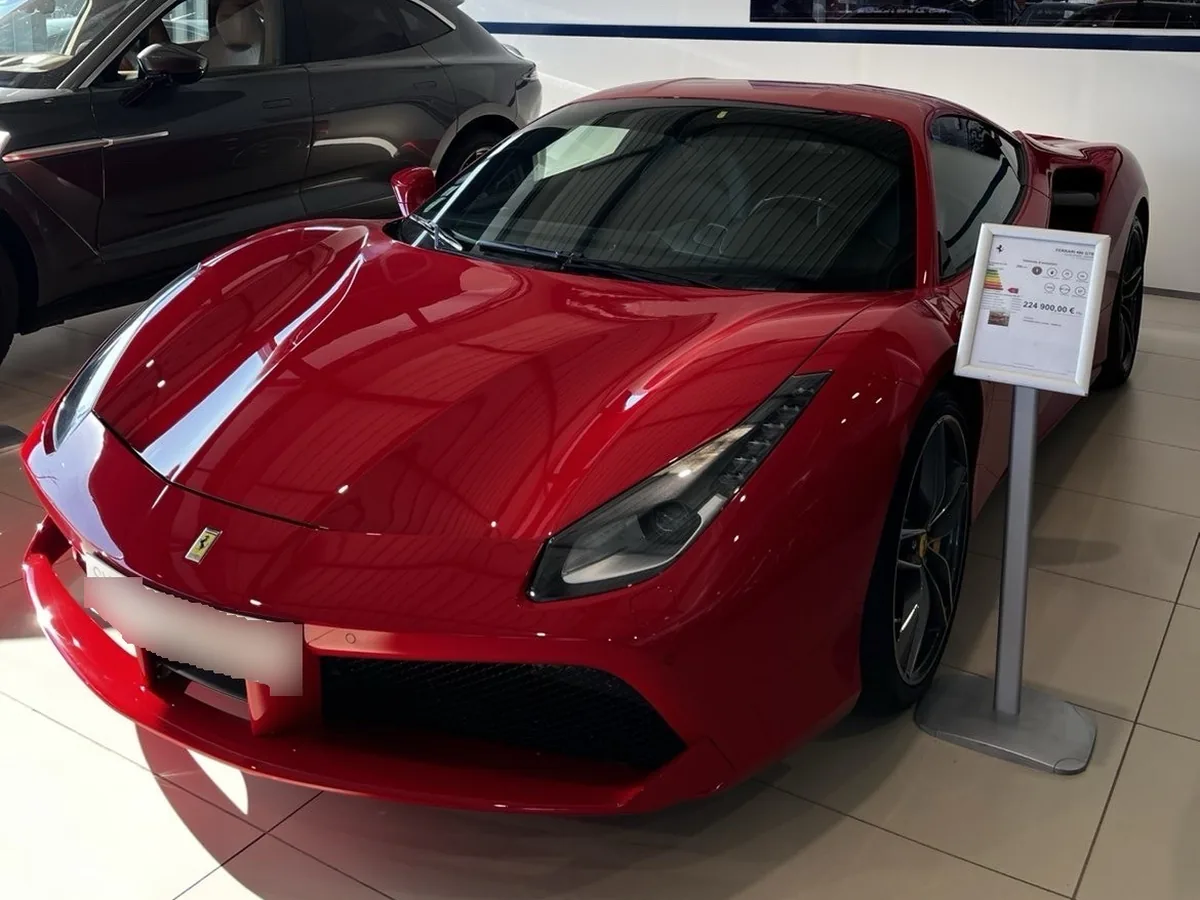
Introduced in 2015, the Ferrari 488 GTB is a two-seat berlinetta with a mid-rear-mounted twin-turbocharged V8. Its name combines the 488cc displacement of each cylinder with GTB, meaning “Gran Turismo Berlinetta.” It replaced the 458 Italia and brought turbocharging back to Ferrari’s main V8 berlinetta after several naturally aspirated generations. The 3,902cc engine produces 670 hp at 8,000 rpm, while power is delivered through a seven-speed dual-clutch gearbox. Ferrari quoted a 330 km/h top speed and a 0–100 km/h time of 3.0 seconds. Beyond the headline figures, the 488 GTB represented a major technical shift: it pursued turbocharged performance while retaining the responsive, usable character expected from a mid-engined Ferrari road car.
Curious about this car?
Explore 488, then try your own photo.
No account needed for the result · Publish only if you choose
Ferrari unveiled the 488 GTB on February 18, 2015, during a private presentation at Maranello ahead of its public debut at the Geneva Motor Show. It succeeded the 458 Italia, but the change involved far more than a new engine. Ferrari introduced a 3,902cc twin-turbocharged V8, a significant move for a mid-engined berlinetta traditionally associated with high-revving naturally aspirated power. The company also focused on throttle response, torque delivery and aerodynamic efficiency, seeking to preserve the immediate feel expected of a Ferrari despite the adoption of turbocharging. The 488 GTB therefore opened a new chapter for Ferrari’s central V8 road cars. The range expanded during 2015 with the 488 Spider, followed by the 488 GT3 and 488 GTE racing cars. These derivatives demonstrated that the 488 was developed as a broad technical platform, capable of supporting both road-going performance and international competition programs.
Photos added by the community for this page.
Source: Ferrari
The GTB suffix is more than an internal designation: Ferrari explains it as “Gran Turismo Berlinetta,” linking the car to the company’s long tradition of grand touring berlinettas. The number 488 refers to the displacement of a single cylinder, not the engine’s total capacity. In 2015, Ferrari also introduced the 488 GT3 and 488 GTE racing cars, making that year the starting point for a family that would operate both on public roads and on international circuits.
Ferrari does not disclose, in the sources consulted, an official production total that separates the 488 GTB from the other members of the 488 family. Ferrari’s 2015 financial results do confirm that the 488 GTB was one of the company’s newly launched models and contributed to growth in V8 sales. The car formed part of a range produced over several years, including the GTB coupe, Spider, racing derivatives and later special-series models. For that reason, an exact production figure should not be assigned to the 2015 berlinetta without a manufacturer statement or a well-documented industrial record. Family-wide estimates found elsewhere do not provide a reliable model-specific total for the 488 GTB.
The 488 GTB received broadly favorable reviews from established automotive publications. Motor Sport Magazine emphasized the scale of its advance over the 458 Italia while noting that the car remained closely connected to Ferrari’s established mid-engined road-car formula. Road tests commonly praised the V8’s power, the limited perceived turbo lag and the chassis’s ability to combine speed with composure. Top Gear named the 488 GTB its Supercar of the Year in its 2016 awards. The engine also won the overall International Engine of the Year title in 2016, a prize awarded to the twin-turbocharged V8 used by the 488 GTB and 488 Spider. Some reviewers did point out a trade-off: compared with the naturally aspirated 458, the turbocharged car delivered more performance but a less distinctive engine note.
The main 2015 road version is the 488 GTB, a closed two-seat berlinetta. Ferrari also launched the 488 Spider in 2015, using the same 3,902cc twin-turbocharged V8 and quoted 670 hp while adding an open-air body. The company then developed the 488 GT3 and 488 GTE racing cars, introduced at the end of 2015 for GT and endurance competition. In 2018, the 488 Pista became the family’s most track-focused road model, followed by the 488 Pista Spider. These cars share the 488 name and a common technical lineage, but they serve different purposes. The GTB emphasizes all-round road performance, the Spider adds open-top driving, the racing versions meet competition regulations, and the Pista derivatives transfer more circuit-developed technology to road use.
Official technical specifications, naming, performance figures, engine and transmission details.
Model year, engine type, displacement, power and top speed.
February 2015 unveiling, relationship with the 458, family variants and racing derivatives.
2015 commercial context, 488 GTB launch and description of the 488 Spider as a two-seat coupe with a mid-rear V8.
Contemporary technical context, evolution from the 458 Italia and discussion of the turbocharged V8.
2016 Supercar of the Year award.
Award history for the 3,902cc V8 family used by the 488 GTB and related models.
Evolution toward the 488 Pista and its use of racing-derived technology.