Ferrari 308 GTB 1975
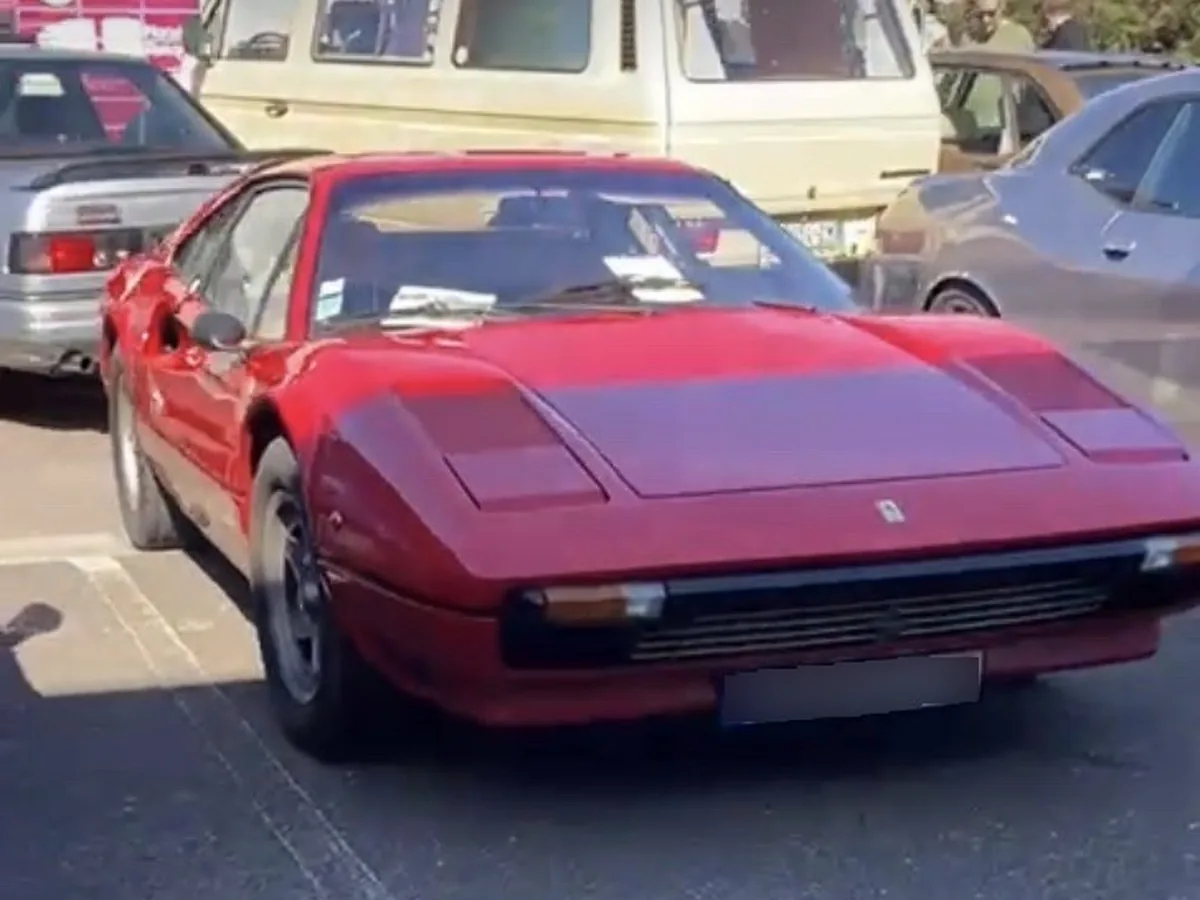
Introduced at the 1975 Paris Motor Show, the Ferrari 308 GTB launched a new generation of mid-engined V8 berlinettas carrying the Ferrari badge. Designed by Leonardo Fioravanti at Pininfarina, it combined a compact profile, a low nose and carefully placed air intakes with styling cues inherited from the Dino 246 GT and the larger 365 GT4 BB. Its 2.9-liter V8 was mounted transversely behind the cabin. The earliest cars were notable for their fiberglass bodywork, an unusual and lightweight solution that represented a first for a Ferrari road car. The 1975 308 GTB therefore occupies a significant place in Ferrari history as the starting point of a ten-year V8 sports-car line.
Curious about this car?
Explore 308, then try your own photo.
No account needed for the result · Publish only if you choose
History
The 308 GTB arrived as Ferrari looked for a compact sports car positioned below the 365 GT4 BB and ready to replace the Dino 246 GT. It shared its basic mid-engined V8 concept with the Dino 308 GT4, introduced two years earlier, but used a very different two-seat berlinetta body designed by Pininfarina rather than Bertone’s 2+2 shape. Leonardo Fioravanti’s design blended the proportions of the Dino 246 GT with visual references to the P6 Berlinetta Speciale concept and the 365 Boxer. In 1975, the 308 GTB became the first road-going Ferrari with a mid-mounted V8 and Ferrari badging. Its four-cam V8 produced up to 255 hp depending on market specification. Early cars also used fiberglass bodywork, helping to distinguish them from later steel-bodied examples. The broader 308 family remained in production until 1985 and developed through fuel-injected and four-valve versions.
Latest scans
Photos added by the community for this page.
Anecdotes
The 308 GTB was unveiled in the same year that Niki Lauda won the Formula 1 World Championship for Ferrari. The model also became connected with Ferrari’s competition ambitions: its platform and styling provided the starting point for the 308 GTB Group 4 project and, later, for the 288 GTO developed in the context of Group B regulations.
Production
The 308 GTB entered Ferrari’s range in 1975 and formed part of a model family that remained in production until 1985. The earliest examples used fiberglass bodywork, which was progressively replaced by steel panels early in the car’s career. Ferrari expanded the range with the removable-roof GTS in 1977, followed by fuel-injected cars and the later Quattrovalvole versions. Published production figures for the specific 1975 GTB vary according to how early fiberglass cars, markets and production periods are counted. A single number should therefore be treated cautiously unless the source clearly defines the exact body style and production series.
Press reception
The 308 GTB received a strong response from automotive journalists when it appeared. Motor Trend praised its taut, purposeful character and treated it as a genuine performance car rather than a lesser Ferrari. Hemmings likewise highlighted the immediate appeal of its Pininfarina proportions and described the model as a major success for the company. The significance of that reception extended beyond styling: the 308 helped establish the mid-engined V8 berlinetta as a central part of Ferrari’s road-car identity, alongside rather than beneath the marque’s traditional twelve-cylinder models.
Evolution
Variants
References
- 308 GTB — Ferrari HistoryFerrari
Supports the 1975 model identity, 2,926.90 cc transverse V8, 255 hp at 7,700 rpm and 252 km/h top speed.
- 50 years of the Ferrari 308 GTBFerrari Magazine
Supports the 1975 Paris debut, Pininfarina design, fiberglass launch bodywork, relationship with the Dino 246 GT and the later 288 GTO connection.
- Bloodlines: Mid-engined V8s – Part 1Ferrari Magazine
Supports the 308 GTB’s role as Ferrari’s first Ferrari-badged mid-engined V8 road car and the market-dependent power range.
- 1975-'85 Ferrari 308 GTB/GTSHemmings
Supports the Pininfarina styling, GTB and GTS body distinction, five-speed transmission, rear-wheel-drive layout and favorable contemporary reputation.
- 1975-1989 Ferrari 308/328 GTB/GTS — Classic Buyers GuideMotor Trend
Supports the fiberglass body, five-speed gated manual transmission, carbureted 2.9-liter V8, later steel bodywork, GTS introduction and press reception.
- Ferrari 308 GTB — Shikoku Automobile MuseumShikoku Automobile Museum
Provides museum documentation on an early 1975 fiberglass-bodied car and illustrates the uncertainty around production counts for the earliest series.
- https://en.wikipedia.org/wiki/Ferrari_308_GTB/GTSen.wikipedia.org
Source found by OpenAI web search for this vehicle page.
- https://fastautoexit.com/research/ferrari-308-gtb-gts/fastautoexit.com
Source found by OpenAI web search for this vehicle page.