
7
Launched in 2017, the DS 7 was the first SUV developed as a model specifically designed for DS Automobiles. Revealed at the Geneva Motor Show as the DS 7 Crossback, it introduced a 4.57-metre premium SUV with a highly detailed cabin and technology that was unusual in its class, including swivelling DS Active LED Vision headlamps, night vision and DS Active Scan Suspension. In 2022, the vehicle received a substantial update and adopted the shorter DS 7 name. The revised version is identified by DS Pixel LED Vision 3.0 headlamps, the DS Light Veil daytime-running-light signature and an expanded E-TENSE plug-in hybrid range, topped by a 360-horsepower model. In the ScanRacer references, the principal distinction is therefore between the 2017 DS 7 Crossback and the 2022 DS 7.
Variants by year
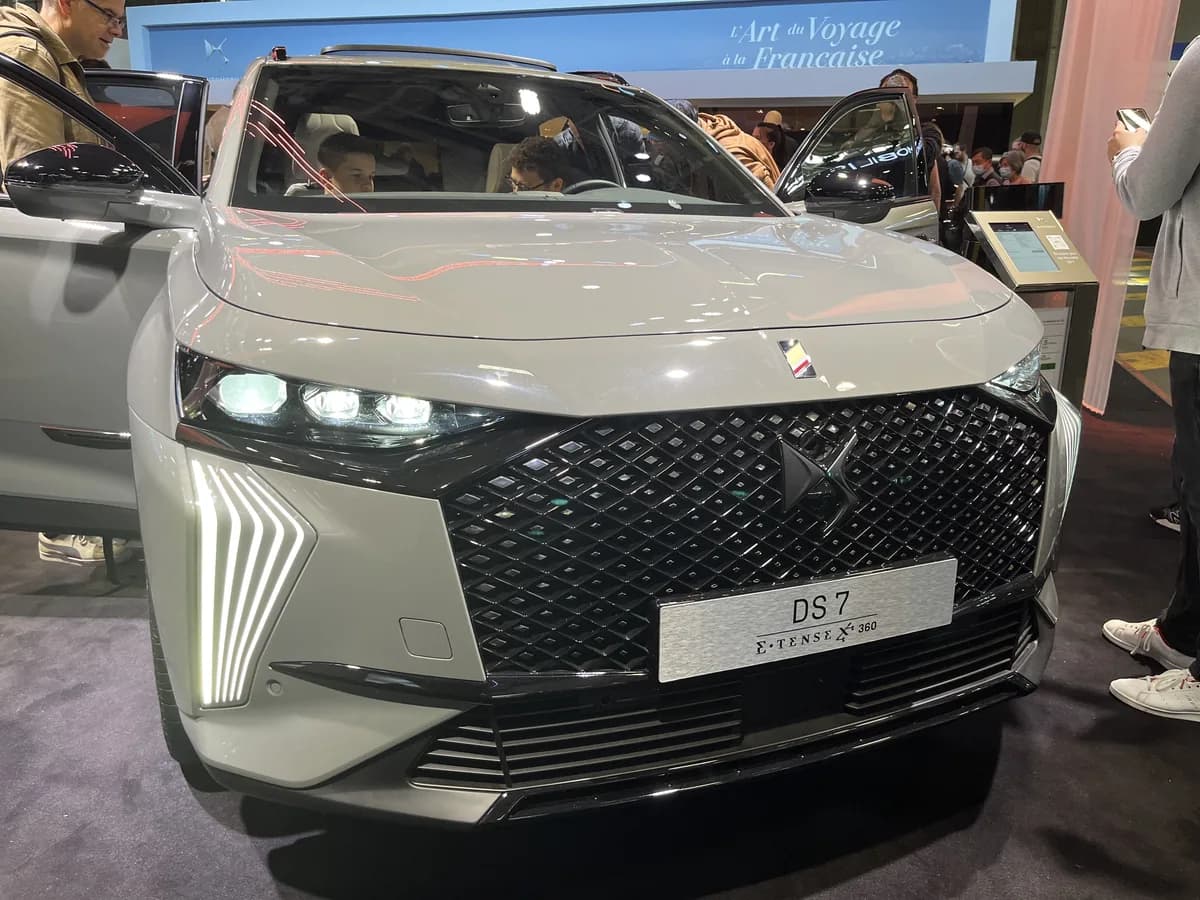
2022
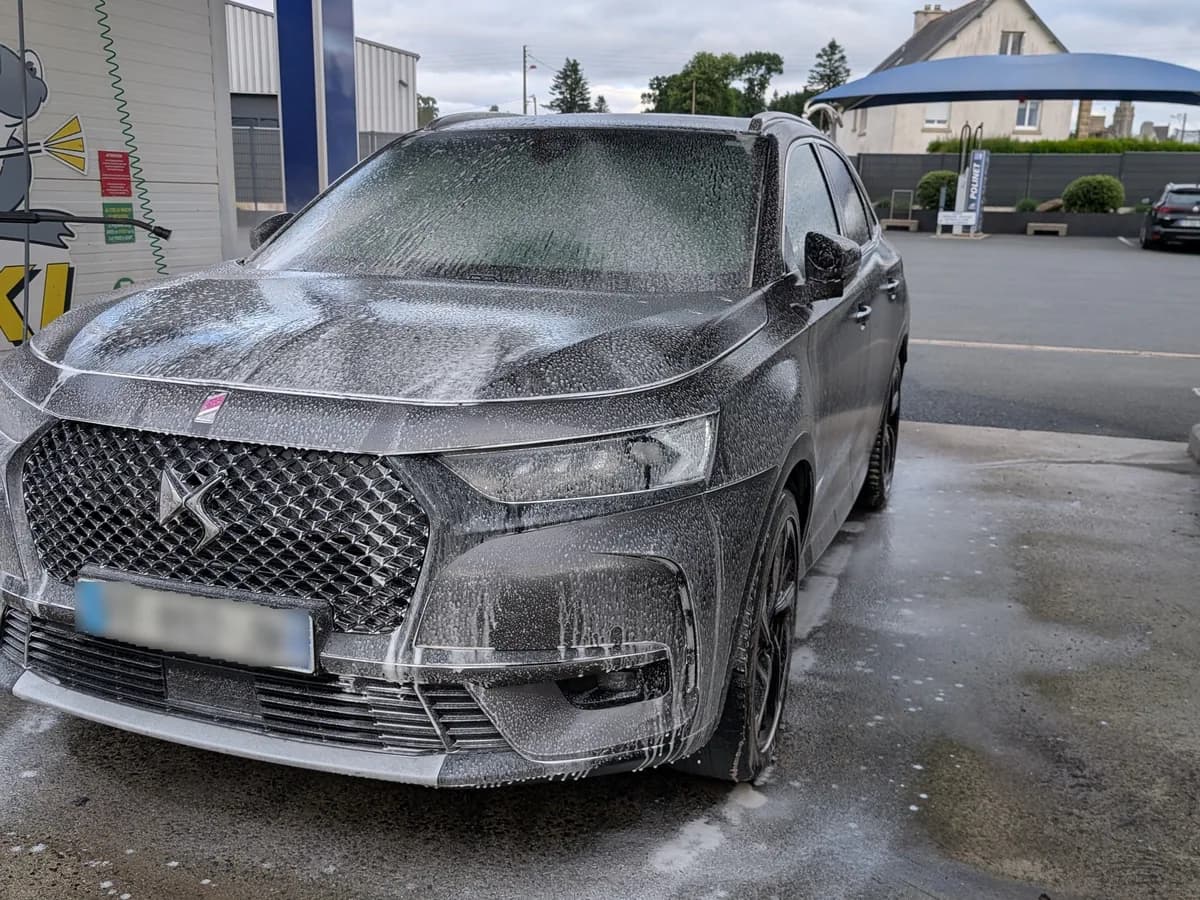
2017
Model summary
Data from the ScanRacer library, organized to compare versions quickly.
Model introduction
Launched in 2017, the DS 7 was the first SUV developed as a model specifically designed for DS Automobiles. Revealed at the Geneva Motor Show as the DS 7 Crossback, it introduced a 4.57-metre premium SUV with a highly detailed cabin and technology that was unusual in its class, including swivelling DS Active LED Vision headlamps, night vision and DS Active Scan Suspension. In 2022, the vehicle received a substantial update and adopted the shorter DS 7 name. The revised version is identified by DS Pixel LED Vision 3.0 headlamps, the DS Light Veil daytime-running-light signature and an expanded E-TENSE plug-in hybrid range, topped by a 360-horsepower model. In the ScanRacer references, the principal distinction is therefore between the 2017 DS 7 Crossback and the 2022 DS 7.
History
DS Automobiles unveiled the DS 7 Crossback in February 2017 before presenting it publicly at the Geneva Motor Show in March. The manufacturer positioned it as the first model of its new generation and as a vehicle intended to establish the brand in the premium market. Its design introduced a distinct identity, including a diamond-effect DS Wings grille, rear lamps inspired by faceted scales and a highly elaborate lighting signature. The DS Active LED Vision headlamps pivot when the vehicle is unlocked and adapt their beam to driving conditions. Inside, the SUV focused on materials, personalisation and digital displays, while equipment such as DS Night Vision, DS Connected Pilot and DS Park Pilot reinforced its technological ambitions. The initial range combined petrol and diesel engines, depending on market, and was later expanded with E-TENSE plug-in hybrid versions. In 2021, the Louvre limited edition demonstrated DS’s approach of linking automotive design with craftsmanship and cultural heritage. The 2022 update is not a separate generation in the strict technical sense; it is a substantial revision of the vehicle introduced in 2017. The Crossback name was dropped, the front end was redesigned and the electrified range expanded with 225-, 300- and 360-horsepower versions.
Generations
The DS 7 is best understood as a single SUV generation divided into two main commercial phases. The first is the DS 7 Crossback, revealed in 2017 and introduced from 2018 in several markets. It is identified by a more ornate grille, DS Active LED Vision headlamps with swivelling modules and vertically arranged daytime-running-light elements. At the rear, the lamps use a three-dimensional pattern inspired by scales or cut gemstones. This phase was offered with petrol, diesel and plug-in hybrid powertrains, together with several DS Inspiration interior themes. The second phase appeared in 2022 under the shorter DS 7 name. It retained the original vehicle’s general platform and silhouette but gained a sharper front end, DS Pixel LED Vision 3.0 headlamps, DS Light Veil daytime-running lights and revised rear details. The most obvious changes therefore concern styling and lighting technology rather than the overall architecture. At launch in France, the range was centred on a 130-horsepower diesel and three E-TENSE plug-in hybrids rated at 225, 300 and 360 horsepower. For identification purposes, it is more accurate to describe these as the Crossback phase and the facelifted DS 7 phase than to present them as two separate generations.
Key differences
The clearest change is the name: “DS 7 Crossback” identifies the first phase, while the updated 2022 vehicle is called simply “DS 7”. At the front, the Crossback uses DS Active LED Vision headlamps with swivelling modules, a diamond-effect DS Wings grille and vertically arranged daytime-running lights. The facelifted DS 7 introduced DS Pixel LED Vision 3.0 headlamps and the DS Light Veil signature, made up of vertical illuminated elements that visually extend the lamps into the bumper. The rear also changed, with sharper bodywork, revised lighting details and a different treatment of the badging. The 2022 cars are additionally associated with a range more heavily focused on E-TENSE plug-in hybrid powertrains. Identification still depends on market, trim level and optional equipment, however. A single badge or photograph may not be enough to establish the exact specification, particularly because some lighting and wheel designs were linked to equipment packages rather than the model name alone.
Photo recognition
To identify a 2017 DS 7 Crossback, start with the front lamps. Equipped cars may have the intricate DS Active LED Vision units, whose modules perform a visible welcome movement when the vehicle is unlocked. The DS Wings grille is broad and, depending on trim, heavily finished in chrome around the central DS emblem. At the rear, the lamps use a raised pattern resembling scales, while the front daytime-running lights are arranged as vertical strings of illuminated elements. The 2022 DS 7 has a sharper-looking front end. Its DS Pixel LED Vision 3.0 headlamps are paired with DS Light Veil elements, visible as vertical illuminated strips descending into the outer bumper areas. The rear lamps and badging were also revised. Large digital displays are shared across both phases, so they are not reliable identification clues on their own. Wheel designs, paint colours and E-TENSE badges vary by market and trim level and should be treated as supporting evidence rather than definitive proof.
Important versions
The first phase included the well-equipped DS 7 Crossback La Première launch edition, along with trims such as Grand Chic, Performance Line and Rivoli, depending on market. The E-TENSE plug-in hybrids became an important part of the model’s development, adding electrification to an SUV initially offered with petrol and diesel engines. The Louvre edition, introduced in 2021, used a theme connected with the Paris museum and featured dedicated presentation details. For 2022, the French launch range centred on the E-TENSE 225, E-TENSE 300 and E-TENSE 4x4 360, alongside a 130-horsepower diesel. Developed with DS Performance, the 360 version added four-wheel drive, a more focused chassis setup and larger-diameter brakes. Trim names and equipment can differ between countries, so these designations should not automatically be applied to every imported vehicle.
The name “7” follows DS naming, with its rules and its exceptions. Decode a DS name
References
- DS 7 Crossback: The First New-Generation DSDS Automobiles / Stellantis Media
- 2017 Geneva Motor Show: DS 7 Crossback Is the Star of Many DS RevealsDS Automobiles / Stellantis Media
- Nouvelle DS 7: Le raffinement pour seul guideDS Automobiles / Stellantis Media
- Nouvelle DS 7: Ouverture des commandesDS Automobiles / Stellantis Media
- DS 7 Crossback (2017–2022) Used Car ReviewRAC Drive
- https://www.honestjohn.co.uk/ds/7/honestjohn.co.uk
- https://www.autobild.de/artikel/ds-7-crossback-2017-test-11296299.htmlautobild.de
- https://www.caradisiac.com/salon-de-geneve-2017-ds-7-crossback-tout-ce-qu-il-faut-savoir-112919.htmcaradisiac.com
Technical specifications
Structured data available for versions linked to this model.
| Version | Power | Torque | Top speed | Drivetrain | Fuel |
|---|---|---|---|---|---|
| Base | 165.5 kw (225 hp) | 265.5 lb-ft (360 Nm) | 140 mph (225 km/h) | Front Wheel Drive / 8-speed automatic | Hybrid Gasoline |
Frequently asked questions
- What years was the DS 7 produced?
- ScanRacer's referenced versions cover 2017 - 2022.
- How many DS 7 examples are documented on ScanRacer?
- 3 published scans from 3 members, with the latest photo added in August 2026.
- What is the power output of the DS 7?
- The sourced technical data lists 165.5 kw (225 hp).