
DS
Founded in Paris on June 1, 2014, DS Automobiles builds on the heritage of the Citroën DS unveiled at the Paris Motor Show in October 1955. Now an independent brand within Stellantis, it develops cars focused on comfort, interior refinement and a distinctly French interpretation of automotive travel. Its early years were shaped by the DS 3, DS 4 and DS 5, followed by the DS 3 Crossback and DS 7 Crossback SUVs and the DS 9 saloon. The E-TENSE label accompanied the brand’s electrification strategy through plug-in hybrid and battery-electric powertrains. From 2025, the N°4 and N°8 introduced a new naming approach, while the N°7 extended that direction in 2026. The resulting range combines compact hatchbacks, SUVs, executive cars and fully electric models.
Models from A to Z
3
4
5
6
7
9
E-Tense
N°4
N°7
N°8
DS overview
DS history
The history of modern DS Automobiles began with its gradual separation from Citroën. The brand was founded in Paris on June 1, 2014, and its identity was officially presented at the Geneva Motor Show in March 2015. Its central historical reference is the DS 19, unveiled in Paris on October 6, 1955. Developed by aeronautical engineer André Lefèbvre, engineer Paul Magès and stylist Flaminio Bertoni, the original car combined aerodynamic thinking, hydropneumatic suspension and highly distinctive styling. It also gained international recognition through its comfort, rally results and use as an official vehicle. The young brand initially marketed models named DS 3, DS 4 and DS 5, with the DS 6 having a particular presence in China. Its next generation adopted a more independent product range, including the DS 3 Crossback, DS 7 Crossback and DS 9. Electrification was organised around the E-TENSE designation, used for battery-electric and plug-in hybrid vehicles. In 2021, DS announced that every new model from 2024 onward would be exclusively electric. The arrival of N°8 in 2025, followed by N°4 and N°7, represents another stage in that transition.
DS positioning
DS Automobiles occupies the premium mainstream market, with an approach that places particular emphasis on styling, cabin atmosphere and ride comfort rather than pure sporting ability. Official brand material highlights French expertise, Parisian inspiration, crafted materials and the idea of an “art of travel”. This direction can be seen in features such as Nappa leather upholstery, haute-couture-inspired patterns, elaborate lighting signatures and advanced driver-assistance equipment. The range covers several categories: city-sized or compact cars with DS 3, a compact hatchback with DS 4, a family SUV with DS 7 and an executive saloon with DS 9. E-TENSE identifies electrified versions, while N°8 represents the flagship of the newer electric generation. The brand’s claimed positioning should nevertheless be separated from established market perception. DS is clearly intended to compete with long-standing premium manufacturers, but its history as an independent marque is comparatively recent.
Recognizing a DS in a photo
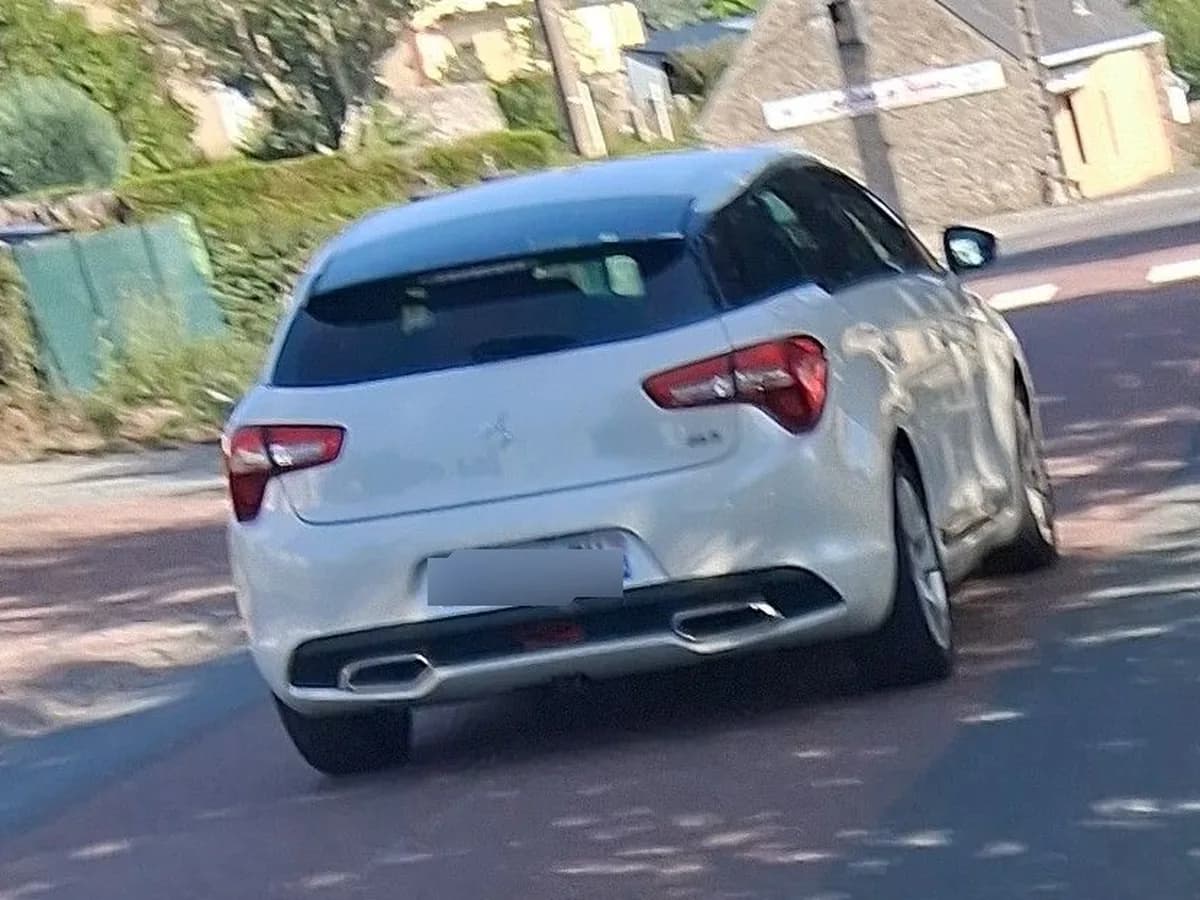
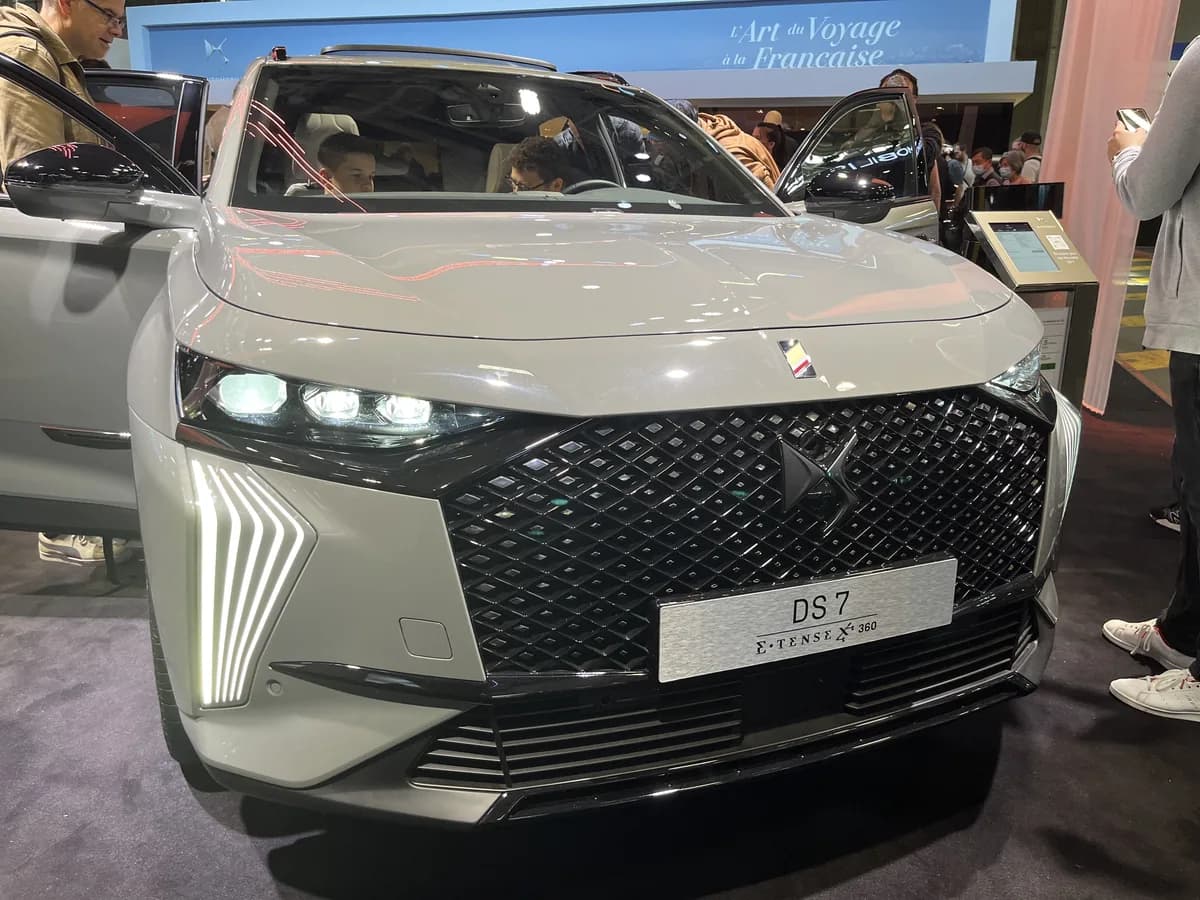
To identify a DS, start with the front end. Most modern models use a grille framed by DS WINGS, a central DS emblem and a highly detailed lighting signature. Depending on the generation, the headlamps may include slim matrix modules, vertical elements or separate daytime-running lights. The sides often feature sculpted bodywork and flush door handles, while the cabin may be recognised by an angular centre console, diamond-shaped controls and distinctive upholstery patterns. The DS 3 is identifiable by its urban proportions and, depending on the generation, a contrasting roof. The DS 4 has a lower compact profile that combines hatchback and crossover cues. The DS 7 is taller and more substantial, with a large grille and horizontal rear lamps. The DS 9 uses a long, formal three-box saloon shape. The N°4, N°7 and N°8 introduce the newer “N°” naming convention and a more recent lighting identity. Badges, wheel designs and trim details remain important when separating facelifted versions.
Important DS models
The DS 3 is one of the brand’s key models. It began as a city car derived from the Citroën range and later evolved into the DS 3 Crossback small SUV, also offered with the electric E-TENSE powertrain. The DS 4 represents DS’s return to the compact segment, using a raised hatchback profile and several electrification options. The DS 7, launched as the DS 7 Crossback, is the family SUV and became a major platform for E-TENSE plug-in hybrid powertrains. The DS 5 helped establish the independent brand’s early identity, while the DS 9 represented its executive saloon offering. In the newer range, N°8 is the electric flagship, using a sleek SUV-coupé body style. N°4 renews the compact offering with hybrid, plug-in hybrid and battery-electric powertrains. N°7, entering the range for the 2026 model year, replaces the DS 7 under the brand’s newer naming system. Together, these models illustrate DS’s progression from badge-led premium derivatives to a more clearly differentiated and increasingly electric product family.
DS model names follow a precise logic — with a few exceptions. Decode a DS name
References
- DS Automobiles - BrandsStellantis
- DS, A 70-Year HistoryStellantis Media / DS Automobiles
- DS Automobiles in France: Highlights of 2015, the DS Launch YearStellantis Media / DS Automobiles
- DS Automobiles to Become a 100% Electric Brand from 2024 OnwardsStellantis Media / DS Automobiles
- DS 4: Refinement EngineeredStellantis Media / DS Automobiles
- The New All-Electric DS N°8 Is Now Available to OrderStellantis Media / DS Automobiles
- DS N°7 Order Opening: Ready for a First-Class TravelStellantis Media / DS Automobiles
- DS Automobiles Announce Pricing and Specification for All-New DS N°4Stellantis Media / DS Automobiles