Dodge Durango 2013
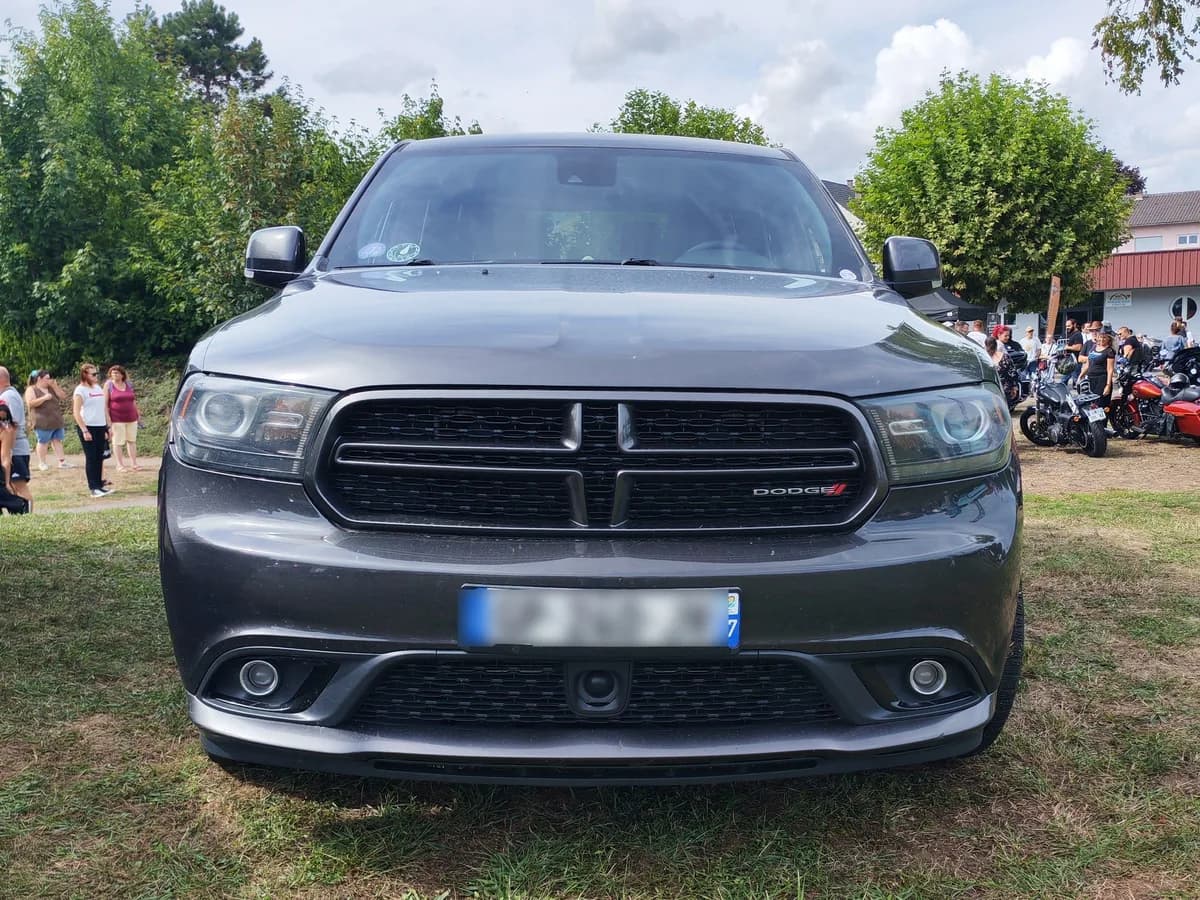
The 2013 Dodge Durango is a four-door, three-row SUV built with a steel unibody and a longitudinally mounted engine. Introduced for the 2011 model year, this third-generation Durango retained a family-oriented layout in 2013, with seating for up to seven, standard rear-wheel drive on the entry model, and available all-wheel drive. Its standard engine was the 3.6-liter Pentastar V6, rated at 290 horsepower and paired with a five-speed automatic transmission. A 5.7-liter HEMI V8 remained available on higher trims. The Durango combined substantial exterior dimensions with a roomy cabin and road-focused handling, placing it between traditional full-size SUVs and large crossover vehicles. Its appeal rested on passenger capacity, towing ability, and a more composed driving character than the truck-based Durango it replaced. (s3.amazonaws.com)

History
The Durango name first appeared for the 1998 model year on a midsize SUV derived from a pickup-based architecture. A larger second generation followed for 2004. The third generation arrived at the end of 2010 as a 2011 model and represented a major change in direction: it used a steel unibody, four-wheel independent suspension, and a more crossover-oriented design instead of the earlier truck-style formula. Chrysler Group began building the new Durango at the Jefferson North plant in Detroit on December 14, 2010. For 2013, the model received only limited changes compared with the previous year. The U.S. lineup consisted of SXT, Crew, Citadel, and R/T trims, with rear- or all-wheel drive depending on the engine and equipment level. The Pentastar V6 formed the range’s foundation, while the HEMI V8 was aimed at buyers who wanted stronger acceleration and higher towing capability. (prnewswire.com)
Latest scans
Photos added by the community for this page.
Anecdotes
The 2013 Durango was assembled in Detroit at the Jefferson North plant, where production of the third-generation model began in December 2010. Another notable detail of the model year was the Blacktop package offered on selected Rallye and R/T versions. It concentrated on dark exterior trim and distinctive wheels rather than mechanical changes. The Pentastar V6 was also highlighted in Dodge’s sales material after being named to Ward’s 2012 “10 Best Engines” list, giving the standard powertrain an added point of recognition beyond its published output figures. (embargoed.stellantisnorthamerica.com)
Production
No reliable public production figure specific to the 2013 Dodge Durango Base has been identified in the sources reviewed. The available documentation does establish that the model was built at the Jefferson Avenue North plant in Detroit, Michigan. At the time, the facility produced the Durango alongside the Jeep Grand Cherokee. Third-generation Durango production began there on December 14, 2010, ahead of the vehicle’s release as a 2011 model. The official 2013 specification sheet does not provide a model-year production total or a breakdown by SXT, Crew, Citadel, and R/T trim. It is therefore more accurate to identify the assembly plant while avoiding an unsupported estimate for the number of Base or total Durango vehicles produced. (s3.amazonaws.com)
Press reception
Contemporary road tests generally characterized the 2013 Durango as a comfortable, stable, and well-controlled large SUV, with precise steering and a composed independent suspension. Cars.com praised the room available across three rows and found the rear-wheel-drive SXT enjoyable to drive, while also noting that the vehicle felt cumbersome during tight maneuvers. The Car Connection highlighted the well-damped ride and useful cabin flexibility but observed that the V6 was not as strong as some rivals and that cargo room behind the third row was limited. Edmunds emphasized the Durango’s refined road manners, adult-friendly third row, and towing ability, while considering the optional V8 the stronger choice for buyers who regularly carried heavy loads or towed substantial trailers. (cars.com)
Evolution
The 2013 Durango belongs to the early phase of the third generation, before the substantial refresh introduced for the 2014 model year. As a result, its changes were mainly related to equipment and packaging rather than a major mechanical redesign. The model retained its 119.8-inch wheelbase, three-row cabin, and choice of V6 or V8 engines. The V6 continued with a five-speed automatic, while the V8 used a six-speed automatic transmission. During the year, Dodge also expanded the Blacktop appearance package to the Durango, including availability on Rallye and R/T models. The underlying formula remained consistent: a large unibody SUV with rear-wheel drive or optional all-wheel drive, generous passenger space, and a strong towing focus. (s3.amazonaws.com)
Variants
References
- 2013 Dodge Durango SpecificationsChrysler Group LLC / Chrysler Media
Official specification sheet covering body construction, assembly plant, engines, power, transmissions, drivetrains, dimensions, cargo capacity, and towing.
- 2013 Dodge Durango - Specs, Prices, MPG, Reviews & PhotosCars.com
Contemporary expert road test covering the SXT base model, engine, transmission, drivetrain, seating, driving impressions, and safety.
- 2013 Dodge Durango Review, Ratings, Specs, Prices, and PhotosThe Car Connection
Model-year overview covering the limited 2013 changes, engine and transmission choices, handling, cargo space, and market positioning.
- 2013 Dodge Durango Review & RatingsEdmunds
Expert assessment of strengths, weaknesses, trim equipment, towing, comfort, handling, and the unchanged status of the 2013 model.
- Dodge Expands Sinister Blacktop Package Offering From Cars to Seven Passenger VehiclesChrysler Group LLC via PR Newswire
Official January 10, 2013 announcement detailing the Durango Blacktop package and its availability on Rallye and R/T models.
- Detroit Assembly Complex - JeffersonStellantis Media
Plant history confirming the Detroit assembly location and the start of third-generation Dodge Durango production in December 2010.
- 2013 Dodge Durango BrochureDodge Canada
Contemporary product brochure supporting equipment descriptions, seating, engine output, safety highlights, and the Ward’s engine recognition.
- https://www.edmunds.com/dodge/durango/2013/review/?msockid=2543cb22c3316dad0199dd91c2e66caeedmunds.com
Source found by OpenAI web search for this vehicle page.