
Durango
Chrysler launched the Durango on September 5, 1997, as a 1998 model, creating an American SUV positioned between compact sport-utility vehicles and larger family-oriented trucks. The first generation was closely related to the Dodge Dakota pickup and quickly became known for its four-door body, available V8 power, and optional third-row seating. A major redesign for 2004 made the vehicle larger and more contemporary, while adding the 5.7-liter HEMI V8 to the range. After the Durango was discontinued for the 2010 model year, Dodge returned with an entirely new version for 2011, sharing important chassis architecture with the Jeep Grand Cherokee. The period covered here therefore begins with the Durango’s late-1997 launch and extends through the 2013 model year, encompassing the early truck-based SUVs, the larger second generation, and the first years of the modern platform. (theautochannel.com)
Variants by year
2013

2010
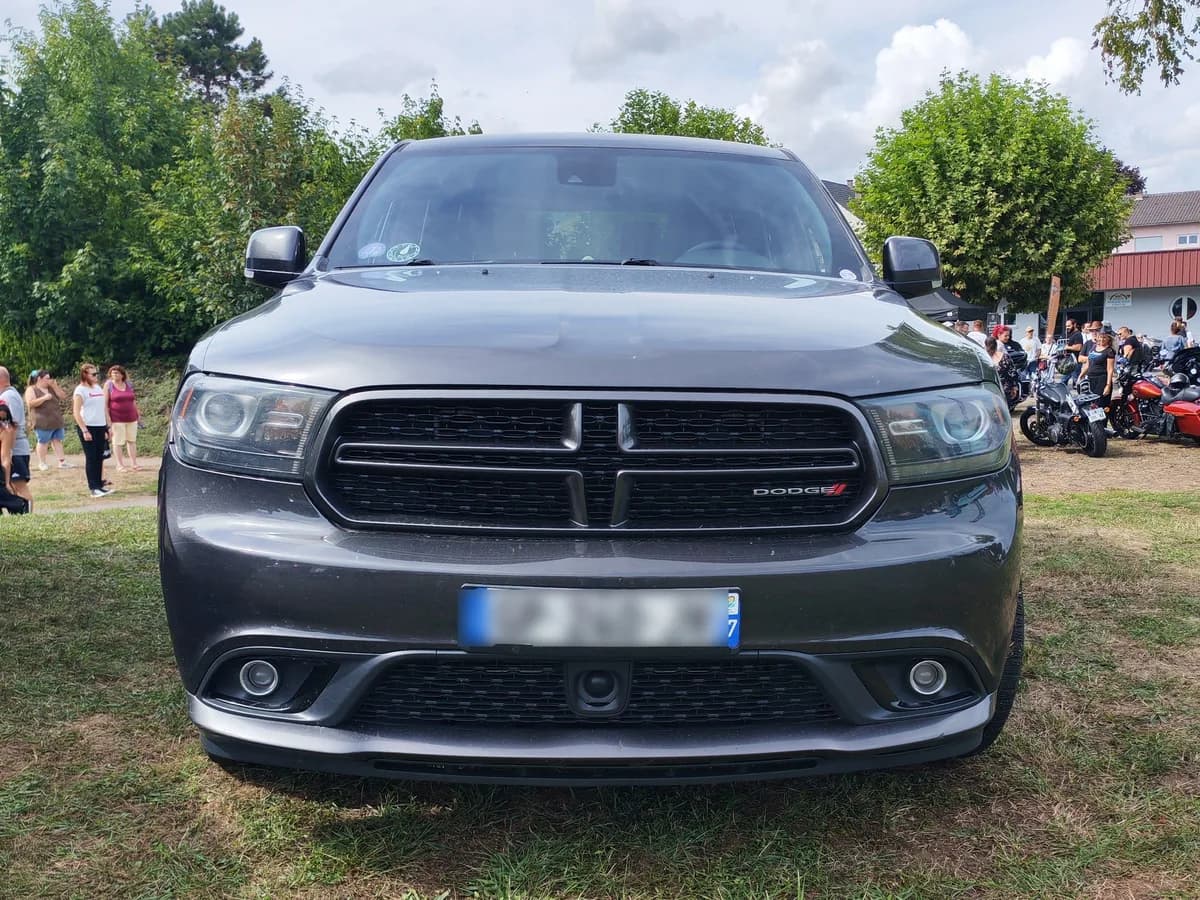
2003
1997
Model summary
Data from the ScanRacer library, organized to compare versions quickly.
Model introduction
Chrysler launched the Durango on September 5, 1997, as a 1998 model, creating an American SUV positioned between compact sport-utility vehicles and larger family-oriented trucks. The first generation was closely related to the Dodge Dakota pickup and quickly became known for its four-door body, available V8 power, and optional third-row seating. A major redesign for 2004 made the vehicle larger and more contemporary, while adding the 5.7-liter HEMI V8 to the range. After the Durango was discontinued for the 2010 model year, Dodge returned with an entirely new version for 2011, sharing important chassis architecture with the Jeep Grand Cherokee. The period covered here therefore begins with the Durango’s late-1997 launch and extends through the 2013 model year, encompassing the early truck-based SUVs, the larger second generation, and the first years of the modern platform. (theautochannel.com)
History
The Durango arrived as family SUVs were becoming increasingly important in North America. The original model followed the traditional truck-based SUV formula: it used the Dodge Dakota’s underlying architecture, featured separate-frame construction, and offered a forward-facing third row. For its first model year, the 5.2-liter Magnum V8 served as the main engine, with a 5.9-liter V8 available as an upgrade. Four-wheel drive was fitted to the first production examples, while a two-wheel-drive version and a 3.9-liter V6 broadened the lineup for 1999. (theautochannel.com) The 2004 redesign retained a utility-focused character but increased the Durango’s dimensions and interior room. A 3.7-liter V6 became the entry engine, joined by 4.7-liter and 5.7-liter HEMI V8 options. The range continued to evolve, including a clearly visible exterior update for 2007. A two-mode hybrid version was offered briefly for 2009. Production of this generation ended after 2009, and Dodge did not sell a Durango for the 2010 model year. (jdpower.com) The Durango returned for 2011 on a different platform with a more road-oriented design, while retaining three-row seating and V6 and V8 power. The 2011 through 2013 model years represent the opening phase of this third generation within the period covered here. (cars.com)
Generations
The first generation covers the Durango introduced for the 1998 through 2003 model years, with production beginning in 1997. It is identifiable by its relatively compact proportions, upright sides, and close visual and mechanical relationship to the Dodge Dakota. Separate-frame construction emphasized durability and towing ability. Depending on the model year, the range combined Magnum V6 and V8 engines with rear- or four-wheel drive and several trim levels. Its available third-row seat was a major selling point against smaller SUVs. (theautochannel.com) The second generation spans the 2004 through 2009 model years. It became longer, taller, and more substantial, with blockier bodywork and a roomier cabin. It retained separate-frame construction but moved beyond the proportions and simple pickup-derived character of the original. A 3.7-liter V6 and 4.7-liter V8 were joined by the 5.7-liter HEMI V8, while a two-mode hybrid appeared briefly for 2009. A significant exterior revision arrived for 2007. (jdpower.com) The third generation began with the 2011 model after the absence of a 2010 Durango. It adopted unitized construction related to the Jeep Grand Cherokee, along with smoother styling and a more modern interior. Within the period covered here, it includes the 2011, 2012, and 2013 model years. (cars.com)
Key differences
The most important distinction is structural. The first- and second-generation Durangos use separate-frame construction, while the model introduced for 2011 switches to a unitized body structure. The earlier generations have a traditional SUV appearance, with a tall body, straight lines, and generous glass area. The 2004 vehicle is noticeably larger than the original and uses a more imposing front end. For 2007, the grille, hood, and headlamps were revised, helping distinguish facelifted examples from 2004-2006 vehicles. (cars.com) The powertrain ranges also changed substantially. The first generation is associated with Magnum V6 and V8 engines; the second introduced the 3.7-liter V6 and 5.7-liter HEMI V8; and the third generation began with the 3.6-liter Pentastar V6 alongside an available HEMI V8, depending on trim. Engine availability could vary by model year, equipment level, and market, so mechanical specifications should not be inferred from exterior appearance alone. (jdpower.com)
Photo recognition
A first-generation Durango can usually be identified by its compact but very upright proportions, Dakota-inspired front end, four-door body, and optional third-row seating. These vehicles generally look narrower and less substantial than the 2004-2009 models. Exact model-year identification is more difficult from the body alone because equipment and engine availability changed progressively during the run. (cars.com) The 2004-2006 Durango has a larger footprint, a broad crossbar grille, and stretched headlamps. The 2007-2009 vehicles received a revised front end, including changes to the grille and hood treatment, giving them a more assertive appearance. The third generation is easier to separate visually because its body is smoother and more integrated, with a road-focused shape typical of Dodge SUVs from the early 2010s. The lack of a 2010 Durango can also help prevent an incorrect year attribution. For a dependable identification, confirm the VIN, manufacturer label, and original vehicle documents rather than relying only on trim badges or exterior modifications. (motortrend.com)
Important versions
The most representative versions from this period begin with the first-generation Durangos equipped with Magnum V8 engines, which demonstrate the model’s truck-based and utility-oriented character. For 2004, the 5.7-liter HEMI V8 marked a major step in the lineup and reinforced the Durango’s role as a large family SUV with towing ability. The 2007 Durango deserves separate attention because of its exterior facelift, while the 2009 hybrid is a rare and technically unusual derivative. The 2011-2013 vehicles introduced the third generation with a different platform, an available Pentastar V6, and a HEMI V8 on selected versions. Trim names and engine-transmission combinations can vary by market, so individual vehicle documents remain the best authority for specification-level identification. (jdpower.com)
References
- Chrysler Announces the Launch of the 1998 Dodge DurangoChrysler Corporation press release via The Auto Channel
- Dodge Durango Model YearsJ.D. Power
- Dodge Durango — Model Years, Generations & NewsCars.com
- Pre-owned: 2004-2009 Dodge DurangoMotorTrend
- 2004 Dodge Durango First DriveCar and Driver
- https://www.carcomplaints.com/Dodge/Durango/carcomplaints.com
- https://www.dodgeproblems.com/models/durango/generations/dodgeproblems.com
Technical specifications
Structured data available for versions linked to this model.
| Version | Power | Torque | Top speed | Drivetrain | Fuel |
|---|---|---|---|---|---|
| — | 290 hp for the standard 3.6-liter V6; 360 hp for the optional 5.7-liter V8. ([s3.amazonaws.com](https://s3.amazonaws.com/chryslermedia.iconicweb.com/mediasite/specs/2013_DG_Durango_SP.pdf)) | — | — | Rear-wheel drive standard on the base/SXT model; full-time all-wheel drive available. ([s3.amazonaws.com](https://s3.amazonaws.com/chryslermedia.iconicweb.com/mediasite/specs/2013_DG_Durango_SP.pdf)) / Five-speed automatic with the 3.6-liter V6; six-speed automatic with the 5.7-liter V8. ([s3.amazonaws.com](https://s3.amazonaws.com/chryslermedia.iconicweb.com/mediasite/specs/2013_DG_Durango_SP.pdf)) | — |
Frequently asked questions
- What years was the Dodge Durango produced?
- ScanRacer's referenced versions cover 1997 - 2013.
- How many Dodge Durango examples are documented on ScanRacer?
- 4 published scans from 4 members, with the latest photo added in August 2026.
- What is the power output of the Dodge Durango?
- The sourced technical data lists 290 hp for the standard 3.6-liter V6; 360 hp for the optional 5.7-liter V8. ([s3.amazonaws.com](https://s3.amazonaws.com/chryslermedia.iconicweb.com/mediasite/specs/2013_DG_Durango_SP.pdf)).