
Traction Avant
Unveiled in Paris on April 18, 1934 as the Citroën 7, the Traction Avant combined several unusually advanced solutions: front-wheel drive, a monocoque-style load-bearing body, hydraulic brakes and independent suspension at all four wheels. Its familiar name refers directly to the front-driven layout, which was still uncommon in a mass-produced car at the time. The low silhouette, developed with the work of engineer André Lefèbvre and designer Flaminio Bertoni, also moved away from the tall bodies mounted on separate frames that were typical of the period. Early production included Berline saloons, the Faux Cabriolet and Cabriolet body styles, followed by longer-wheelbase Commerciale and Familiale versions. The range continued to evolve for more than two decades before production ended in 1957. (media.stellantis.com)
Variants by year
1936
1935
 R
R1934
Model summary
Data from the ScanRacer library, organized to compare versions quickly.
Model introduction
Unveiled in Paris on April 18, 1934 as the Citroën 7, the Traction Avant combined several unusually advanced solutions: front-wheel drive, a monocoque-style load-bearing body, hydraulic brakes and independent suspension at all four wheels. Its familiar name refers directly to the front-driven layout, which was still uncommon in a mass-produced car at the time. The low silhouette, developed with the work of engineer André Lefèbvre and designer Flaminio Bertoni, also moved away from the tall bodies mounted on separate frames that were typical of the period. Early production included Berline saloons, the Faux Cabriolet and Cabriolet body styles, followed by longer-wheelbase Commerciale and Familiale versions. The range continued to evolve for more than two decades before production ended in 1957. (media.stellantis.com)
History
The Traction Avant was developed during a difficult period for Citroën. André Citroën wanted a radically modern car that would sit lower, handle more securely and offer a different technical direction from the rear-wheel-drive models that came before it. Engineer André Lefèbvre led the technical work, while Flaminio Bertoni contributed to the body design. The 7A was officially introduced on April 18, 1934, and the range soon expanded with additional 7 and 11 models. (media.stellantis.com) The launch was ambitious, but early cars suffered from development and build-quality problems, particularly involving the transmission and driveshafts. Citroën’s financial difficulties led Michelin to take control of the company in 1934. Under the new management, the Traction Avant was progressively improved, while the range expanded to include different body lengths, more powerful engines and versions aimed at family or commercial use. (hagerty.co.uk) Production continued through the pre-war and post-war periods, with detail changes that make year-by-year identification challenging. The six-cylinder 15-Six joined the range in 1938, followed by further body and equipment revisions. Citroën gives total production as 759,123 cars between 1934 and 1957, a figure that helps explain the model’s lasting importance in French automotive history. (media.stellantis.com)
Generations
The Traction Avant does not have formal generations in the modern marketing sense. It is more accurate to describe a series of technical families and development phases. The first phase began in 1934 with the 7A and the early 7 and 11 models. The fiscal-horsepower designations 7 CV and 11 CV identify different mechanical families with different engines and dimensions. Early body styles centered on the short-wheelbase saloon, joined by the Faux Cabriolet and Cabriolet. (media.stellantis.com) A second stage is represented by the 11 Légère and 11 Normale. The Légère retained the shorter format associated with the 7 models, while the Normale used a larger body and wheelbase. This distinction helps explain why two cars carrying the general Traction Avant name can have noticeably different proportions. The Commerciale and Familiale followed the longer-body concept, with a stronger emphasis on utility and passenger capacity. (hagerty.co.uk) From 1938, the 15-Six became the upper-level version through its six-cylinder engine. Later years brought changes to the body, trunk, grille, steering and equipment. For cars from 1934 to 1936, the exact date, body style and chassis information are therefore usually more dependable identification clues than the broad commercial name alone. (hagerty.co.uk)
Key differences
Within the 1934–1936 selection, the Berline is the conventional four-door saloon body. The Faux Cabriolet uses a closed two-door profile, while the Cabriolet adds a folding roof and a more open presentation. Both two-door styles are far less common today than the saloon and may include body or trim details linked to the coachwork and production period. (hagerty.co.uk) The Commerciale-Familiale is defined mainly by its longer format and practical purpose. Specialist sources associate the long versions with a greater wheelbase, increased interior capacity and, in the Commerciale, more useful rear access. The body name alone should not be used to infer a precise engine or specification, however, because designations, markets and equipment changed during the model’s long production run. (hagerty.co.uk)
Photo recognition
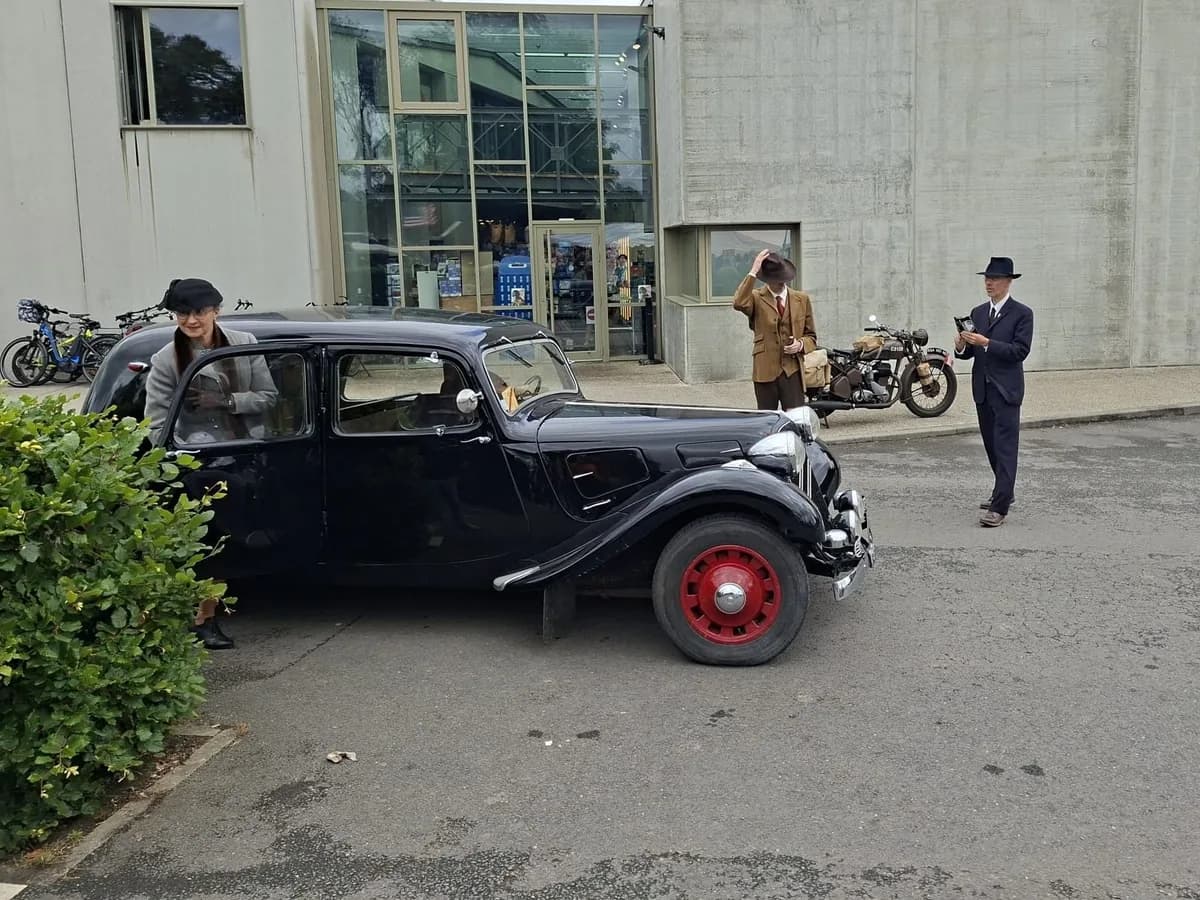
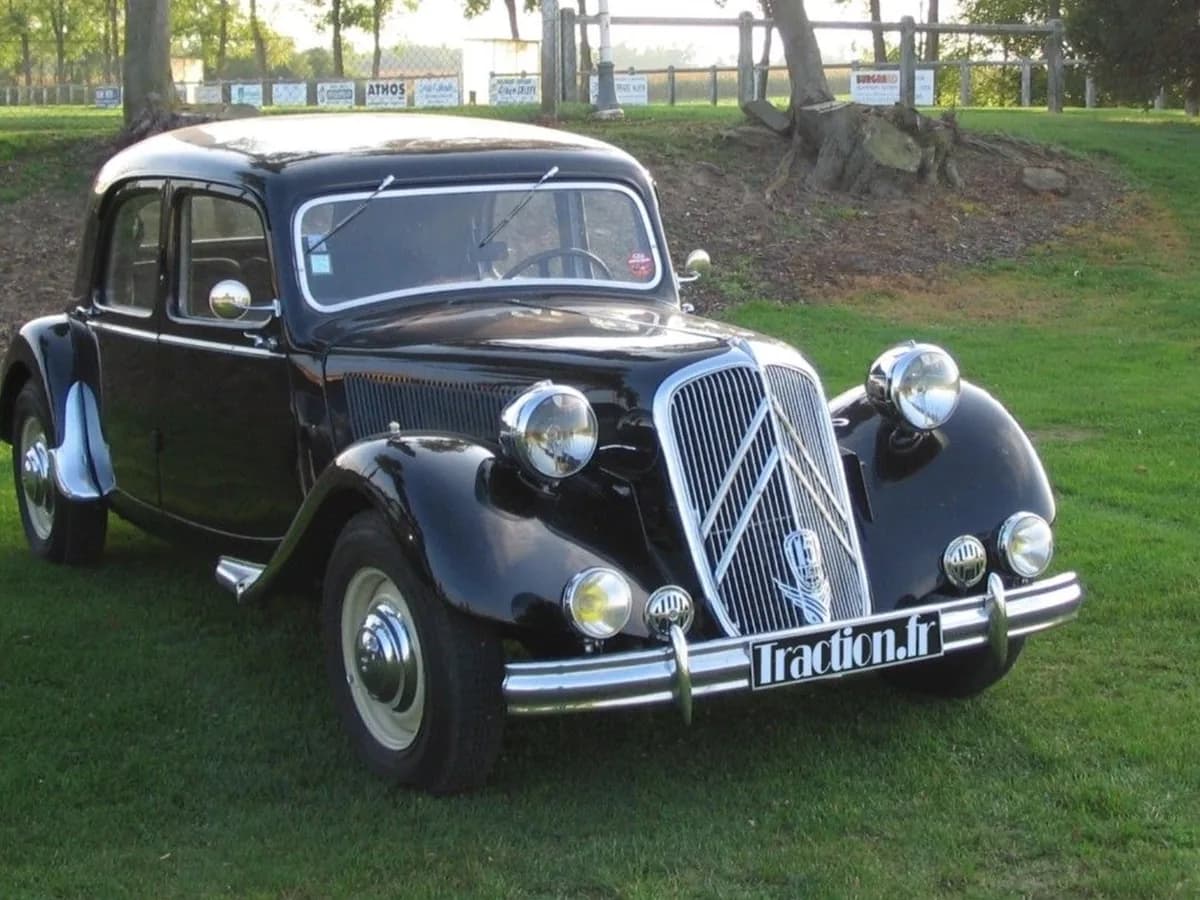
The Traction Avant is first recognized by its low body, enveloping fenders and the absence of traditional running boards. The sloping grille carries Citroën chevrons, but their position and finish can vary with the year, country of assembly and later restoration work. Early 1934 cars have several period-specific details, including a rounded grille top on some examples, chevrons mounted behind the grille and a chrome windscreen surround. These clues are useful, but they cannot always date a car conclusively on their own. (media.stellantis.com) Body-style identification depends on the number of doors, roof profile and whether a folding roof is present. Overall length and the distance between the wheels may also indicate a longer Commerciale or Familiale. A reliable identification should be checked against the manufacturer’s plate, body number and mechanical details, since many surviving cars have been restored or modified over time. (hagerty.co.uk)
Important versions
The 7A was the starting point of the family, introduced in 1934 with a small four-cylinder engine. The 7B and 7C continued that initial branch, while the 11 models occupied a more powerful category and were offered in Légère and Normale formats. For the period covered here, the Berline, Faux Cabriolet and Cabriolet represent the principal passenger-car bodies. The Commerciale-Familiale is the longer and more versatile derivative. The 15-Six arrived later with a six-cylinder engine and should not be attributed to a 1934–1936 example without supporting documentation. (media.stellantis.com)
The name “Traction Avant” follows Citroën naming, with its rules and its exceptions. Decode a Citroën name
References
- Citroën celebrates 90 years of the Traction Avant, an iconic model with 100 patentsCitroën / Stellantis Media
- Citroën 11 A Traction AvantMuseo Nazionale dell'Automobile di Torino
- Buying Guide: Citroën Traction Avant (1934-1956)Hagerty UK
- Citroën Traction Avant buyer's guideClassics World
- Citroën Traction Avant 11A historyCATS Citroën
- 100 Jahre Citroën: Traction Avant erstes französisches Fahrzeug mit Frontantrieb in GroßserienproduktionCitroën / Stellantis Media
- https://www.media.stellantis.com/ch-fr/citroen/press/citroen-celebre-les-90-ans-de-la-traction-avant-modele-emblematique-aux-100-brevetsmedia.stellantis.com
- https://www.media.stellantis.com/ch-de/citroen/press/citroen-feiert-das-90-jaehrige-jubilaeum-des-traction-avant-des-emblematischen-modells-mit-100-patentenmedia.stellantis.com
Frequently asked questions
- What years was the Citroën Traction Avant produced?
- ScanRacer's referenced versions cover 1934 - 1936.
- How many Citroën Traction Avant examples are documented on ScanRacer?
- 11 published scans from 11 members, with the latest photo added in September 2026.