Citroën C4 Picasso-SpaceTourer Grand 2006
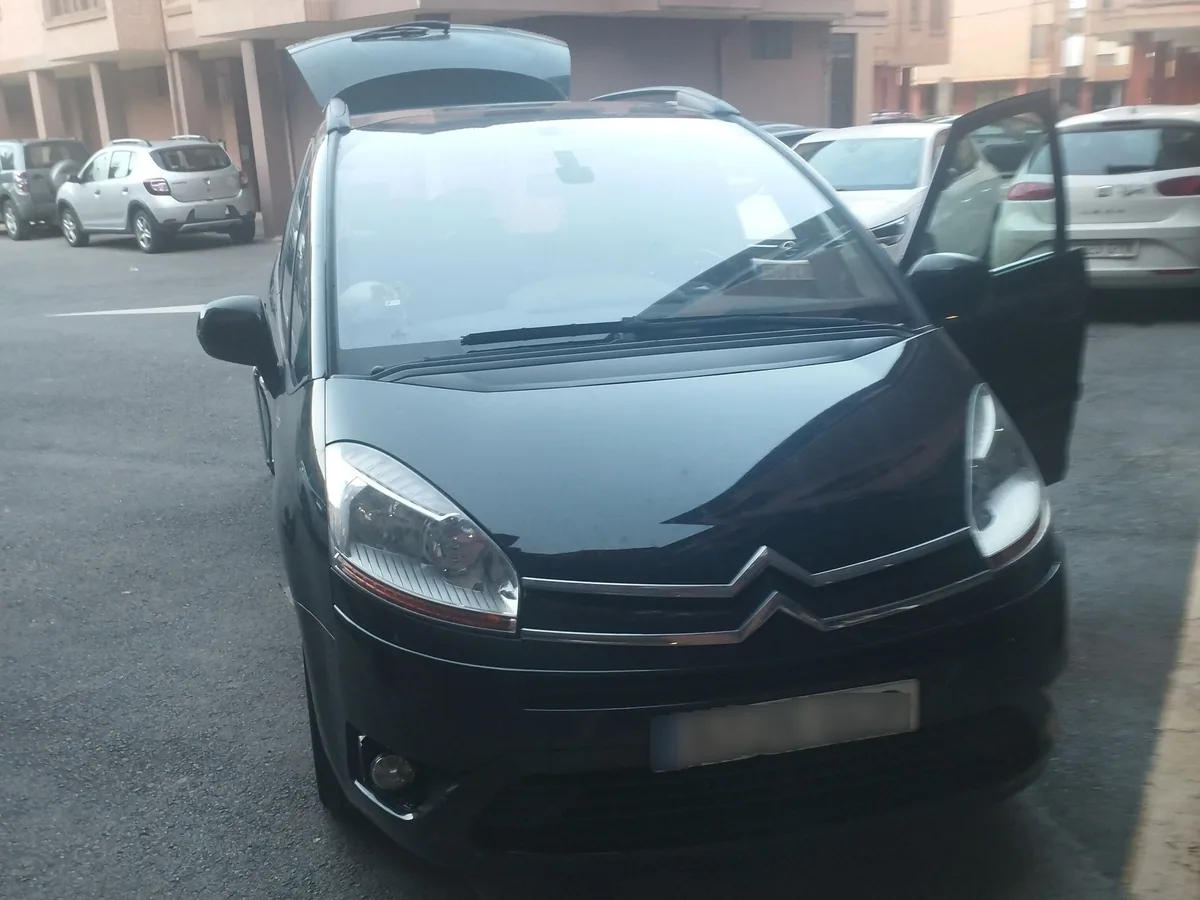
Presented at the Paris Motor Show in September 2006, the Citroën Grand C4 Picasso introduced the long-wheelbase, seven-seat member of the C4 Picasso family. It was designed as a compact MPV, combining a taller body and three rows of seating with a generous glazed area. One of its most distinctive features was the panoramic windscreen, which extended well into the roof and improved forward visibility. The model reached the market late in 2006, joining the Xsara Picasso and the larger C8 in Citroën’s family-car range. The SpaceTourer name came much later; in 2006, the vehicle was sold as the Grand C4 Picasso.
History
The Grand C4 Picasso arrived when compact MPVs were among the most important family vehicles in the European market. Citroën placed it between the older, more affordable Xsara Picasso and the larger C8. It was officially shown at the 2006 Paris Motor Show and reached customers later that year. A shorter five-seat C4 Picasso joined the range in early 2007.
The Grand C4 Picasso shared its underlying platform family with the Citroën C4 and Peugeot 307, but its body and interior were tailored to family use. The design concentrated on cabin space, access to the rear seats and flexible loading options. Individual second-row seats and a fold-away third row allowed the interior to switch between passenger-carrying and cargo duties.
Production took place at PSA’s Vigo plant in Spain. The first generation continued until 2013, when it was replaced by the second-generation C4 Picasso and Grand C4 Picasso. The model later became part of the same lineage that adopted the SpaceTourer name in 2018.
Latest scans
Photos added by the community for this page.
Anecdotes
The Grand C4 Picasso’s panoramic windscreen is one of its most recognizable features. It reaches deeply into the roof area and gives the driver an unusually open forward view. Sliding sun visors help control glare despite the large glass area. Another unusual detail was the EGS gearbox selector, mounted on the steering column rather than on the centre console, a distinctive solution for a family MPV of the period.
Production
Grand C4 Picasso production was carried out at PSA’s Vigo plant in Galicia, Spain. At the time, the factory built several Citroën and Peugeot models, including the C4 Picasso, Grand C4 Picasso and Xsara Picasso. Group documents identify the Grand C4 Picasso as a model introduced into production in 2006.
Citroën reported 891,000 sales for the first-generation C4 Picasso family between 2006 and 2013. That figure covers the C4 Picasso range as a whole, however, and is not a production total for the long-wheelbase Grand version alone. It should therefore not be presented as the number of 2006 Grand C4 Picasso vehicles built. The second generation followed in 2013, continuing the model’s association with Vigo.
Press reception
Early road tests focused on the Grand C4 Picasso’s family-oriented strengths. Caradisiac highlighted its cabin space, flexible seating and distinctive approach to the compact-MPV class, while Auto Express praised its ride comfort, visibility and generally reassuring road manners.
The handling assessments were more measured. The vehicle was considered composed and easy to drive, but not especially sporty, with more body movement than the sharpest rivals. The EGS automated manual gearbox was regarded as convenient, although its shifts could feel hesitant or jerky. Overall, contemporary coverage viewed the Grand C4 Picasso primarily as a comfortable, spacious and inventive family vehicle rather than a driver-focused alternative.
Evolution
Variants
References
- El Citroën Grand C4 SpaceTourer deja de fabricarse y cierra una saga de casi 30 años de monovolúmenes innovadoresCitroën / Stellantis Media
Supports the 2006 introduction of the seven-seat version, the 2007 arrival of the five-seat version, the later SpaceTourer naming and the 891,000 sales figure for the first generation.
- 50th Anniversary Celebration for PSA Peugeot Citroën’s Plant in Vigo, SpainGroupe PSA Archives / Stellantis Media
Supports Vigo production and the presence of the C4 Picasso and Grand C4 Picasso at the Spanish plant.
- Citroen Grand C4 Picasso MPV reviewAuto Express
Supports contemporary press comments on comfort, visibility, EGS transmission behaviour, engine range and UK trim names.
- Essai - Citroën C4 Picasso : de 5 à 7Caradisiac
Supports the 2006 Paris presentation, seven-seat positioning, modularity, engine and gearbox overview, and contemporary driving impressions.
- Citroën Grand C4 Picasso from 2006Citroën Service
Supports the official model identification and the 2006 starting date for the Grand C4 Picasso.
- https://www.autozine.co.uk/citroen/c4-grand-picasso/reviewautozine.co.uk
Source found by OpenAI web search for this vehicle page.
- https://www.australiancar.reviews/_pdfs/Citroen_GrandC4Picasso_2007_Brochure_201101.pdfaustraliancar.reviews
Source found by OpenAI web search for this vehicle page.
- https://www.reddit.com/r/drivingsg/comments/1eq58ta/questions_about_citroen_c4_grand_picasso/reddit.com
Source found by OpenAI web search for this vehicle page.