Citroën C35 1974
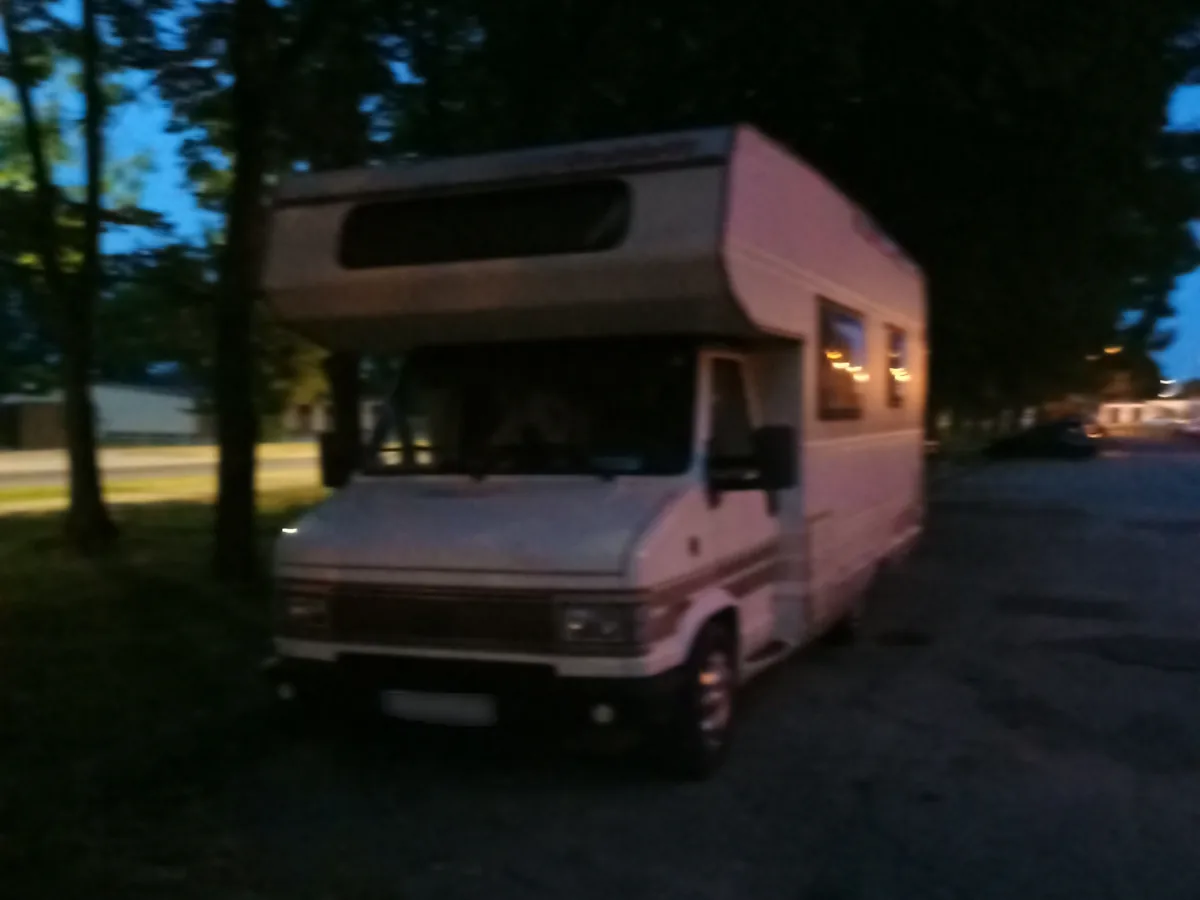
The 1974 Citroën C35 Base belongs to a light commercial vehicle developed through an industrial partnership with Fiat. In Citroën’s range, it stood as a larger-duty van positioned above the small panel vans of the period, with a straightforward presentation and broad intended uses. Depending on the body type, it could be delivered as a closed van, a chassis for specialist bodies, or other specialized derivatives. For 1974, the Base label should be understood as a catalog entry rather than proof of a more precisely documented factory trim level.
History
The C35 emerged from a joint industrial program between Citroën and Fiat, with each brand marketing its own version under a different name. Fiat sold the 242 mainly in Italy, while Citroën used the C35 designation in France and in several other European markets. This arrangement gave both manufacturers a way to offer a larger, more modern commercial vehicle than the small vans commonly available at the time.
The model was launched in 1974, the same year Citroën also introduced the CX. From the outset, the C35 was linked to two main powertrains: a 2,175 cc diesel and a 2.0-liter petrol engine. The diesel is especially notable in the model’s history, since Stellantis presents it as the first vehicle to receive Citroën’s modern small-displacement diesel engine, a four-cylinder related to development work around DS engines.
The 1974 Base version therefore belongs to the model’s opening phase, before the technical changes and production shifts mentioned by specialist sources. It sits at the start of a range defined mainly by simplicity, multiple body possibilities, and suitability for a wide variety of professional uses.
Latest scans
Photos added by the community for this page.
Production
The C35 was launched in 1974 as part of the shared program with Fiat, but the provided sources do not give production data specific to the Base variant. They only indicate that the model’s career extended well beyond its debut, with end dates varying by market and by source. For the 1974 Base example, the launch year is the only production marker that can be stated with confidence.
Evolution
Variants
References
- The Citroën C35 market overviewCLASSIC.COM
Supports the broad production-period context and the C35’s identity as a Fiat-cooperation utility vehicle.
- Citroën C35 museum referenceCats Citroën Net
Supports the existence of varied body configurations and practical restoration differences between Citroën and Fiat examples.