
C35
Introduced in 1974, the Citroën C35 was a commercial vehicle developed in cooperation with Fiat. It was sold in France as the C35, while its closely related Italian counterpart was marketed as the Fiat 242. The name refers to its approximately 3.5-tonne gross vehicle weight category. The C35 appeared during a period when Citroën was expanding its working-vehicle range alongside the long-running Type H. It used a front-wheel-drive van layout and was offered with petrol and diesel engines, including a 2.175-litre diesel connected with Citroën engine development. Depending on its body, the vehicle could serve as a panel van, chassis for specialist conversions, passenger carrier or motorhome. In the ScanRacer catalogue, the model is represented by one Base variant dated 1974.
Variants by year
1974
Model summary
Data from the ScanRacer library, organized to compare versions quickly.
Model introduction
Introduced in 1974, the Citroën C35 was a commercial vehicle developed in cooperation with Fiat. It was sold in France as the C35, while its closely related Italian counterpart was marketed as the Fiat 242. The name refers to its approximately 3.5-tonne gross vehicle weight category. The C35 appeared during a period when Citroën was expanding its working-vehicle range alongside the long-running Type H. It used a front-wheel-drive van layout and was offered with petrol and diesel engines, including a 2.175-litre diesel connected with Citroën engine development. Depending on its body, the vehicle could serve as a panel van, chassis for specialist conversions, passenger carrier or motorhome. In the ScanRacer catalogue, the model is represented by one Base variant dated 1974.
History
The C35 emerged from an industrial cooperation between Citroën and Fiat. The same programme produced the Fiat 242, sold mainly in Italy, while Citroën used the C35 name in France and several other European markets. The partnership allowed both manufacturers to offer a modern commercial vehicle in a heavier category than the small vans of the period. The vehicle was launched in 1974, the same year in which Citroën introduced the CX. The diesel engine is one of the model’s significant historical features. Stellantis describes the C35 as the first vehicle to receive Citroën’s modern small-capacity diesel engine. Displacing 2,175 cc, the four-cylinder unit was related to development work associated with the company’s DS engines. A 2.0-litre petrol engine was also available. The C35 could be supplied in several body configurations, ranging from a panel van to a chassis intended for specialist conversions. The model’s career continued well beyond its initial launch. Specialist sources place production into the early 1990s, with an industrial change after Fiat ended production of the 242. Exact end dates differ between markets and references, so they should not be confused with the single 1974 year represented in the ScanRacer catalogue.
Generations
The C35 is not clearly divided into officially named generations. Its development is better understood through changes to engines, body styles and production arrangements. The first phase began with the 1974 launch, when the range included a 2.0-litre petrol engine and a 2,175 cc diesel. The vehicle was offered as a panel van, chassis-cab or platform for specialist bodies. Passenger-carrying versions, ambulances and motorhomes are also documented by specialist references. A second phase followed as technical updates were introduced during the model’s career. Available references mention the later adoption of a 2.5-litre diesel intended to improve performance and working capability. Other changes could involve body length, exterior equipment and cab fittings. These alterations should not automatically be treated as a new commercial generation. The final phase is connected with production after Fiat discontinued the 242 in Italy. Secondary sources indicate that C35 assembly subsequently moved to France, which helps explain differing dates between markets. For accurate identification, it is safer to refer to an early series and later developments rather than create a generation structure that is not confirmed by manufacturer documentation.
Key differences
The main comparison is the Fiat 242. Both vehicles came from the same industrial programme and shared a technical basis, but their commercial identities differed: the Fiat 242 was associated with the Italian market, while Citroën used the C35 name in France and other European countries. Visible differences may therefore result from badging, market presentation, installed engine or market-specific equipment. Within the C35 range, the most important differences concern body style and powertrain. A panel van does not look like a chassis intended for a separate body, an ambulance or a motorhome conversion. Petrol and diesel versions can also be difficult to distinguish from a distance without checking badges, vehicle documents or the engine bay. Because engine sizes and equipment changed during the model’s career, the production year and market are essential when attempting a precise identification.
Photo recognition
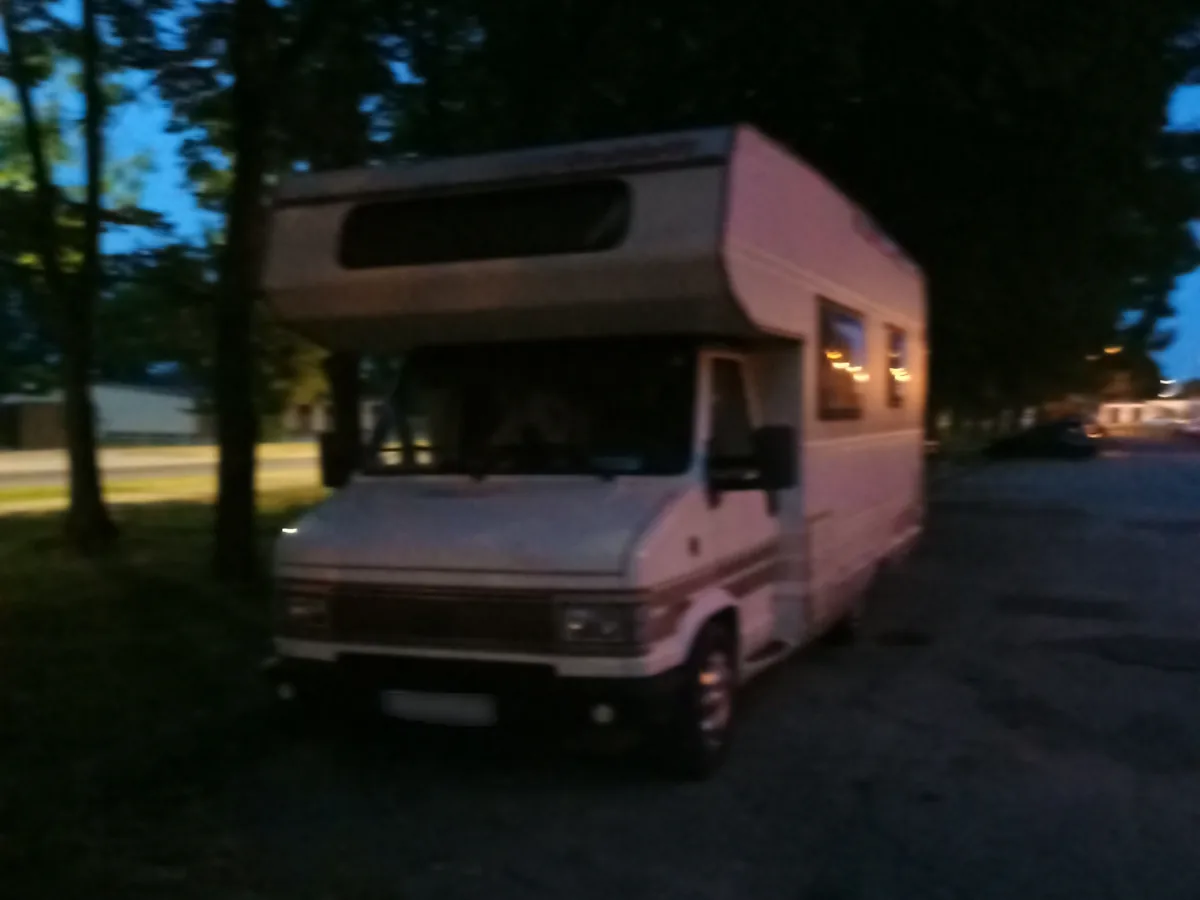
The C35 is first recognised as a large forward-control, front-wheel-drive commercial vehicle, substantially bigger than the small vans of its period. Its appearance can nevertheless vary considerably according to the conversion: panel van, dropside, chassis-cab, minibus, ambulance or motorhome. A rear view alone is therefore not always enough to identify the exact version. For a more reliable identification, inspect the front end, Citroën badges, door and side-window shapes, and the wheelbase and body arrangement. Badges or plates marked C35, C35D or another designation may help, but their absence is not conclusive. The engine bay and registration documents are the most dependable ways to distinguish petrol and diesel vehicles. The Fiat 242 is the key twin model to consider. A nearly identical vehicle carrying Fiat emblems should not automatically be catalogued as a C35. Specialist bodywork can conceal many original details; in such cases, the year, registration country and vehicle type number are more dependable than appearance alone.
Important versions
For 1974, the entry available in the ScanRacer catalogue is the “Base” variant. This label should be treated as a catalogue designation, not as proof of a documented official Citroën trim level. External sources confirm that the launch-year C35 belonged to a broader range, with petrol and diesel engines and several body configurations. Historically important configurations included the panel van, chassis supplied for body conversions, passenger-carrying versions and specialist conversions. The 2,175 cc diesel engine is also a major reference point for the launch period. Later diesel engines with larger displacement and subsequent equipment changes should not be assigned to a 1974 example without visual or documentary evidence.
The name “C35” follows Citroën naming, with its rules and its exceptions. Decode a Citroën name
References
- The Citroën C35 market overviewCLASSIC.COM
- Citroën C35 museum referenceCats Citroën Net
Frequently asked questions
- What years was the Citroën C35 produced?
- ScanRacer's referenced versions cover 1974.
- How many Citroën C35 examples are documented on ScanRacer?
- 3 published scans from 3 members, with the latest photo added in August 2026.