Citroën C15 1984
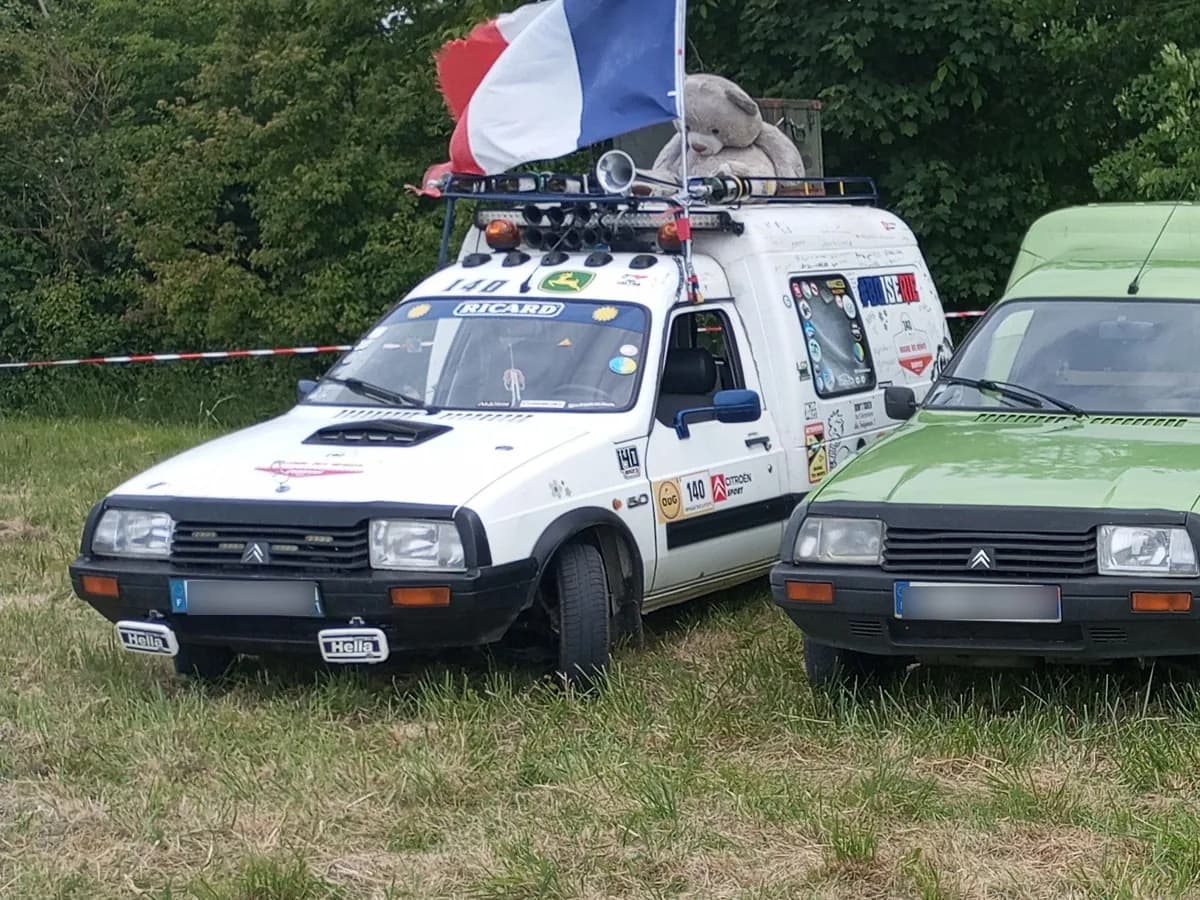
Introduced in 1984, the Citroën C15 Base was a compact commercial vehicle derived from the Citroën Visa. Much of the front bodywork came from the small hatchback, while the rear half was redesigned as a practical panel van for professional use. Measuring less than four metres long and offering a quoted load volume of about 2.67 cubic metres, the C15 combined useful carrying capacity with dimensions suited to urban streets and rural work. The 1984 model year belongs to the earliest phase of the C15’s long career, before later changes to its engines, trim and exterior details. The Base version represents the straightforward, work-focused side of the original range, prioritising utility and mechanical simplicity over comfort or decorative equipment.
History
The C15 was introduced in 1984 as Citroën’s successor to the Acadiane and as a new light-commercial vehicle for the brand. Its development involved more than simply converting a Visa into a van: the wheelbase was extended and the rear suspension layout was adapted to create a more useful, flatter loading floor. At the same time, the vehicle retained many Visa components, including the front bodywork and much of the cabin. Citroën’s historical material linked the C15 name to a gross vehicle weight of 1,500 kg. At launch, the range included the petrol C15 E with a 1,124 cm³ four-cylinder engine and the diesel C15 D using a 1,789 cm³ unit. The C15 then enjoyed an unusually long career, gaining revised engines, body configurations and special editions before finally disappearing from the market in the mid-2000s.
Latest scans
Photos added by the community for this page.
Anecdotes
In the United Kingdom, the C15 was initially marketed under the names “Van Rouge” and “Van Blanc”, referring to the colours offered. Citroën also highlighted distinctive practical details such as the single wiper serving the narrow windscreen. The C15 name was not merely a range code: it referred to the model’s 1.5-tonne gross vehicle weight.
Production
The Citroën C15 remained in production from 1984 to 2006, making it one of the longest-lived European light commercial vehicles built on a largely consistent basis. L’Argus reports 1,181,407 examples sold over the model’s full career. Historical sources identify Vigo in Spain as an important production location, while other sites also contributed to assembly or manufacture of particular versions for different markets. The exact number built during the 1984 model year, or the total produced in Base trim, is not established by the sources consulted. These figures should therefore be understood as general C15-family data rather than a precise count for the earliest Base vehicles.
Press reception
Automotive publications generally describe the C15 as a simple, durable commercial vehicle particularly suited to professional work. At launch, its strongest argument was the balance between compact exterior dimensions and a quoted load volume of about 2.67 cubic metres. L’Argus also emphasises the straightforward engineering and the model’s ability to remain competitive for almost twenty-three years. Caradisiac highlights the C15’s lasting popularity among tradespeople and rural users, together with its ease of maintenance. These assessments apply to the C15 range as a whole and are not a dedicated road test of the 1984 Base trim, whose equipment could vary between markets.
Evolution
Variants
References
- Citroën C15 - Photos, détails et équipementsCitroën Origins
Supports the 1984 launch year, 1984-2006 production period, vehicle type, dimensions, manual gearbox, single wiper, broad engine availability and official historical context.
- Communiqué de presse commercialisation du C15 en 1984Citroën Origins
Official 1984 launch press material preserved in Citroën’s historical archive.
- Communiqué de presse commercialisation du C15 en 1984 - Données techniquesCitroën Origins
Official technical document associated with the 1984 launch.
- Le Citroën C15 a 40 ans : voici son histoireL’Argus
Supports the launch engines and power figures, technical evolution, restylings, variants, dimensions, payload information and reported total sales.
- Route de nuit - Un mythe automobile nommé Citroën C15Caradisiac
Supports the early 1.1-litre petrol configuration, 1985 diesel evolution, practical capacity, production locations, long-term reputation and UK naming anecdote.
- Citroen C15Citroenet
Supports the Visa derivation, early engine capacities, payload and load-volume figures, Vigo production, UK launch names, platform-cab availability and Dangel conversion.
- https://www.autoencyclopedie.com/citroen-c15-1984-2006autoencyclopedie.com
Source found by OpenAI web search for this vehicle page.
- https://www.caradisiac.com/le-citroen-c15-l-utilitaire-increvable-qui-vous-dorlote-221186.htmcaradisiac.com
Source found by OpenAI web search for this vehicle page.