Citroën BX Hatch 1982
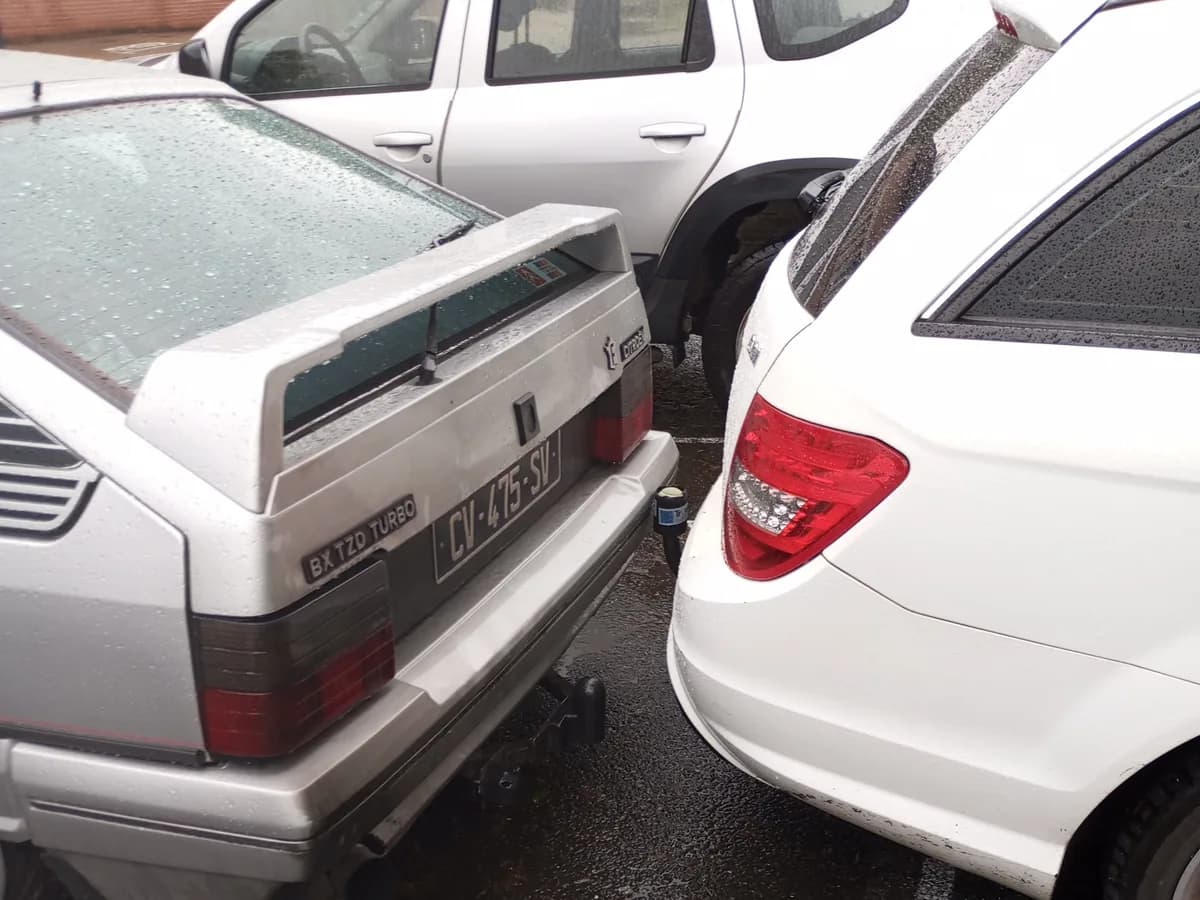
Unveiled beneath the Eiffel Tower on September 23, 1982, the Citroën BX was a five-door family hatchback developed to progressively replace the GS and GSA. Its sharply geometric shape, created by Marcello Gandini at Bertone, stood apart from the smoother designs then becoming common in Europe. The BX combined its distinctive styling with hydropneumatic suspension, front-wheel drive and an unusually lightweight body that used composite materials for several panels. At its commercial launch at the Paris Motor Show, the range consisted of five versions and two petrol engines of 1,360 and 1,580 cc. The 1982 BX therefore marked a new direction for Citroën’s family cars, bringing together ride comfort, practicality, economy and unconventional engineering.
History
The BX project, internally known as XB, began in 1978 with the aim of creating a modern successor to the GS and strengthening Citroën’s position in the upper-medium family-car market. Development took place during the early PSA era, which explains the use of engines from the group’s shared mechanical parts base, while Citroën retained several of its own technical signatures. Marcello Gandini designed the body for Bertone, giving the car a five-door two-box layout with an unusually angular profile. Citroën’s technical centre at Vélizy also made extensive use of computer-aided design to support development and aerodynamic work. The car was revealed publicly on September 23, 1982, before commercial sales began around the Paris Motor Show on September 30. The BX featured hydropneumatic suspension, four-wheel disc brakes and a transversely mounted engine driving the front wheels. Low weight was another central objective: the bonnet, tailgate and other body elements used composite materials. The model remained in production until 1994 and received extensive mechanical, trim and body revisions during its career.
Latest scans
Photos added by the community for this page.
Anecdotes
The BX launch was staged as a major public event. On September 23, 1982, a large wooden crate was lowered from the Eiffel Tower before revealing the new Citroën to the public and press. The car also stood out for its extensive use of composite materials. Citroën identified the bonnet and tailgate among the components produced using these lightweight solutions. A few years later, the BX Digit continued the model’s technological image with digital instrumentation, showing how the original emphasis on unconventional design extended beyond the bodywork.
Production
Citroën produced the BX from 1982 to 1994, with total output for the complete family exceeding 2.3 million vehicles, including hatchbacks and estates. Production began at the Rennes-La Janais plant in Brittany. The model’s commercial importance was substantial: Citroën needed to strengthen its position within the PSA Group and renew its offering after the long-running GS and GSA. The five-door hatchback remained the core body style, while the estate joined the range later. Citroën’s published figure applies to the entire BX production run and does not isolate the number built in 1982 or the output of any individual trim level. A precise production total for the generic 1982 Hatch variant is therefore not established by the cited sources.
Press reception
Early coverage focused on the BX’s originality, suspension comfort, road manners and braking performance. In an article published at the time of its launch, Le Monde described the car as recognisably Citroën despite its use of shared PSA components. Contemporary reporting and later historical assessments also highlighted the Bertone styling, low weight and useful interior space. The car was not free from criticism, however: early examples were sometimes faulted for perceived assembly quality and the finish of certain materials. Overall, the BX quickly became regarded as a major commercial success and as an important contributor to Citroën’s recovery. Its combination of conventional family-car practicality and distinctive hydraulic suspension gave it a clear identity in a crowded European market.
Evolution
Variants
References
- Citroën BX celebrates its 40th birthdayCitroën / Stellantis Media
Supports the launch dates, five initial versions, engine displacements, power outputs, dimensions, weights and total production exceeding 2.3 million.
- La Citroën BX souffle ses 40 bougiesCitroën / Stellantis Media
Supports the Eiffel Tower unveiling, Paris Motor Show launch and the model’s commercial significance.
- Citroën BX festeggia i suoi 40 anniCitroën / Stellantis Media
Supports the XB project, Bertone and Marcello Gandini design, five-door body, hydropneumatic suspension, front-wheel drive, composite body panels and later technological developments.
- History of CitroënCitroën
Supports the BX’s 1982 introduction as a modern five-door hatchback saloon within Citroën’s model history.
- BX Citroën : elle est bien de la familleLe Monde
Supports contemporary press comments on Citroën identity, hydropneumatic suspension, road holding, braking and comfort.
- Essai Citroën BX. Pour ses 40 ans, elle prend sa revancheL’Argus
Supports the launch role of the BX 16 TRS and later commentary on early-series finish and assembly criticisms.
- https://www.franzose.de/en/News/PaName-30-Jahre-Citroen-BX-1982-2012franzose.de
Source found by OpenAI web search for this vehicle page.
- https://archives-catalogues-automobiles.fr/index.php/2016/06/30/catalogues-citroen-bx/archives-catalogues-automobiles.fr
Source found by OpenAI web search for this vehicle page.