
i3
Introduced in 2013, the BMW i3 was the first series-production model from BMW i and one of the earliest premium cars designed from the outset for electric propulsion. This four-seat urban hatchback uses an unusual LifeDrive architecture, combining a carbon-fiber-reinforced plastic passenger cell with an aluminum chassis that houses the battery and drivetrain. Its short body, rear-hinged rear doors, and flat cabin floor were developed around city use, while the electric motor mounted at the rear retained BMW’s traditional rear-wheel-drive layout. During its production life, the i3 received several battery upgrades, a styling revision, and a sport-oriented i3s derivative. Production of this first-generation i3 hatchback ended in 2022. BMW later announced a separate 2026 i3 sedan based on the Neue Klasse platform, so the two model lines should not be treated as the same vehicle.
Variants by year
2026
2022
2017
2013
Model summary
Data from the ScanRacer library, organized to compare versions quickly.
Model introduction
Introduced in 2013, the BMW i3 was the first series-production model from BMW i and one of the earliest premium cars designed from the outset for electric propulsion. This four-seat urban hatchback uses an unusual LifeDrive architecture, combining a carbon-fiber-reinforced plastic passenger cell with an aluminum chassis that houses the battery and drivetrain. Its short body, rear-hinged rear doors, and flat cabin floor were developed around city use, while the electric motor mounted at the rear retained BMW’s traditional rear-wheel-drive layout. During its production life, the i3 received several battery upgrades, a styling revision, and a sport-oriented i3s derivative. Production of this first-generation i3 hatchback ended in 2022. BMW later announced a separate 2026 i3 sedan based on the Neue Klasse platform, so the two model lines should not be treated as the same vehicle.
History
BMW unveiled the i3 in July 2013, with market launches following from late 2013 and during 2014 depending on region. The car emerged from Project i, a program developed separately from BMW’s conventional combustion-engine ranges so that the packaging advantages of an electric drivetrain could be used from the beginning. Its structure consists of two main sections: the CFRP Life module forming the passenger cell and the aluminum Drive module containing the battery, suspension, electric motor, and crash structures. This construction helped offset battery weight and gave the i3 proportions unlike those of BMW’s conventional compact cars. Early versions used a 60 Ah battery, with a gasoline range extender available in some markets. For the 2017 model year, BMW introduced a 94 Ah battery, followed by a 120 Ah unit for the 2019 model year. The BMW i3s also appeared during this development phase, bringing a sportier chassis tune, wider track, and higher output. BMW announced the end of production for the original i3 hatchback in 2022, after roughly eight and a half years of manufacture. The i3 name was later applied to a separate Neue Klasse electric sedan scheduled for 2026, which should not be confused with the earlier I01 hatchback.
Generations
The BMW i3 hatchback did not pass through several conventional body generations. Instead, it remained within the same I01 family throughout production, with the major changes involving battery capacity, styling, and chassis tuning. The first phase, launched from 2013 and 2014 depending on market, used the 60 Ah battery. It retained the original design and an approximately 22.6 kWh gross battery pack, while BMW rated the electric motor at 170 hp in its reference specifications. A two-cylinder range extender was offered in selected markets. This system did not turn the car into a conventional plug-in hybrid because the wheels continued to be driven by the electric motor. The 94 Ah phase arrived for the 2017 model year with a 33 kWh gross battery. BMW also introduced the i3s in 2017, adding a sportier suspension setup, a wider track, and a 10 mm lower ride height. The 2018 update brought revised bumpers and lighting details. The 120 Ah phase followed for 2019, increasing gross battery energy to 42.2 kWh. Exact equipment, charging specifications, and range-extender availability vary by market and model year, so identification should rely on the vehicle’s production date and specification label rather than appearance alone.
Key differences
The most significant differences between BMW i3 versions concern battery capacity. Early 60 Ah cars emphasize lower initial weight and cost, but their certified range is substantially below that of 94 Ah and 120 Ah versions. The 94 Ah cars are a common middle ground on the used market, while the 120 Ah models provide the largest energy reserve offered in the original hatchback range. The range extender is another decisive distinction. It adds a small gasoline engine, fuel tank, and extra weight; availability depended on the market, and some later versions were sold only as battery-electric cars. The i3s is identified by its higher output, sportier suspension calibration, slightly wider body, and dedicated exterior details. The 2018 facelift mainly revised the bumpers and lighting rather than creating a new generation. Certified range figures should not be compared directly across NEDC, EPA, and WLTP testing cycles, and they should not be treated as universal real-world results. Equipment and drivetrain combinations also vary by country.
Photo recognition
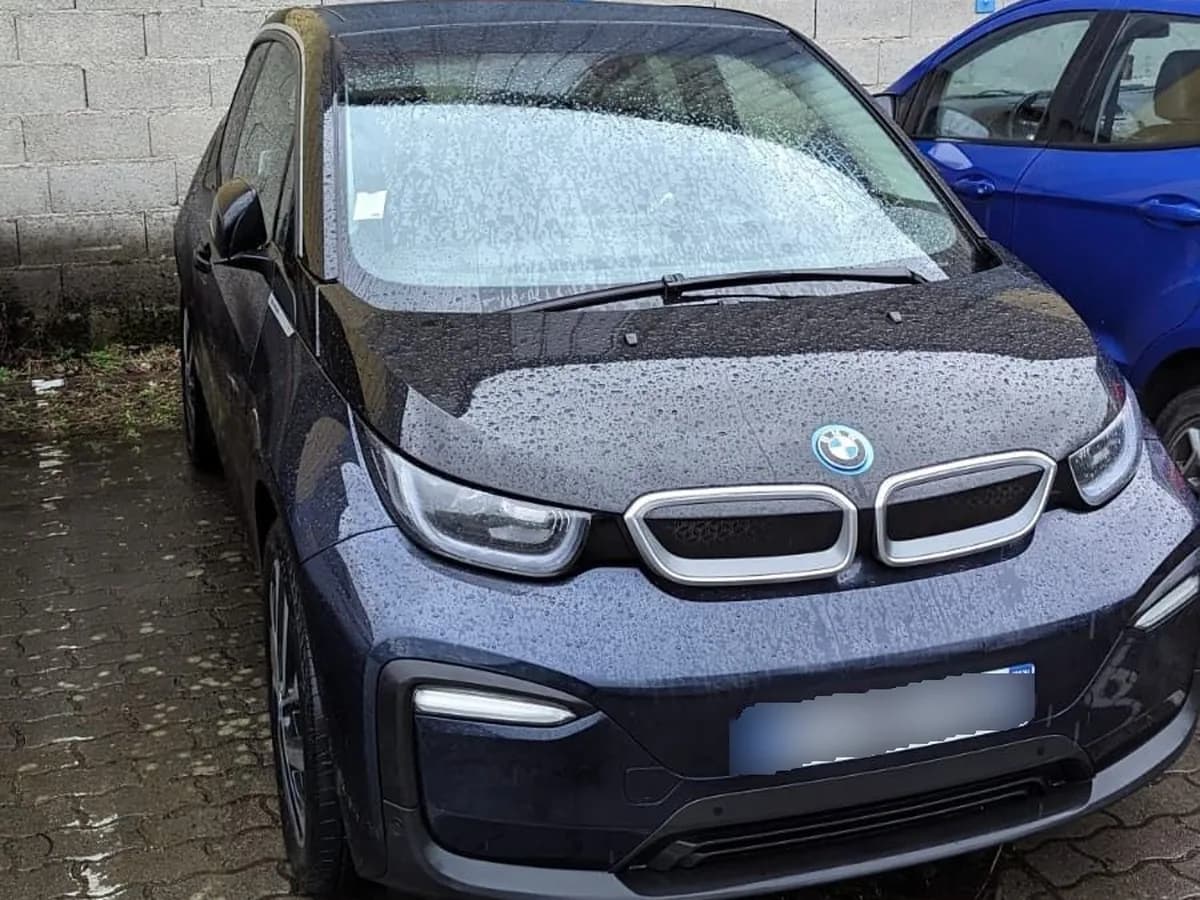
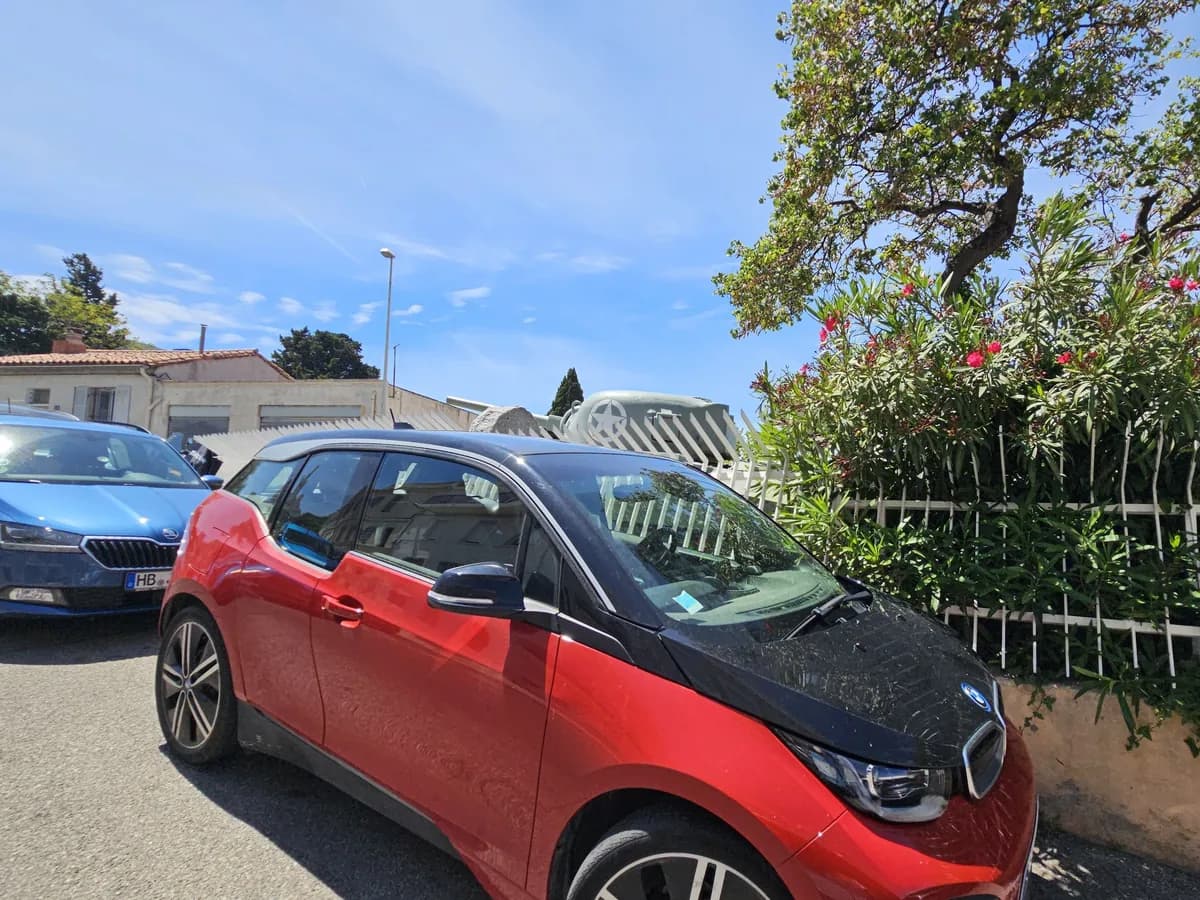
The BMW i3 is immediately recognizable by its short, upright body, forward-set cabin, and wave-shaped side glazing. The broad black section running from the hood toward the windshield, often known as the black belt, is another defining feature. Its rear-hinged rear doors are visible only after the front doors are opened because the car does not use a conventional fixed B-pillar between the two openings. The fully glazed tailgate and U-shaped rear light graphics complete the visual identity of the early cars. The facelifted cars can be identified by revised bumpers and lighting, especially at the front. The i3s has a sportier appearance, with black wheel-arch details, a wider track, and model-specific trim depending on market and equipment level. Badging and wheel design can provide clues, but they are not always conclusive. To confirm whether a car has the 60 Ah, 94 Ah, or 120 Ah battery, the most reliable evidence is the factory specification sheet, vehicle identification number, or production documentation. Exterior appearance alone cannot establish battery capacity or the presence of a range extender.
Important versions
The BMW i3 60 Ah is the original version, sold either as a battery-electric car or, in selected markets, with a range extender. The i3 94 Ah arrived for the 2017 model year with a 33 kWh gross battery and represented a major range improvement. The BMW i3s 94 Ah added a sportier character through higher output and dedicated chassis tuning. The i3 120 Ah, introduced for 2019, received a 42.2 kWh gross battery and became the most advanced version of the original hatchback body. The i3s 120 Ah combined that battery with the sport-focused suspension and exterior treatment. Naming, equipment, and range-extender availability vary by country, so the original market and model year should be checked before assigning a precise version.
The name “i3” follows BMW naming, with its rules and its exceptions. Decode a BMW name
References
- The BMW i3BMW Group PressClub
- The New BMW i3 and First Ever BMW i3sBMW Group PressClub USA
- The new 2017 BMW i3 (94 Ah)BMW Group PressClub USA
- The new 2019 BMW i3 120Ah and i3s 120AhBMW Group PressClub USA
- Production of the BMW i3 comes to a closeBMW Group PressClub Global
- The new BMW i3: Second model of the Neue KlasseBMW Group PressClub USA
- https://www.press.bmwgroup.com/usa/article/detail/T0149790EN_US/the-all-new-bmw-i3?language=en_USpress.bmwgroup.com
- https://www.bmwgroup.com/en/news/general/2026/predrive-bmw-i3.htmlbmwgroup.com
Technical specifications
Structured data available for versions linked to this model.
| Version | Power | Torque | Top speed | Drivetrain | Fuel |
|---|---|---|---|---|---|
| Base | 125.1 KW @ - RPM170 HP @ - RPM168 BHP @ - RPM | 184 lb-ft @ - RPM250 Nm @ - RPM | 93 mph (150 km/h) | Front Wheel Drive / single gear | Electric |
Frequently asked questions
- What years was the BMW i3 produced?
- ScanRacer's referenced versions cover 2013 - 2026.
- How many BMW i3 examples are documented on ScanRacer?
- 4 published scans from 4 members, with the latest photo added in August 2026.
- What is the power output of the BMW i3?
- The sourced technical data lists 125.1 KW @ - RPM170 HP @ - RPM168 BHP @ - RPM.