
E9
Introduced in 1968 as the 2800 CS, the BMW E9 was a four-seat coupe positioned at the top of BMW’s range. Its elegant body followed the styling language of BMW’s large coupes while using an architecture related to the E3 sedan. Produced until 1975, the E9 family developed from the 2800 CS into the 3.0 CS and fuel-injected 3.0 CSi, then culminated in the lightweight 3.0 CSL. The CSL was created as a homologation model for touring-car competition and became the road-going foundation for one of BMW’s most successful racing programmes. With its smooth inline-six engine, long bonnet, frameless side windows and restrained grand-touring character, the E9 remains one of the defining classic BMW coupes.
What about the car you photographed?
Upload a photo to get a suggested make, model and likely year.
No account needed for the result · Publish only if you choose
Variants by year
Make: BMW · Model: E9
2 / 2 versions shown
1970
1968
BMW E9 photos
Model summary
Data from the ScanRacer library, organized to compare versions quickly.
Model introduction
Introduced in 1968 as the 2800 CS, the BMW E9 was a four-seat coupe positioned at the top of BMW’s range. Its elegant body followed the styling language of BMW’s large coupes while using an architecture related to the E3 sedan. Produced until 1975, the E9 family developed from the 2800 CS into the 3.0 CS and fuel-injected 3.0 CSi, then culminated in the lightweight 3.0 CSL. The CSL was created as a homologation model for touring-car competition and became the road-going foundation for one of BMW’s most successful racing programmes. With its smooth inline-six engine, long bonnet, frameless side windows and restrained grand-touring character, the E9 remains one of the defining classic BMW coupes.
History
The BMW E9 arrived in late 1968 with the 2800 CS, replacing the earlier 2000 C and 2000 CS coupes. Its engineering was related to the E3 sedan, but the coupe received a longer, more distinctive body and a sportier grand-touring presentation. Karmann was responsible for assembling the bodies before final completion by BMW. Power came from BMW’s M30 inline-six, giving the 2800 CS a smoother and more substantial character than the smaller coupes it replaced. BMW expanded the range in 1971 with the 3.0 CS and 3.0 CSi. The CS used twin carburetors, while the CSi adopted Bosch electronic fuel injection and produced more power. These cars established the E9 as a fast, comfortable and technically refined long-distance coupe. The 3.0 CSL followed as a lightweight homologation model intended to make the E9 eligible for touring-car competition. Its weight-saving measures included aluminum body panels, reduced equipment and Plexiglas glazing. The CSL then became the foundation for BMW’s factory racing programme. The racing version won the European Touring Car Championship in 1973 and added five more titles between 1975 and 1979. Although E9 production ended in 1975, the model’s combination of luxury-coupe design and competition success had a lasting influence on BMW’s sporting identity.
Generations
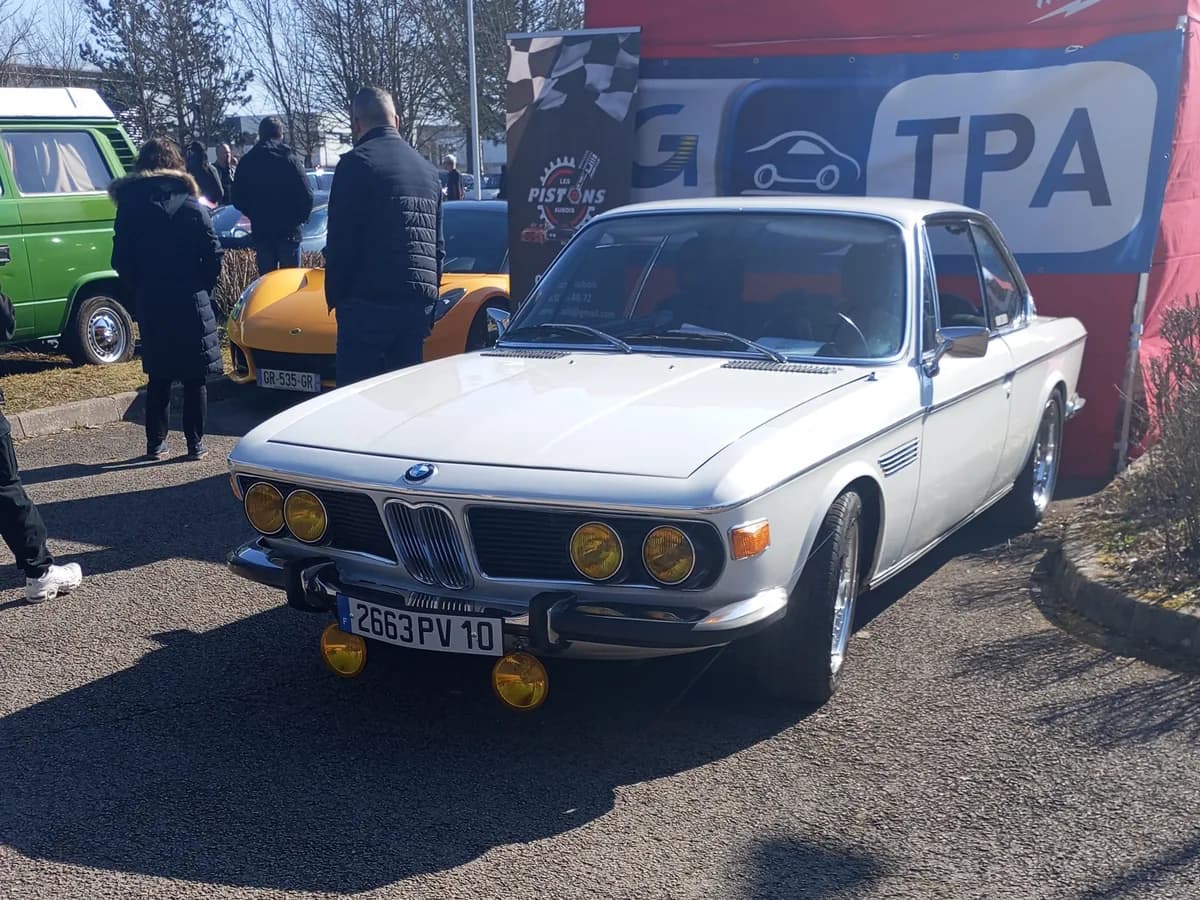
The BMW E9 is best understood as a single coupe family rather than as a series divided into modern-style generations. Its main stages are defined by engine development and equipment changes. The first model was the 2800 CS, introduced in 1968 with a 2.8-liter inline-six using carburetors. It established the E9’s long bonnet, frameless side windows and formal grand-touring proportions. From 1971, BMW added the 3.0 CS and 3.0 CSi with a 3.0-liter engine. The 3.0 CS retained carburetors, while the CSi used Bosch electronic fuel injection. This distinction is useful when identifying an E9 and also reflects the hierarchy within the standard production range: the CSi was the more powerful road model before the arrival of the CSL. A 2.5 CS was introduced later as a less powerful, more accessible version near the end of the model’s life. The 3.0 CSL was a separate lightweight branch rather than a conventional trim level. Created for racing homologation, it used weight-saving construction and, on later cars, a distinctive aerodynamic package. Early examples used the carbureted 180-hp engine, while later cars adopted fuel injection and higher output. Equipment, trim and body details therefore differ significantly according to production stage and market.
Key differences
The main differences between E9 variants concern engine displacement, fuel delivery and weight. The 2800 CS uses BMW’s 2.8-liter inline-six with carburetors. The 3.0 CS increases displacement to 3.0 liters but keeps carburetors, while the 3.0 CSi is identified by Bosch electronic fuel injection and stronger performance. These versions remain comparatively well-equipped grand-touring coupes. The 3.0 CSL follows a different philosophy. Its name refers to “Coupé, Sport, Leichtbau”, or lightweight construction, reflecting its purpose as a racing-homologation model. Aluminum panels, Plexiglas glazing and reduced insulation or equipment helped lower weight. Early CSL cars used the carbureted 180-hp engine; later examples adopted fuel injection and produced 200 hp, followed by higher-output developments rated at 206 hp. The most dramatic aerodynamic parts were associated with later cars and should not automatically be expected on every CSL.
Photo recognition
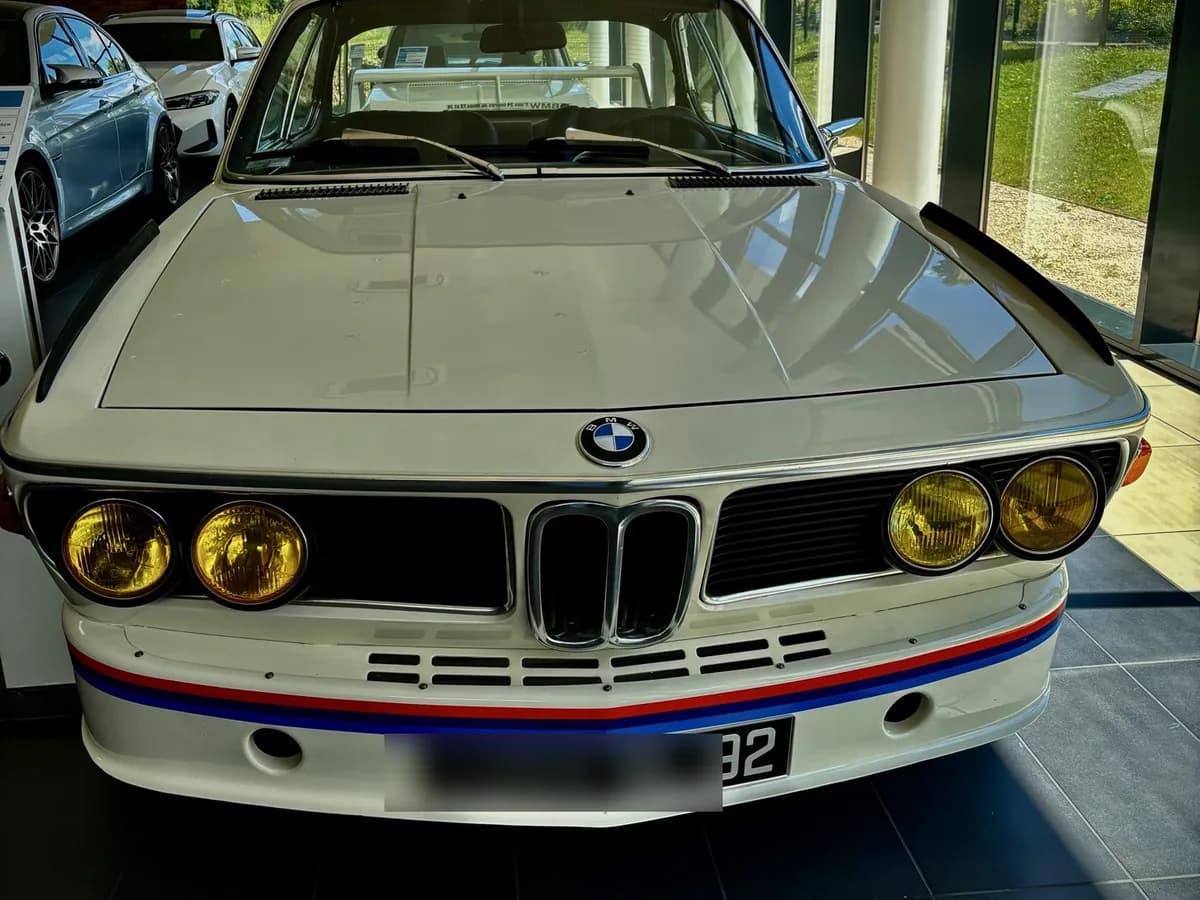
The BMW E9 is first identified by its long-bonnet coupe shape, twin round headlights set into the grille and frameless side windows. The Hofmeister kink at the rear side window is especially clear in profile. Other defining proportions include a low waistline, short rear deck and four-seat cabin. These features help separate the E9 from the related E3 sedan, even though the two models share important engineering principles. Variant identification requires more than reading a badge. Engine configuration, production records and original documentation are more reliable than appearance alone. The 3.0 CSi is associated with Bosch fuel injection, while a genuine CSL may show aluminum panels, lightweight glazing and reduced equipment. Later CSL cars are commonly recognized by their wider arches and dramatic aerodynamic parts, including a front spoiler, front-fender air guides, roof spoiler and large rear wing. However, not every CSL received the complete “Batmobile” appearance, and many standard E9 coupes have since been modified to imitate it.
Important versions
The 2800 CS was the launch model in 1968 and established the E9 family’s basic design and character. The 3.0 CS and 3.0 CSi arrived in 1971 and formed the core of the range: the CS used carburetors, while the CSi adopted Bosch electronic fuel injection. The 3.0 CSL was the specialist derivative. Created for racing homologation, it reduced weight through aluminum panels, Plexiglas glazing and simplified equipment, then gained further engine and aerodynamic developments. The 2.5 CS joined the range late in the model’s career as a less powerful alternative. Because specifications and equipment varied by market, rare versions should be authenticated through BMW records, chassis numbers and period documentation rather than appearance alone.
The name “E9” follows BMW naming, with its rules and its exceptions. Decode a BMW name
References
- BMW 3.0 CSL (E9), 180 hpBMW Group Classic
- Reproduction parts for the E9BMW Group Classic
- BMW E9 Guide: Models, Specs & Buyer’s GuideCar & Classic
- BMW E9 coupes buyer’s guideClassic & Sports Car
- https://www.adac.de/rund-ums-fahrzeug/autokatalog/marken-modelle/bmw/e9/adac.de
- https://www.motorsportmagazine.com/archive/article/april-2020/134/buying-guide-bmw-e9-csl-batmobile/motorsportmagazine.com
- https://supercarnostalgia.com/blog/bmw-e9-30-cslsupercarnostalgia.com
Frequently asked questions
- What years was the BMW E9 produced?
- ScanRacer's referenced versions cover 1968 - 1970.
- How many BMW E9 examples are documented on ScanRacer?
- 2 published scans from 2 members, with the latest photo added in August 2026.
What about the car you photographed?
Upload a photo to get a suggested make, model and likely year.
No account needed for the result · Publish only if you choose