Power
400 ch, 480 Nm
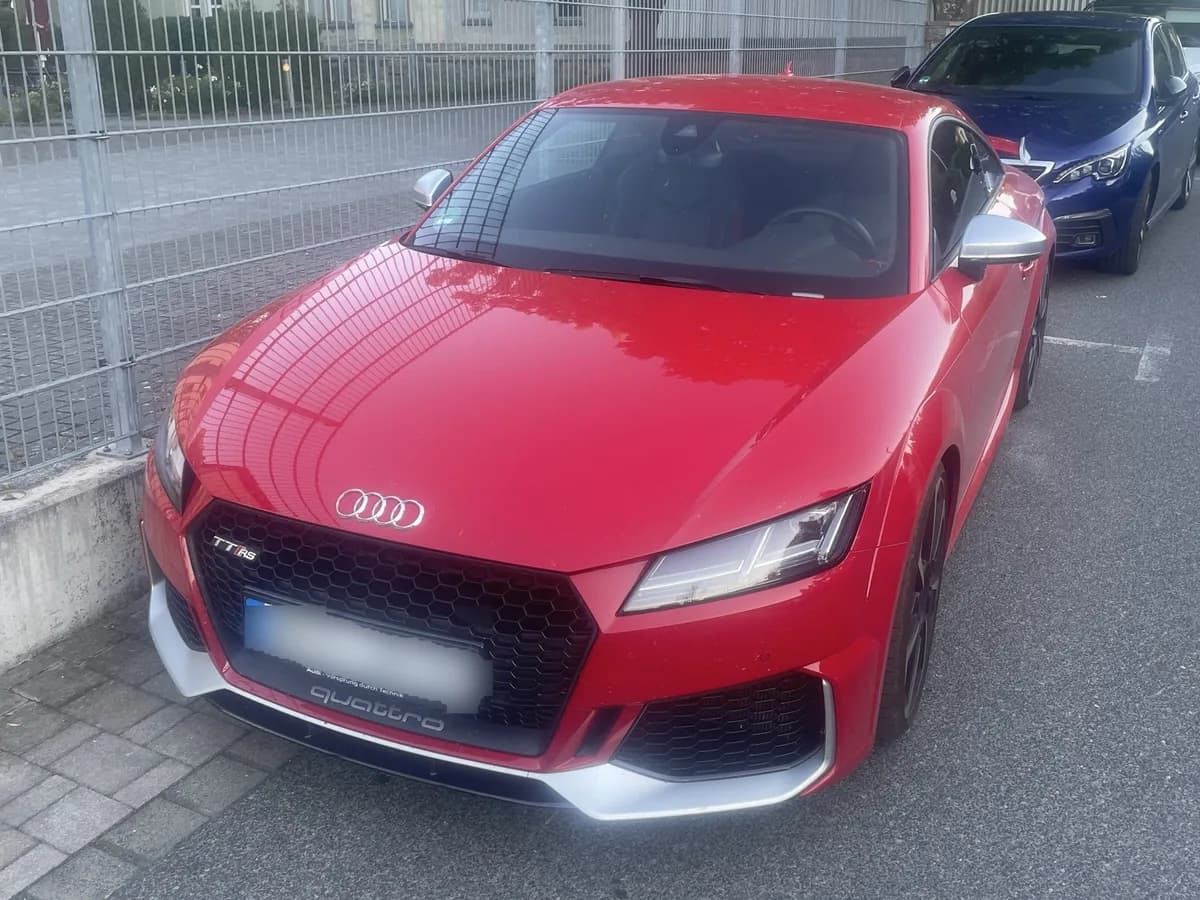
In 2016, the Audi TT RS Coupé entered a new phase with the TT’s third generation. In its compact two-door body, it used a thoroughly revised 2.5 TFSI five-cylinder engine producing 400 hp and 480 Nm. The seven-speed S tronic became the core of the drivetrain, while quattro all-wheel drive remained central to its identity. In this form, the Coupé was announced at 1,440 kg and could reach 100 km/h in 3.7 seconds. Its more aggressive appearance clearly set it apart from a standard TT, with RS-specific detailing and the extra rigidity of a fixed-roof body.
The TT RS began as Audi’s return to a turbocharged petrol five-cylinder, first introduced in 2009 on the TT’s second generation. Developed by quattro GmbH, the original TT RS used a 2.5-litre TFSI engine rated at 340 hp and 450 Nm. In 2012, the TT RS plus raised that output to 360 hp and 465 Nm without changing the model’s basic formula. The concept evoked Audi’s 1980s competition cars through the combination of five-cylinder layout, turbocharging and quattro drive, although it was not a direct rally replica.
In 2016, the TT RS moved into a new generation with the third iteration of the TT. The engine was extensively reworked, described as lighter and fitted with an aluminium block. Output rose to 400 hp and 480 Nm, and the seven-speed S tronic became the central transmission choice. This change also brought a more modern presentation and, depending on configuration, Audi’s virtual cockpit. In Coupé form, the car represented the most performance-focused expression of this new TT RS phase.
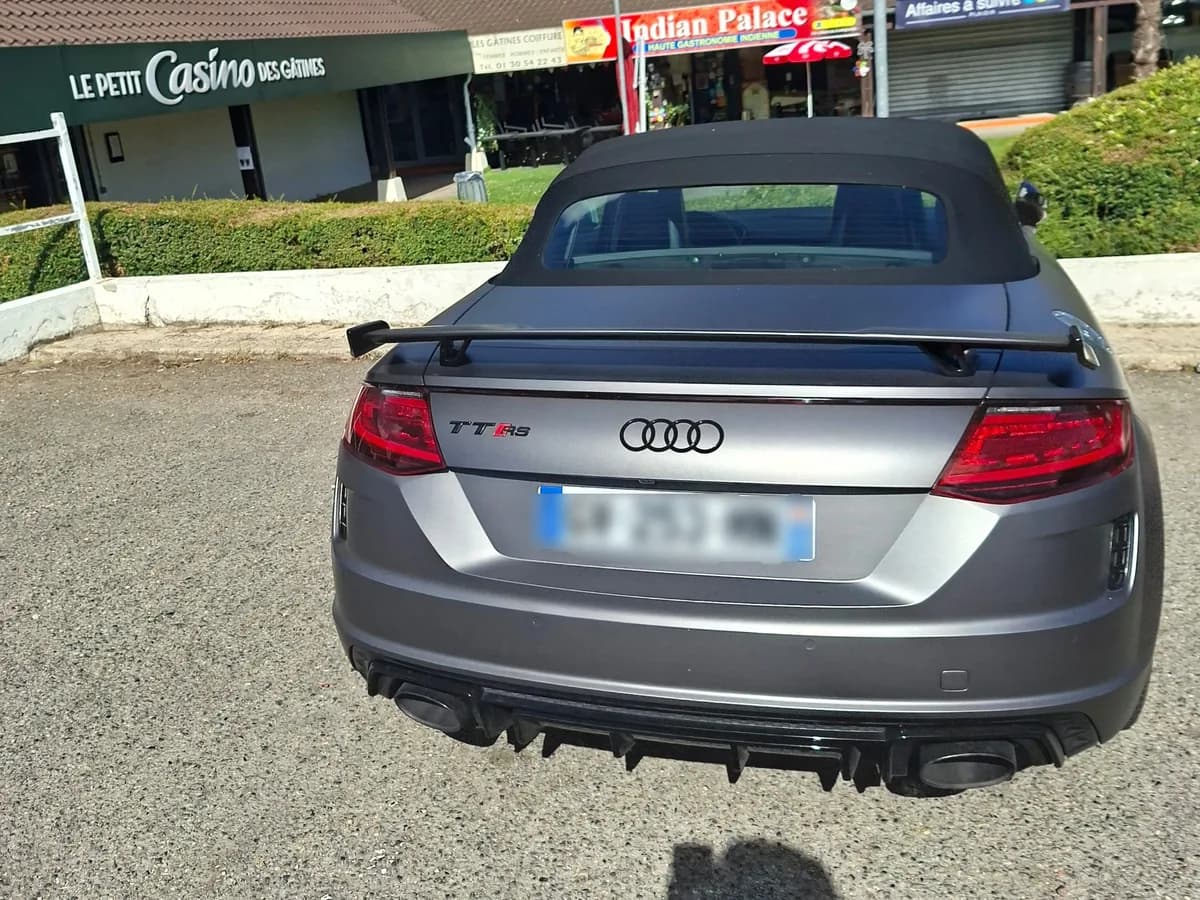
Photos added by the community for this page.
Source: Audi MediaCenter
For 2016, the available information mainly identifies the TT RS Coupé through its position in the range and its technical specification. The model belongs to the third-generation TT and sits at the top of the TT RS family for that period. Detailed production data are not provided in the dossier, but confirming an example depends more on the VIN, build date and national specification sheet than on the model year alone.
Compared with the first-generation TT RS, the 2016 model adopted a more modern layout and a more powerful engine. Output increased from 340 to 400 hp, while torque rose to 480 Nm and the seven-speed S tronic replaced the transmission setup used at the launch of the original car. The engine was also said to be 26 kg lighter than its predecessor, helping performance and overall dynamics.
The Coupé also benefited from the stiffness of a fixed-roof body, which explains its acceleration advantage over the Roadster. Audi quoted 3.7 seconds for 0 to 100 km/h, versus 3.9 seconds for the open version. At 1,440 kg, it was the lighter and quicker body style in this generation. Visually, it used a more aggressive RS presentation, including a honeycomb grille and prominent oval exhaust outlets.
Within the TT RS line, it is important to distinguish both generations and body styles. The first generation is identified by its 2.5 TFSI five-cylinder engine with 340 hp, then by the 2012 TT RS plus with 360 hp. The second-generation TT RS, launched in 2016 on the third-generation TT, introduced the 400 hp and 480 Nm engine, a seven-speed S tronic, and quattro all-wheel drive with electrohydraulic torque distribution.
For 2016, the Coupé and Roadster shared most of their technical base and RS equipment. The Coupé stood out through its fixed roof, lower weight and slightly stronger performance. The Roadster added an electrically operated soft top and structural reinforcements, which made it heavier and reduced luggage space. Depending on market and configuration, some equipment details could vary.
Supports the 2016 TT RS engine, power, torque, acceleration, transmission, quattro system, body differences, dimensions, weights, design details and equipment.
Provides independent automotive context on the 2016 model as the second TT RS generation and its Coupé/Roadster positioning.
Source found by OpenAI web search for this model page.
Source found by OpenAI web search for this model page.
Source found by OpenAI web search for this model page.
Source found by OpenAI web search for this model page.
Source found by OpenAI web search for this model page.