
RS4
The Audi RS4 is the high-performance member of the A4 family, developed by quattro GmbH, later known as Audi Sport. Its story began in the late 1990s with an Avant powered by a Cosworth-developed 2.7-liter twin-turbo V6 rated at 380 hp. Later generations adopted very different engineering solutions: a naturally aspirated V8 for the B7, a 4.2-liter naturally aspirated V8 for the B8, and a 2.9-liter twin-turbo V6 for the B9. The Avant body style remains central to the RS4 identity, although the generation introduced in 2005 was also offered as a sedan and convertible. Within the ScanRacer coverage, the referenced years run from 1999 to 2019 and include labels such as Base, Avant, Sedan, Cabrio, and Cabriolet.
What about the car you photographed?
Upload a photo to get a suggested make, model and likely year.
No account needed for the result · Publish only if you choose
Variants by year
Make: Audi · Model: RS4
8 / 8 versions shown
2019

2017

2012
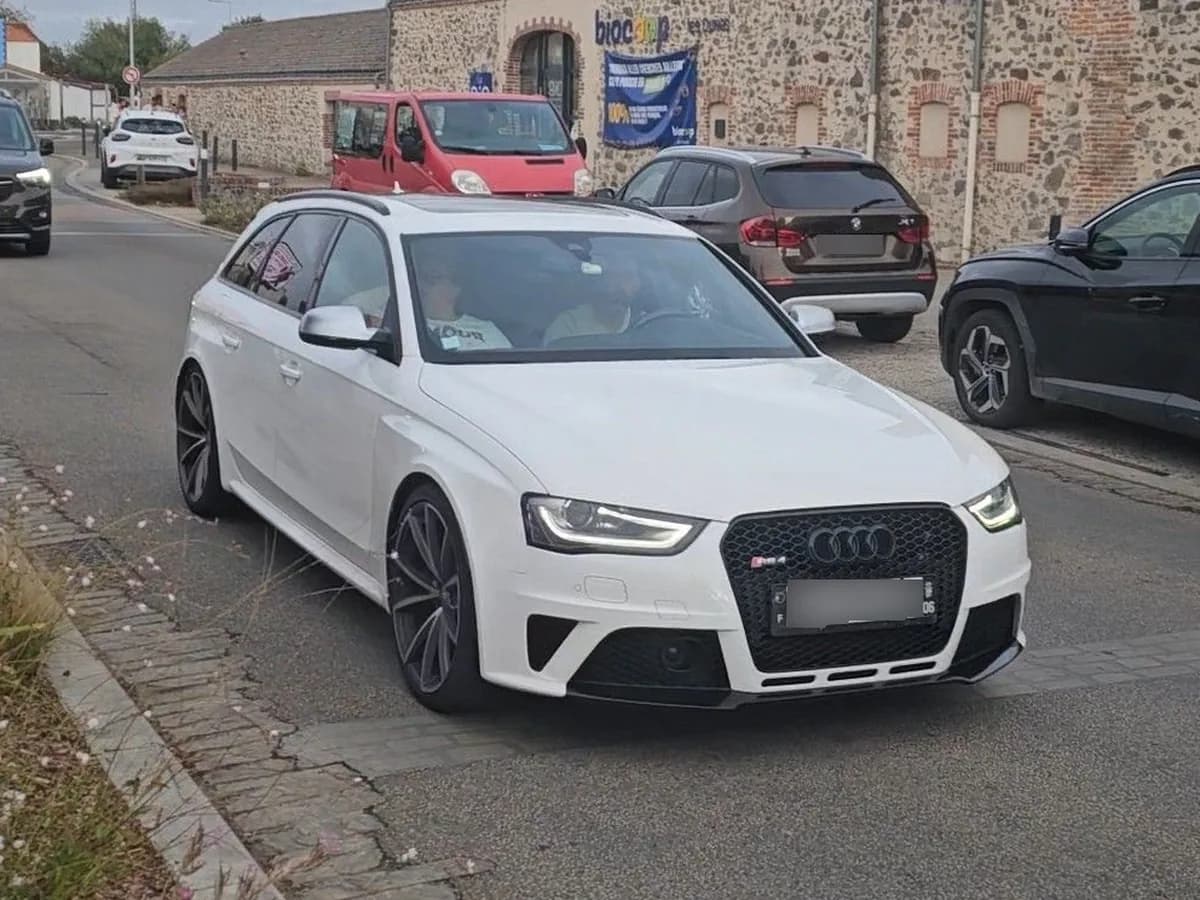
2006


2005
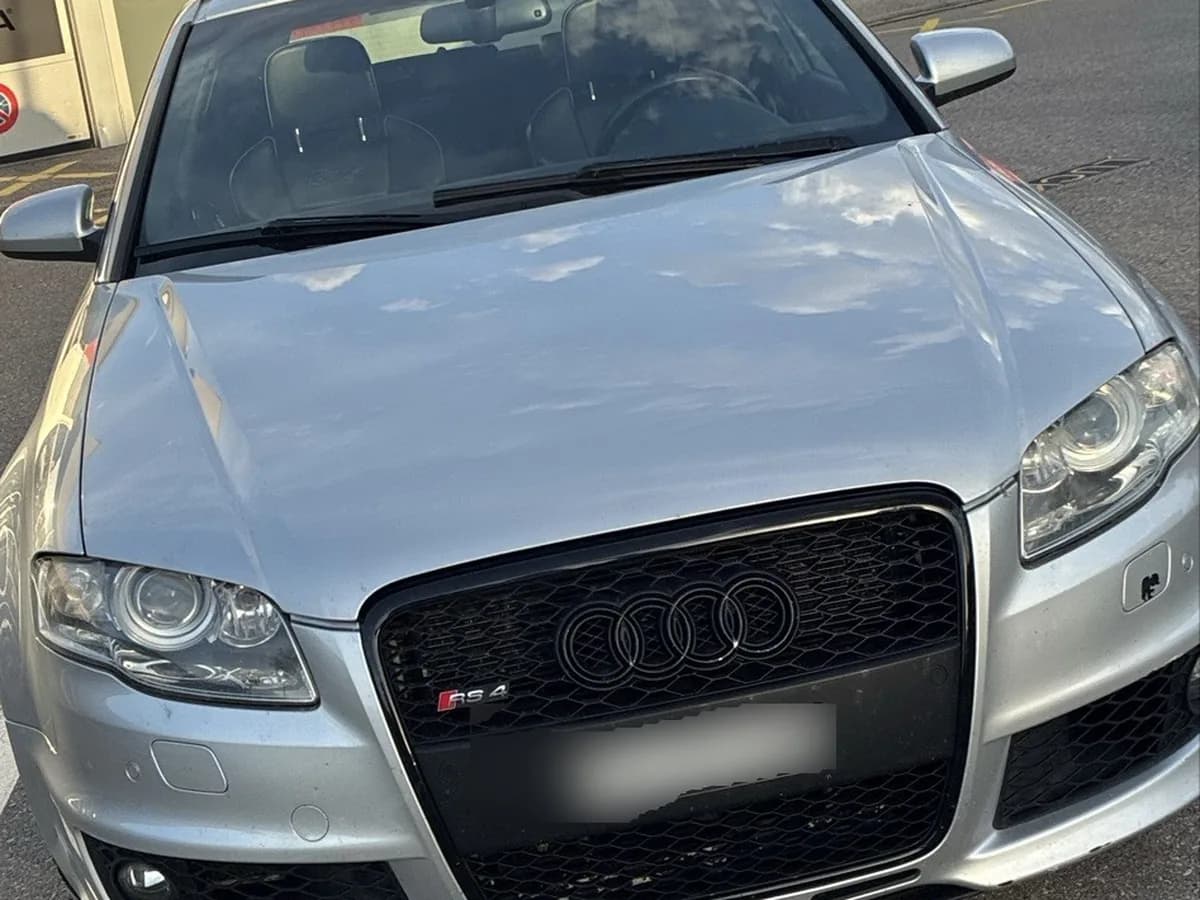
1999
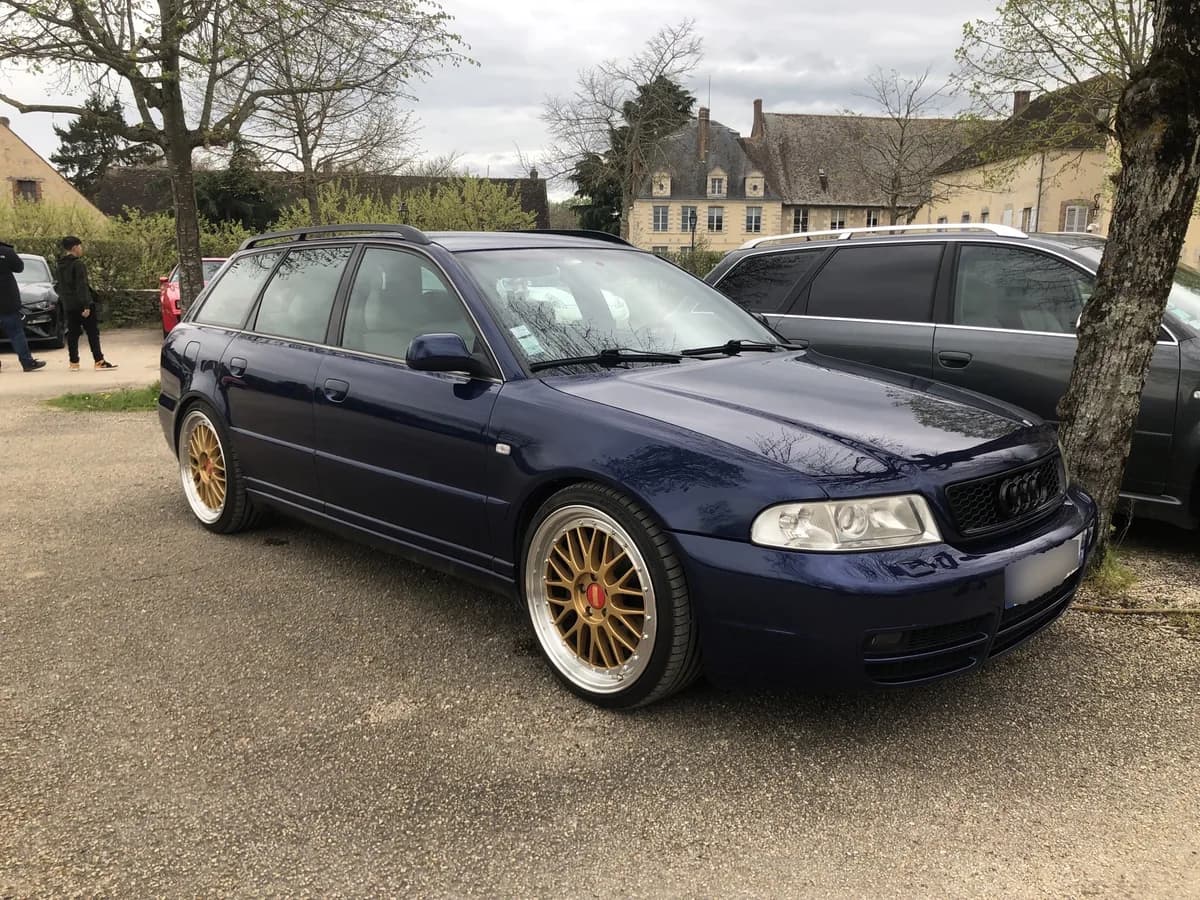
Audi RS4 photos
Model summary
Data from the ScanRacer library, organized to compare versions quickly.
Model introduction
The Audi RS4 is the high-performance member of the A4 family, developed by quattro GmbH, later known as Audi Sport. Its story began in the late 1990s with an Avant powered by a Cosworth-developed 2.7-liter twin-turbo V6 rated at 380 hp. Later generations adopted very different engineering solutions: a naturally aspirated V8 for the B7, a 4.2-liter naturally aspirated V8 for the B8, and a 2.9-liter twin-turbo V6 for the B9. The Avant body style remains central to the RS4 identity, although the generation introduced in 2005 was also offered as a sedan and convertible. Within the ScanRacer coverage, the referenced years run from 1999 to 2019 and include labels such as Base, Avant, Sedan, Cabrio, and Cabriolet.
History
The first RS4 belongs to the B5 generation of the A4. Audi presented it in 1999 and began sales in 2000 as an Avant-only model. Its Cosworth-developed 2.7-liter twin-turbo V6 produced 380 hp, while flared wheel arches, lowered suspension, 18-inch wheels, and quattro all-wheel drive clearly separated it from a standard A4. Audi states that production was completed at Neckarsulm by a specialist team and reached 6,046 cars over roughly eighteen months. The second generation arrived in 2005 on the A4 B7 platform. It changed direction with a naturally aspirated 4.2-liter V8 and introduced several body styles: sedan, Avant, and later convertible. Audi also highlighted an asymmetric, dynamically variable center differential intended to give the car a more rear-biased handling balance. The B8 generation was presented in 2012 and returned to an Avant-only formula. It retained a naturally aspirated 4.2-liter V8, now producing 450 hp. The B9, unveiled in 2017, switched to a 2.9-liter twin-turbo V6 rated at 450 hp. It continued the RS4 recipe of strong performance, quattro all-wheel drive, and practical everyday usability.
Generations
The RS4 B5 is the first generation sold under the RS4 name. Based on the A4 B5, it is identified primarily by its Avant body, heavily flared wheel arches, and 2.7-liter twin-turbo V6. Audi places its introduction in 1999, with commercial sales beginning in 2000. It was a short, specialist production model closely connected with quattro GmbH. The RS4 B7 appeared in 2005. It replaced the turbocharged V6 with a naturally aspirated 4.2-liter V8 and expanded the body-style range considerably. The sedan and Avant were followed by a convertible. This generation also brought a notable quattro development: an asymmetric, dynamically variable center differential. In the ScanRacer data, the Sedan, Avant, Cabrio, and Cabriolet labels cluster around 2005 and 2006. That alignment is consistent with the B7 period, although the available data does not establish a precise market specification for every label. The B8, introduced in 2012, returned to an Avant-only format and retained a naturally aspirated V8, producing 450 hp. The B9 arrived in 2017 with a 2.9-liter twin-turbo V6 and again used the Avant body. For the years covered through 2019, these four families provide the clearest generation-based structure.
Key differences
The main differences between generations are mechanical. The B5 uses a 2.7-liter twin-turbo V6 and represents the rarest formula, developed closely with quattro GmbH. The B7 moved to a naturally aspirated 4.2-liter V8 and offered a broader body-style range, including sedan, Avant, and convertible. It also introduced an important evolution of the quattro center differential with an asymmetric, dynamically variable torque distribution. The B8 retained a naturally aspirated V8 but returned to an Avant-only body. The B9 changed engine philosophy again, adopting a 2.9-liter twin-turbo V6 while keeping the stated 450-hp output. These distinctions should not be used in isolation to identify a car. Equipment, market specification, model-year timing, and optional features can affect both appearance and technical details. Body style, engine type, and generation codes are therefore best treated as complementary clues rather than standalone proof.
Photo recognition
A B5 RS4 can be identified by its Avant-only body, prominently flared arches, distinctive side skirts, large air intakes, and sport exhaust outlets. Its overall shape remains related to the A4 B5, but the additional width is obvious when viewed from the front or rear. The B7 is the only generation in this period offered in three body styles. The sedan and Avant share an aggressive front end, widened arches, and a naturally aspirated V8, while the convertible has a different roofline and rear design. An RS4 badge alone is not enough to authenticate a car because exterior parts may have been changed or retrofitted. The B8 should be identified as a wide-bodied Avant with a more modern front design and details associated with the A4 B8 architecture. The B9, introduced in 2017, has a sharper Avant profile, a wider Singleframe grille, and newer lighting signatures. Reliable identification should combine body style, A4 generation, engine, vehicle documentation, and production codes.
Important versions
The B5 RS4 Avant is especially important in the model’s history: it was the first RS4, the only one to use the 2.7-liter twin-turbo V6, and the only one of its generation offered exclusively as an Avant. The B7 RS4 is equally significant because it introduced the naturally aspirated V8 and added the sedan and convertible to the Avant range. The B8 RS4 Avant marked the model’s return after a production gap and retained a naturally aspirated V8 in an exclusively practical body style. The B9 RS4 Avant then introduced the 2.9-liter twin-turbo V6 and is the newest generation included in the ScanRacer period through 2019. Labels such as Base, Avant, Sedan, Cabrio, and Cabriolet should be treated as catalog categories; they do not replace manufacturer generation codes or verification of an individual vehicle.
The name “RS4” follows Audi naming, with its rules and its exceptions. Decode a Audi name
References
- Audi RS 4 Avant 2.9 TFSI technical dataAudi MediaCenter
- https://www.topgear.com/car-news/classic/heres-every-generation-audi-rs4-which-one-would-you-picktopgear.com
- https://www.caradisiac.com/gamme--audi-rs4/caradisiac.com
- https://www.ausmotive.com/downloads/Audi/RS4-Avant-press-kit-June2012.pdfausmotive.com
- https://australiancar.reviews/_pdfs/Audi_RS4_B8_Presskit_201302.pdfaustraliancar.reviews
Technical specifications
Structured data available for versions linked to this model.
| Version | Power | Torque | Top speed | Drivetrain | Fuel |
|---|---|---|---|---|---|
| — | 450 horsepower | — | — | quattro all-wheel-drive / Eight-speed Tiptronic | — |
Frequently asked questions
- What years was the Audi RS4 produced?
- ScanRacer's referenced versions cover 1999 - 2019.
- How many Audi RS4 examples are documented on ScanRacer?
- 15 published scans from 13 members, with the latest photo added in October 2026.
- What is the power output of the Audi RS4?
- The sourced technical data lists 450 horsepower.
What about the car you photographed?
Upload a photo to get a suggested make, model and likely year.
No account needed for the result · Publish only if you choose