
A8
Introduced in 1994 as the successor to the Audi V8, the Audi A8 became the brand’s flagship luxury sedan. Its first generation made a strong technical statement with a body built entirely from aluminum using Audi Space Frame technology, an approach intended to reduce weight while maintaining structural rigidity. Across four generations, the A8 remained a large four-door sedan, commonly offered in standard- and long-wheelbase forms, while its engines, quattro all-wheel-drive systems, and electronic features continued to evolve. Between 1994 and 2017, the range also included particularly ambitious derivatives, including the performance-oriented S8 and several W12 models. This period charts the A8’s development from a restrained, engineering-led luxury sedan into one of Audi’s most comprehensive technology showcases.
What about the car you photographed?
Upload a photo to get a suggested make, model and likely year.
No account needed for the result · Publish only if you choose
Variants by year
Make: Audi · Model: A8
5 / 5 versions shown
2017
2013
2009
2002

1994
Audi A8 photos
Model summary
Data from the ScanRacer library, organized to compare versions quickly.
Model introduction
Introduced in 1994 as the successor to the Audi V8, the Audi A8 became the brand’s flagship luxury sedan. Its first generation made a strong technical statement with a body built entirely from aluminum using Audi Space Frame technology, an approach intended to reduce weight while maintaining structural rigidity. Across four generations, the A8 remained a large four-door sedan, commonly offered in standard- and long-wheelbase forms, while its engines, quattro all-wheel-drive systems, and electronic features continued to evolve. Between 1994 and 2017, the range also included particularly ambitious derivatives, including the performance-oriented S8 and several W12 models. This period charts the A8’s development from a restrained, engineering-led luxury sedan into one of Audi’s most comprehensive technology showcases.
History
The Audi A8 appeared in 1994 after being shown at the Geneva Motor Show, replacing the Audi V8 at the top of Audi’s range. Its launch coincided with a major shift in the brand’s identity: the A8 name introduced a new model-naming structure, while the Audi Space Frame aluminum body became one of the car’s defining technical features. Audi presented the construction as a way to reduce weight compared with a conventional steel body, with potential benefits for efficiency and road manners. The second generation, introduced from 2002, retained lightweight construction but adopted a more substantial design and a more integrated electronic architecture. Audi’s official material highlights the MMI operating system and an expanded range that included long-wheelbase models and a 6.0-liter W12. The third generation arrived in 2010 and further established the A8 as a technology flagship, adding a broader selection of gasoline and diesel engines, advanced suspension systems, and increasingly elaborate comfort equipment. A significant update followed for 2013, bringing revised styling, updated engines, and Matrix LED headlights. The fourth generation was revealed in 2017, outside the main period covered here.
Generations
The first generation, launched in 1994 and commonly identified as the D2, is defined by restrained proportions and its aluminum ASF construction. It established the A8 formula with V6 and V8 engines depending on the market, quattro all-wheel drive, and an emphasis on low weight rather than visual excess. The related S8 added a more overt performance character. The second generation, sold from 2002 to 2009, introduced a more sculpted exterior and an interior organized around Audi’s MMI interface. It continued to use an aluminum space-frame structure and was offered in long-wheelbase form. Its range also became more ambitious, with prestigious powertrains such as the W12 and a broader diesel presence in selected markets. The third generation began in 2010. It brought sharper styling, a more horizontal cabin design, and a larger portfolio of electronic systems. Depending on the market and specification, the range included V6, V8, diesel, and W12 powertrains. The 2013 update introduced exterior revisions and Matrix LED headlights. Within the period represented by this library, coverage ends in 2017, when the next A8 generation was introduced.
Key differences
The differences between generations concern less the basic formula than the technology, styling, and powertrain strategy. The first A8 emphasized restrained design and the low weight of its aluminum structure. The second generation introduced a more expressive body, Audi’s MMI interface, a broader range of engines, long-wheelbase versions, and the W12 option. The third generation adopted sharper exterior lines and a more prominent electronic architecture inside the cabin. It also added more driver-assistance systems, turbocharged engines, and, after the 2013 update, Matrix LED headlights depending on specification and market. Because badges, engines, transmissions, and equipment varied between countries, identification by production period and market is safer than relying on a trim name alone. Two cars with the same A8 badge may therefore differ significantly in equipment or drivetrain.
Photo recognition
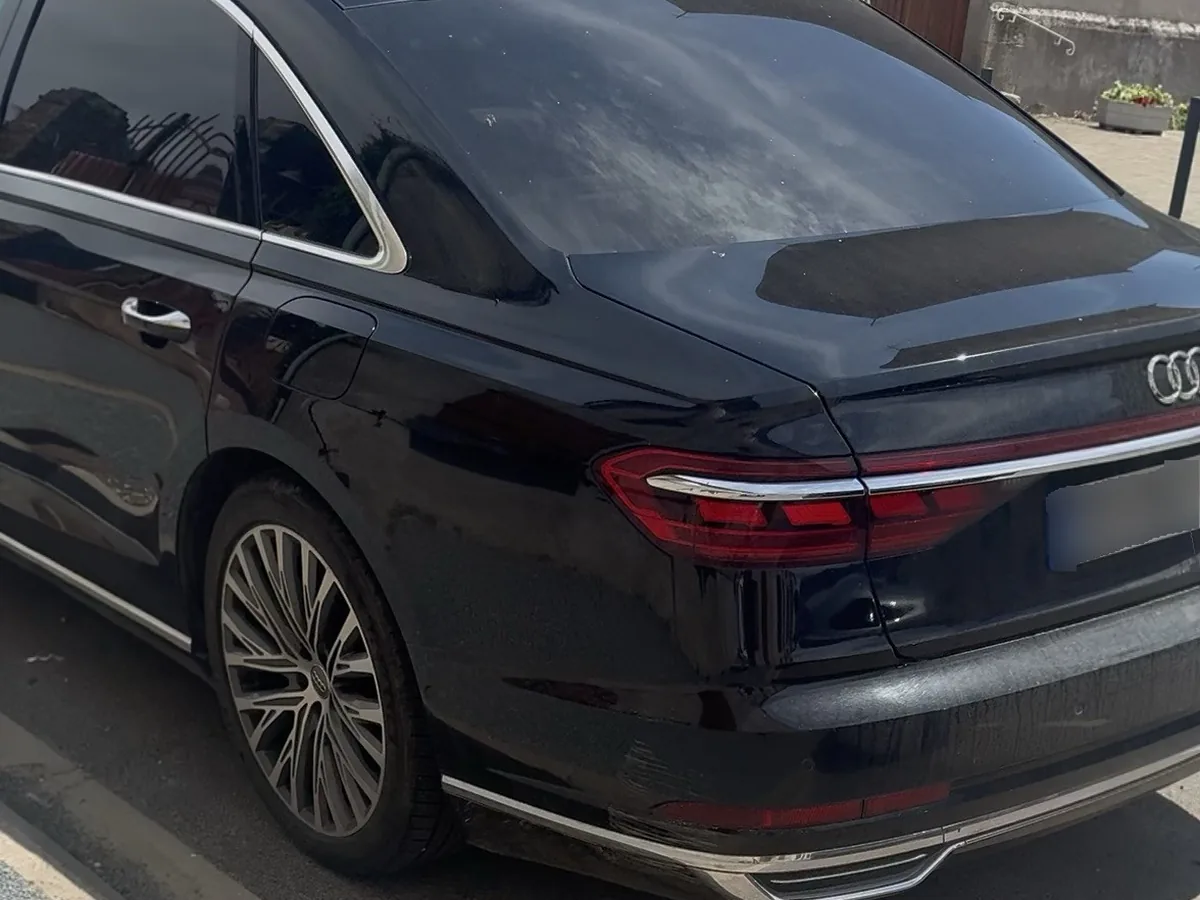
A first-generation A8 usually has very smooth bodywork, restrained side surfacing, and a narrower grille than later cars. The second generation looks wider and more sculpted; its dashboard may feature the MMI control system, although equipment depends on model year and specification. The third generation is identified by sharper lines, a large Singleframe grille, and horizontal rear lamps. Facelifted cars from 2013 onward may have more elaborate LED lighting signatures and, depending on trim, Matrix LED headlights. To distinguish a standard-wheelbase A8 from an A8 L, examine the length of the rear door and the space between the rear axle and the passenger compartment rather than relying only on badges. An S8 may use sportier exterior details, distinct exhaust outlets, or dedicated badging, but exact cues vary by market. Wheels, headlights, and bumpers may also be optional, so a single visual feature should not be treated as conclusive identification.
Important versions
The S8 is the best-known performance derivative of the A8 family. It retains the role of a large luxury sedan but receives a more dynamic chassis setup and more powerful engines. W12 versions sit at the top of the range in several generations, combining a compact engine layout with a strong emphasis on refinement and equipment. The A8 L focuses on rear-seat space through its extended wheelbase and was aimed at buyers seeking maximum passenger comfort. Depending on market and model year, the broader range also included gasoline V6 and V8 engines, V6 and V8 TDI diesels, and hybrid versions during the third generation. Commercial names and exact equipment should always be checked against the relevant year and country, since the same badge did not guarantee identical specifications worldwide.
The name “A8” follows Audi naming, with its rules and its exceptions. Decode a Audi name
References
- A8 From 2002 to 2009Audi UK Press
- The New Audi A8Audi UK Press
- UK new generation Audi A8 models ready for a grand entranceAudi UK Press
- Sharpened design and innovative technologies for the flagship: the enhanced Audi A8Audi
- A8/S8 ModelsAudi of America Media
- https://www.motortrend.com/features/audi-a8-history-photos-generations-specificationsmotortrend.com
- https://www.cars.com/research/audi-a8/cars.com
Frequently asked questions
- What years was the Audi A8 produced?
- ScanRacer's referenced versions cover 1994 - 2017.
- How many Audi A8 examples are documented on ScanRacer?
- 4 published scans from 4 members, with the latest photo added in October 2026.
What about the car you photographed?
Upload a photo to get a suggested make, model and likely year.
No account needed for the result · Publish only if you choose