Alpine A310 1971
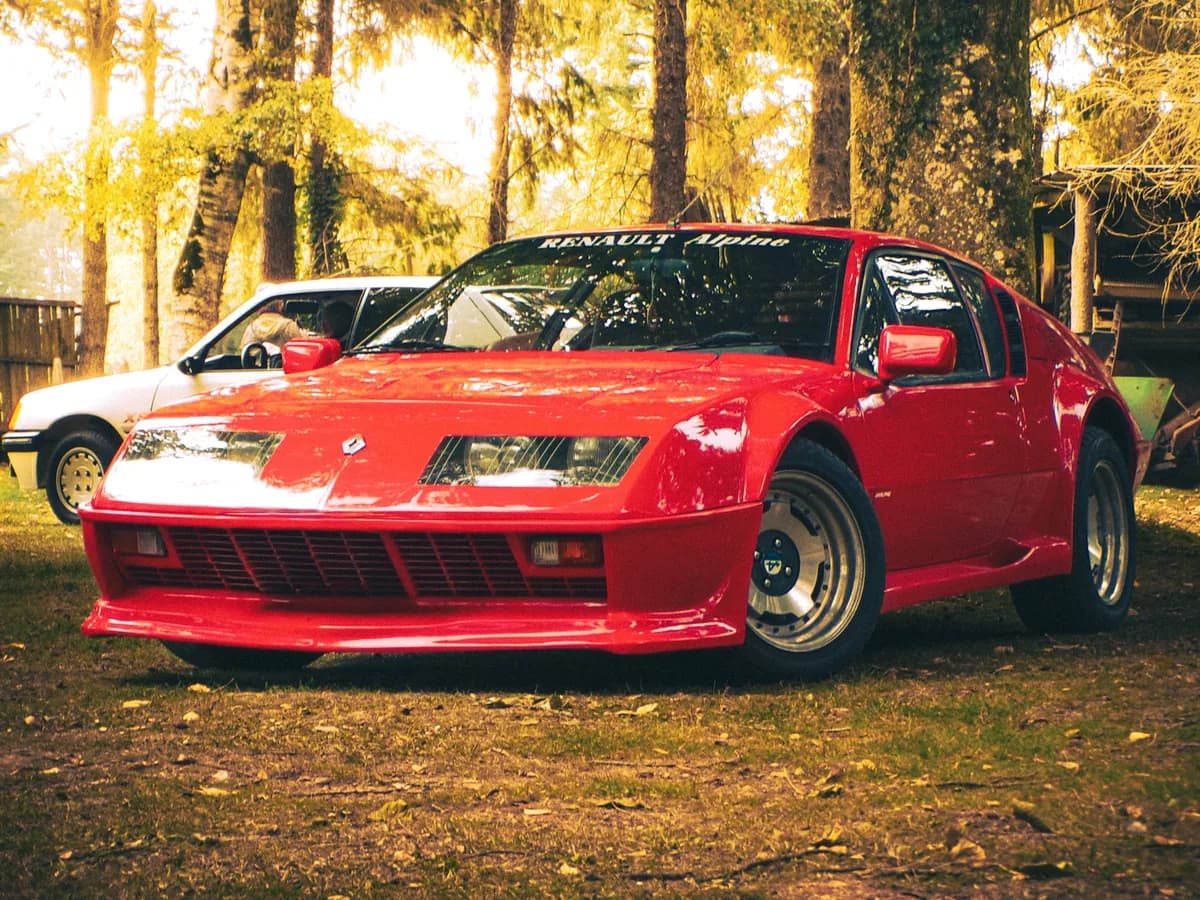
Introduced at the Geneva Motor Show in March 1971, the Alpine A310 marked a new direction for the French marque. Larger and better suited to grand touring than the A110, it retained a rear-mounted powertrain, a steel backbone chassis and a lightweight polyester body. The 1971 model belongs to the first four-cylinder generation, identified by its six-headlamp nose beneath a transparent cover. A Renault-derived 1,605 cc engine was mounted longitudinally behind the passenger compartment and drove the rear wheels. With its low wedge-shaped profile and 2+2 layout, the A310 aimed to combine Alpine’s sporting character with the space and refinement expected from a more mature grand-tourer. It was conceived as a broader-ranged companion to the A110 rather than a direct replacement.
Curious about this car?
Explore A310, then try your own photo.
No account needed for the result · Publish only if you choose
History
Jean Rédélé developed the A310 while Alpine was expanding rapidly on the strength of the A110’s competition success. The new model was intended to reach a wider audience and move the company toward the sports-car and grand-touring market, offering more cabin room and a more sophisticated presentation. It was developed closely with Renault’s engineering organization and unveiled to the public at Geneva in 1971. The car retained the principles that had made Alpine distinctive: a rigid backbone structure, independent suspension, a rear-mounted Renault powertrain and a lightweight composite body. Because the PRV engine was not yet ready for production, the launch car used a 1,605 cc four-cylinder derived from Renault’s sporting units. The 1973 fuel crisis severely affected demand for cars in this category and helped accelerate Renault’s financial involvement in Alpine. The A310 nevertheless remained in production and continued to evolve until the V6 arrived in 1976.
Latest scans
Photos added by the community for this page.
Anecdotes
The A310’s identity is closely tied to its striking front end. Six headlamps positioned beneath a broad transparent cover gave the early car an instantly recognizable appearance. Alpine also presented it as a grand-tourer capable of carrying two occasional rear passengers, making it more practical than the A110. Jean Rédélé therefore preserved the brand’s sporting character while aiming for customers who wanted more than a competition-focused road car.
Production
Four-cylinder A310 production ran from 1971 to 1976. Renault production figures give a total of 2,340 cars built in France for this generation. That number was modest compared with the 9,276 A310 V6 cars listed in the same production summary. Available references do not agree consistently on the exact number built during 1971 alone, so the series total is more reliable than an uncertain annual figure. The vehicle described here belongs to the first production year, before the introduction of fuel injection and the PRV V6. Manufacturing took place in Dieppe, Alpine’s historic industrial base, where the company combined composite body construction with Renault-sourced mechanical components.
Press reception
Contemporary road tests summarized by specialist automotive sources generally valued the four-cylinder A310’s balance of sporting ability and comfort. Its independent suspension, limited body roll and predictable handling allowed it to remain engaging while being more refined than the A110. Reviewers also pointed to weaknesses, including inconsistent early build quality and a gearshift that could feel vague, concerns that mattered for a car positioned as a grand-tourer. The four-cylinder’s output could seem modest relative to the A310’s dramatic shape and upmarket ambitions. The arrival of the V6 in 1976 was therefore an important development, giving the model the stronger performance that many observers felt its design promised.
Evolution
Variants
References
- History of the Alpine brandAlpine / Renault Group
Supports the brand history, the A310’s 1971 introduction context and Alpine’s competition background.
- A brief history of Alpine, 1955–2017Autocar
Supports the Geneva debut, the Porsche 911 positioning, the effect of the 1973 fuel crisis and the model’s later evolution.
- History of Alpine brand press documentRenault Group
Supports the A310’s design purpose, Dieppe production, the 1,605 cc four-cylinder, later injection and V6 developments, and production totals.
- Alpine A310AutoZine
Supports the technical architecture, rear-mounted engine, rear-wheel drive, five-speed gearbox, six-headlamp design and period-test assessments.
- Geneva Auto Show, 1971Revs Institute
Confirms the Alpine-Renault A310’s presence at the Geneva Motor Show in March 1971.
- https://en.wikipedia.org/wiki/Alpine_A310en.wikipedia.org
Source found by OpenAI web search for this vehicle page.
- https://www.autoencyclopedie.com/alpine-a310-1971-1985autoencyclopedie.com
Source found by OpenAI web search for this vehicle page.
- https://www.renaultalpine.co.uk/a310.phprenaultalpine.co.uk
Source found by OpenAI web search for this vehicle page.