
A310
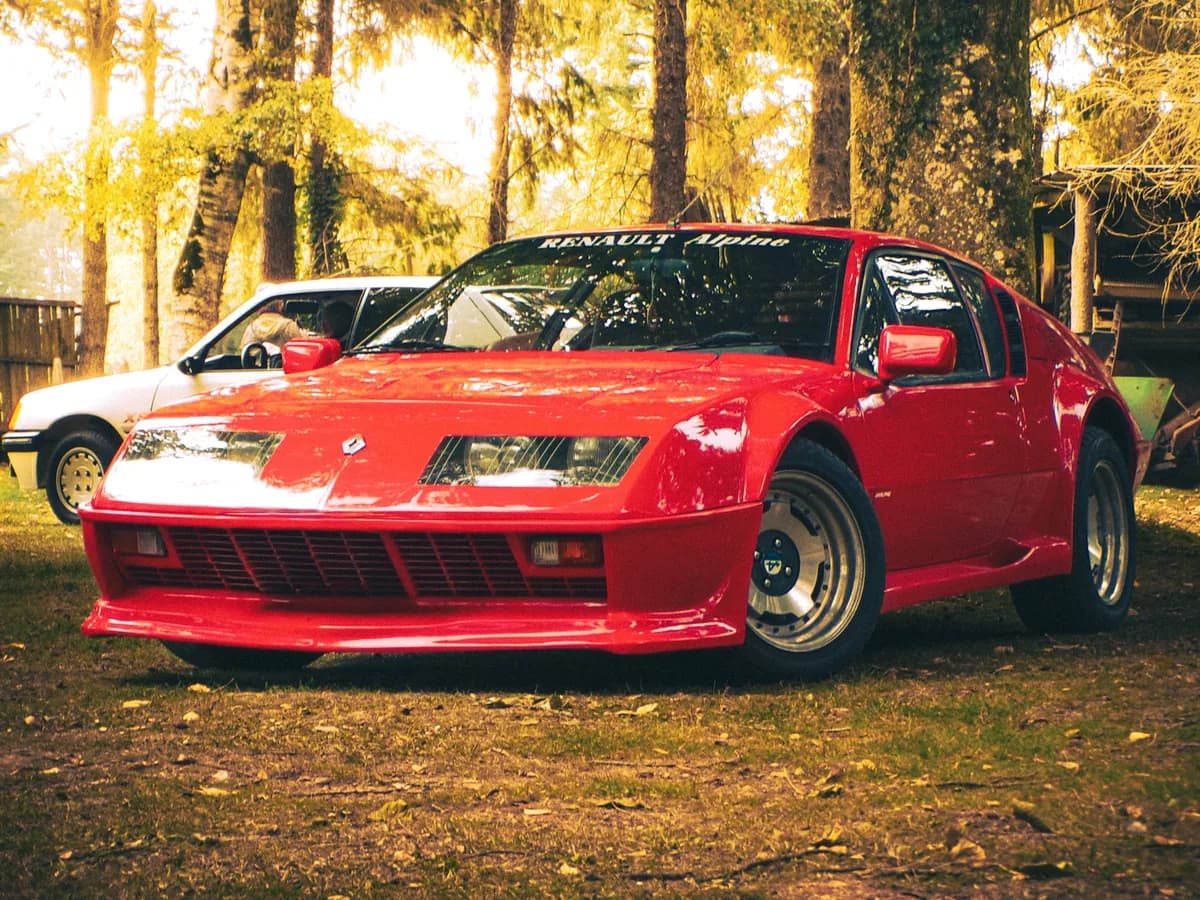
Unveiled at the Geneva Motor Show in March 1971, the Alpine A310 marked a new direction for the Dieppe-based manufacturer. Longer and more accommodating than the A110 Berlinette, this rear-engined 2+2 coupe was intended to appeal to grand-touring buyers while retaining Alpine’s established engineering formula: a steel backbone chassis, lightweight fiberglass bodywork, and Renault-based mechanical components. The first model year used a 1,605 cc four-cylinder engine; period technical references identify a five-speed manual gearbox for the early production car. Its sharply creased shape is especially easy to identify from the very low nose, six headlamps installed behind transparent covers, and air inlets on the front fenders. The 1971 model therefore represents the earliest production form of the A310, before later body revisions and the introduction of the V6.
What about the car you photographed?
Upload a photo to get a suggested make, model and likely year.
No account needed for the result · Publish only if you choose
Variants by year
Make: Alpine · Model: A310
1 / 1 versions shown
1971
Alpine A310 photos
Model summary
Data from the ScanRacer library, organized to compare versions quickly.
Model introduction
Unveiled at the Geneva Motor Show in March 1971, the Alpine A310 marked a new direction for the Dieppe-based manufacturer. Longer and more accommodating than the A110 Berlinette, this rear-engined 2+2 coupe was intended to appeal to grand-touring buyers while retaining Alpine’s established engineering formula: a steel backbone chassis, lightweight fiberglass bodywork, and Renault-based mechanical components. The first model year used a 1,605 cc four-cylinder engine; period technical references identify a five-speed manual gearbox for the early production car. Its sharply creased shape is especially easy to identify from the very low nose, six headlamps installed behind transparent covers, and air inlets on the front fenders. The 1971 model therefore represents the earliest production form of the A310, before later body revisions and the introduction of the V6.
History
The A310 was introduced at a time when Alpine wanted to complement, rather than immediately replace, the A110. The Berlinette had established the company’s sporting reputation, but its very compact dimensions restricted everyday usability and commercial reach. The A310 addressed those limits with a roomier car intended for fast touring and positioned higher in the range. Jean Rédélé’s new model was shown at Geneva in 1971, and production began at Alpine’s Dieppe plant during the same year. Its construction remained characteristic of Alpine. A central steel backbone chassis supported independent suspension and a lightweight composite body, while the engine was mounted longitudinally behind the passenger compartment to drive the rear wheels. At launch, the A310 used a 1,605 cc Renault-Gordini four-cylinder engine with twin twin-choke carburetors. The low mass and rear-engine layout gave it a distinctive driving character, although the performance of the early car did not always seem as dramatic as its advanced styling suggested. The most important mechanical change came later in the decade. After several years as a four-cylinder model, the A310 received the 2.7-litre PRV V6 and developed into a more convincing grand tourer. Production continued until 1984, with later revisions affecting the exterior, chassis and equipment. The model represented here is restricted to the 1971 model year, identifying the earliest four-cylinder production form.
Generations
The A310’s development can be divided into two broad periods, although commercial names and intermediate changes differed according to model year and market. The first period comprises the four-cylinder cars introduced in 1971. These early models have a relatively narrow body, six headlamps concealed beneath transparent covers, and a 1,605 cc Renault-Gordini engine. The earliest examples are the closest to the original design shown at Geneva. During the middle of the 1970s, Alpine revised the car in stages. Later four-cylinder models received mechanical and equipment changes, and a simpler, lower-cost version was also offered. The decisive change was the arrival of the A310 V6, introduced from 1976-1977 according to the reference consulted. The 2.7-litre PRV engine brought a different level of performance and was accompanied on early V6 cars by a four-headlamp nose, followed by further changes to the body and suspension. The final years brought wider and more highly equipped derivatives, including the GT and Boulogne packages. Those cars should not be confused with the 1971 A310. The model year covered here belongs to the initial four-cylinder phase, before the V6 engine, wider bodywork, major aerodynamic packages and later plastic bumper treatments.
Key differences
For the 1971 model year, the key distinction is that it belongs to the early first-series four-cylinder production. It differs from later A310 V6 cars through its 1,605 cc Renault-Gordini engine, narrower body and six-headlamp nose beneath clear covers. Early cars also used simpler exterior fittings, including flexible bumper strips rather than the plastic bumper treatment adopted on later versions. Detail differences can exist between individual early-production cars, including equipment, induction systems, wheels and trim. A restored example may also contain components from a later model year. Published power figures vary according to the measurement standard and the precise specification, so they are not the most reliable way to identify a 1971 car. A more dependable assessment combines the front-end design, fender air inlets, bumper construction, chassis number and surviving factory or registration documentation.
Photo recognition
A 1971 Alpine A310 is first identified by its low 2+2 coupe profile and fiberglass body mounted over a backbone chassis. The most obvious visual clue is the nose: six rectangular headlamps extend across the front and sit behind transparent covers. This creates an almost continuous glass-covered front treatment, unlike the conventional grille layout of a front-engined car. The front fenders provide another useful clue. Early cars have air openings positioned on the upper sections of the fenders, a feature associated with the initial four-cylinder A310. Flexible bumper strips are more consistent with an early production car than the plastic bumper arrangements seen on later versions. The engine should be located behind the passenger compartment, and the overall proportions remain compact despite the nominal 2+2 layout. Visual inspection alone is not conclusive. Restored cars may carry later parts, replacement body panels or modified lighting. A reliable identification should therefore combine the nose design, fender vents, bumper treatment, chassis number, manufacturer plate and period documentation.
Important versions
The most relevant version for 1971 is the launch four-cylinder A310, often identified in specialist documentation by the 1600 VE designation. It introduced the angular body, rear-mounted 1,605 cc Renault-Gordini engine and six-headlamp front end. Later four-cylinder developments from the second half of the 1970s should not be treated as identical to this initial specification. The other major stage was the A310 V6, introduced from 1976-1977 according to the sources consulted. Its 2.7-litre PRV engine, revised exterior treatment and subsequent chassis developments created a distinct phase in the model’s career. The wider and more powerful GT and Boulogne versions belong to the final years of A310 production. Within the supplied ScanRacer context, the available model year is limited to 1971 and the listed variant is Base.
References
- A310Renault Alpine Club UK
- Renault Alpine Club International – A310Renault Alpine Club International
- Alpine A310 (1971-1985)Auto Encyclopédie
- Alpine A310 1600 – 1971 brochureNotice Utilisation Voiture
- https://www.encycarpedia.com/us/alpine/71-a310-i-coupeencycarpedia.com
- https://gazoo.com/catalog/maker/ALPINE/A310/197101/gazoo.com
Frequently asked questions
- What years was the Alpine A310 produced?
- ScanRacer's referenced versions cover 1971.
- How many Alpine A310 examples are documented on ScanRacer?
- 8 published scans from 7 members, with the latest photo added in August 2026.
What about the car you photographed?
Upload a photo to get a suggested make, model and likely year.
No account needed for the result · Publish only if you choose