Alpine A110 1962
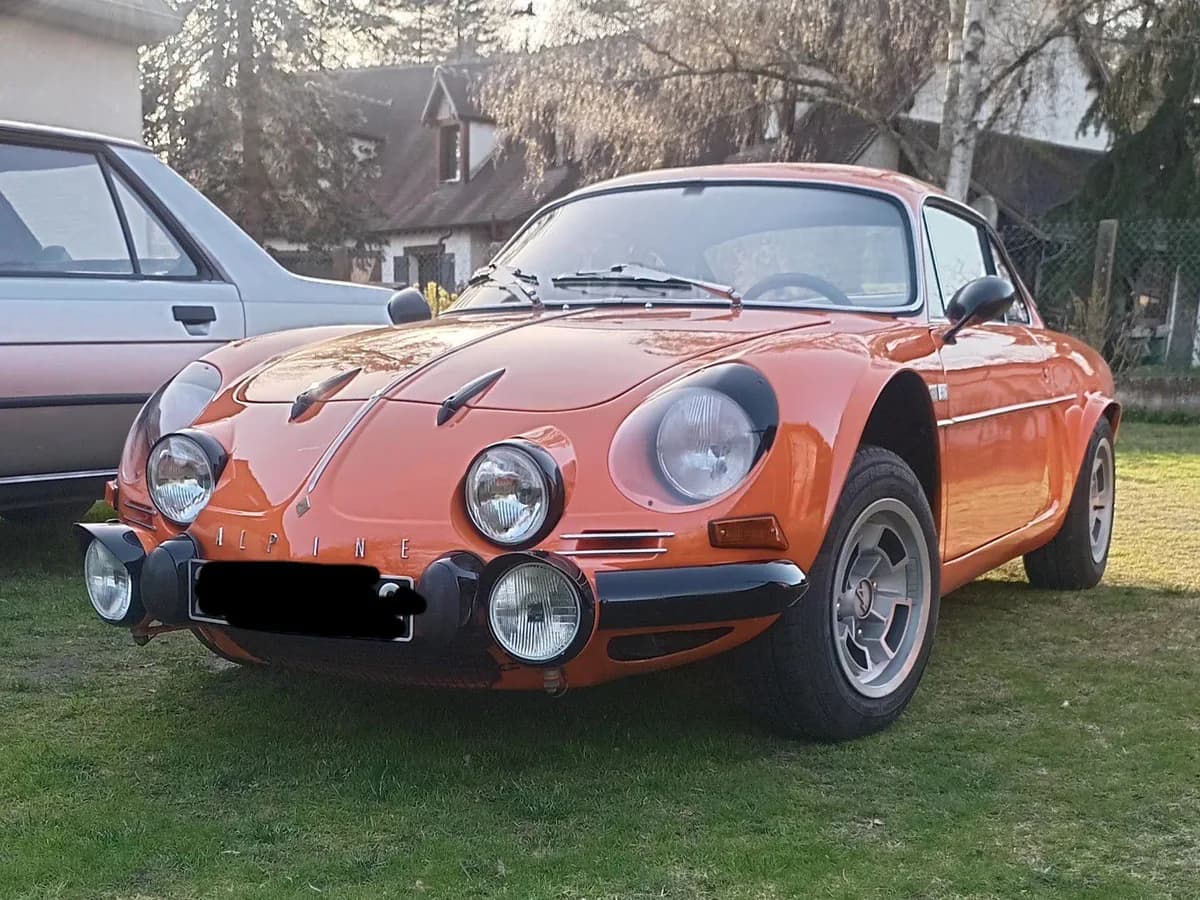
Unveiled at the Paris Motor Show in autumn 1962, the Alpine A110 marked a new stage for the company founded by Jean Rédélé. This berlinette retained Alpine’s lightweight backbone-chassis concept while adopting mechanical components derived from the Renault 8. In its launch configuration, it combined a two-seat coupe body with a rear-mounted 956 cc four-cylinder engine and a four-speed manual gearbox. Its appeal came less from outright power than from low mass, compact dimensions and responsive handling. The 1962 model year represents the car’s public arrival, while the earliest series-built examples are generally documented as entering commercial production from 1963. Because early cars and specifications can overlap between model years, period records should be checked carefully when identifying an individual example.
Curious about this car?
Explore A110, then try your own photo.
No account needed for the result · Publish only if you choose
History
The A110 evolved from the A108 Berlinette, which already used a backbone chassis and a lightweight composite body. For the new model, Alpine drew on the mechanical package of the Renault 8, introduced in 1962. This brought a more modern foundation and the four-wheel disc-brake layout associated with Renault’s new generation. Jean Rédélé presented the car publicly at the 1962 Paris Motor Show. Commercial production followed with a 956 cc version, while later developments introduced more powerful engines related to the Renault 8 Major, Renault 8 Gordini, Renault 12 and Renault 16. French production continued until 1977. During its long career, the berlinette became Alpine’s defining road car and a major rally competitor. Its competition record culminated in Alpine winning the inaugural World Rally Championship manufacturers’ title in 1973, after earlier success in national and European events.
Latest scans
Photos added by the community for this page.
Anecdotes
The A110 is closely associated with the Renault 8, but it was not simply a Renault with a different body. Alpine retained its own backbone-chassis concept and covered it with a lightweight glassfibre-and-polyester body. That combination explains how a relatively modest engine could power a car known for lively responses on winding roads. The berlinette later became the name most closely associated with Alpine’s rally cars, extending far beyond the road-going version introduced in 1962.
Production
French production of the A110 covered a career from 1962 to 1977, with Dieppe as its principal production centre. Alpine also licensed Berlinette production in several countries, including Spain, Mexico and Bulgaria. Alpine’s official historical material states that just under 8,000 Berlinettes were built in Dieppe, with approximately 4,000 additional cars produced under licence abroad. These figures apply to the Berlinette over its full production career and do not represent the 1962 model year alone. No separate production total is used here for the base specification because the surviving documentation does not establish a sufficiently reliable figure for that exact configuration.
Press reception
The best-documented reception of the A110 is reflected in its competition record and in the reputation it built over time. Alpine presents the berlinette as the model that established its identity around low weight, compact dimensions and agility. In competition, the A110 succeeded in national and European championships before Alpine won the 1973 World Rally Championship manufacturers’ title. That achievement firmly strengthened the car’s standing among automotive writers and collectors. Detailed contemporary road tests of the specific 1962 base version are less consistently available than later historical accounts covering the A110’s complete career. Claims about launch-period press opinion should therefore be made with care.
Evolution
The A110 developed quickly after its introduction. The initial configuration used a Renault 8-derived 956 cc engine and a four-speed manual gearbox. More powerful versions followed with engines related to the Renault 8 Major and Renault 8 Gordini, while five-speed gearboxes and larger displacements gradually entered the range. The basic silhouette remained remarkably consistent, but details changed from one period to another, including the front treatment, air intakes, lighting, instruments and equipment. Early cars should therefore not be judged by the appearance of later Berlinettes. The twin-headlamp arrangement often associated with the model belongs to subsequent development stages rather than necessarily to the first cars presented in 1962.
Variants
References
- History of the Alpine brandAlpine Global Media
Supports the 1962 arrival of the original A110 and the relationship between Alpine and Renault.
- Alpine passion through the years at RetromobileAlpine Global Media
Supports the A110’s 1962 replacement of the A108, its production period, licensed production and approximate Berlinette totals.
- Alpine A110: the countdown begins!Alpine Global Media
Supports the 1962 launch of the Alpine Berlinette and its lightweight sporting identity.
- 1962 Alpine A-110 1000 Berlinette Specs ReviewAutomobile-Catalog
Supports the early 956 cm³ engine, approximately 51 hp DIN, four-speed manual transmission, two-door coupe body and rear-wheel drive.
- Exposition Alpine au Festival Automobile International des InvalidesAlpine Global Media
Supports the A110’s 1962 introduction, composite body construction, lightweight philosophy and later competition reputation.
- Alpine A110 historyMotor1
Provides independent historical context on the Renault 8-derived platform, early 956 cm³ engine and long-term evolution.
- https://en.wikipedia.org/wiki/Alpine_A110en.wikipedia.org
Source found by OpenAI web search for this vehicle page.
- https://de.wikipedia.org/wiki/Alpine_A110de.wikipedia.org
Source found by OpenAI web search for this vehicle page.