Power
177 KW @ 6000 RPM 240 HP @ 6000 RPM 237 BHP @ 6000 RPM
Unveiled in final production form at the 2013 Geneva Motor Show, the Alfa Romeo 4C Coupé is a two-seat sports car with a mid-mounted engine and rear-wheel drive. Its design places a strong emphasis on low mass: the central passenger cell is made from carbon fibre, while aluminium is used for the supporting structures. Built at Maserati’s Modena plant, the 4C combines a turbocharged 1.75-litre four-cylinder petrol engine with Alfa Romeo’s TCT dual-clutch transmission. Its compact shape echoes the Alfa Romeo 33 Stradale, while parts of its engineering philosophy were influenced by the 8C Competizione. With a stripped-back cabin, bucket seats and a Race setting, the 4C takes a deliberately uncompromising approach to the modern sports car.
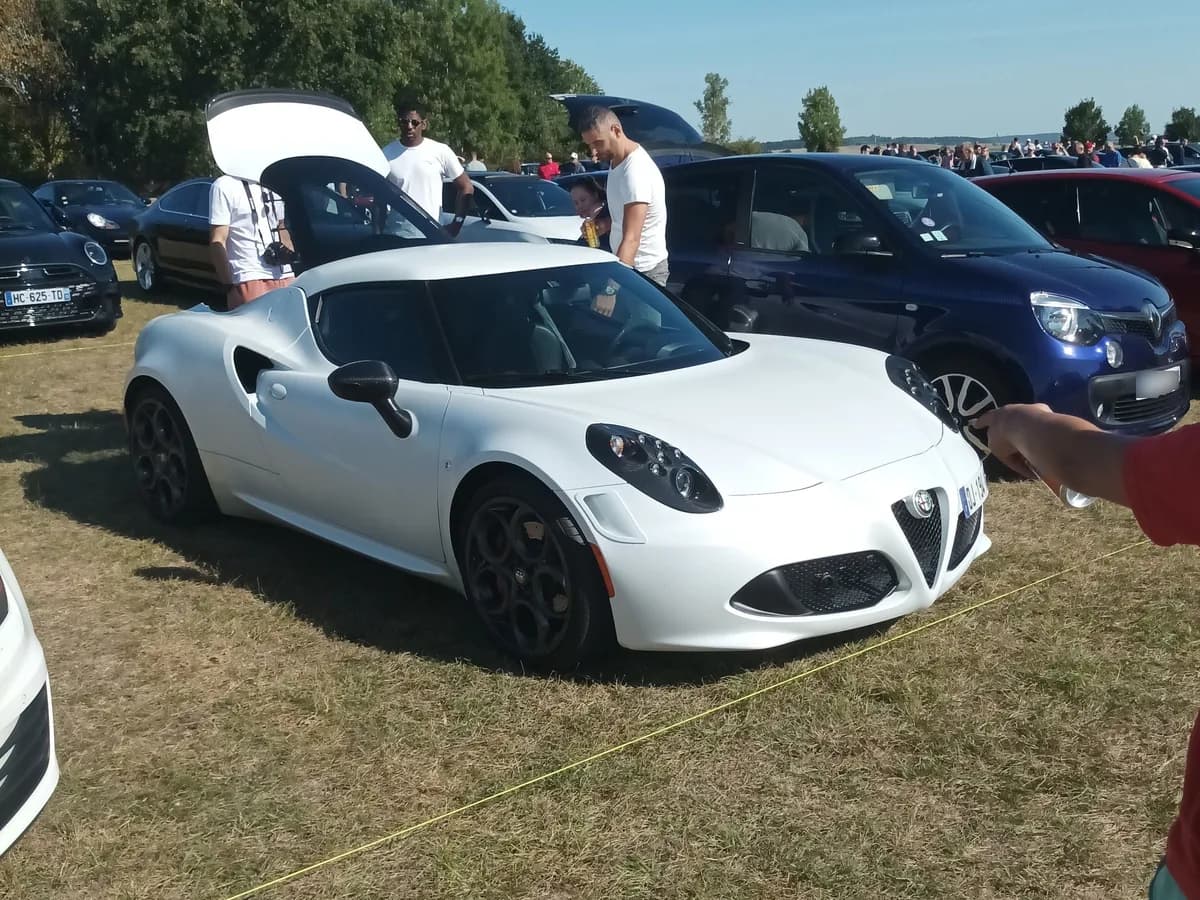
The Alfa Romeo 4C story began with a concept revealed at Geneva in 2011. The response to that study encouraged Alfa Romeo to develop a production car without abandoning its lightweight architecture or dramatic appearance. The definitive 4C made its debut at the 2013 Geneva Motor Show and entered the market later that year. Alfa Romeo presented it as a compact, mid-engined sports car designed by its engineers and manufactured at Maserati’s Modena plant.
The 4C also formed part of Alfa Romeo’s return strategy for the United States. Its development followed the technical direction established by the 8C Competizione, particularly through the use of lightweight materials and a strong focus on power-to-weight ratio. The carbon-fibre passenger cell was central to that approach and remained an unusual feature for a car in this price category. The aluminium-block 1750 Turbo engine, unassisted steering and dual-clutch gearbox gave the model a distinctly specialised character. European orders opened in 2013, while the production plan was deliberately presented as limited.
Photos added by the community for this page.
Source: autoevolution
The “4C” name echoes Alfa Romeo’s historic 6C and 8C designations, which were associated with six- and eight-cylinder models. In the 4C’s case, the number does not indicate the cylinder count; it reflects the stated ambition of achieving a power-to-weight ratio below 4 kg per horsepower. Alfa Romeo also linked the car visually to the 33 Stradale. Before production began, the 2011 4C concept received several design-related awards, helping build interest in the final Coupé revealed at Geneva in 2013.
Production of the Alfa Romeo 4C began in 2013 at Maserati’s plant in Modena, Italy. Alfa Romeo described the arrangement as a collaboration between its design and engineering teams and Maserati’s manufacturing expertise. At launch, the company stated that worldwide 4C production would be limited to 3,500 cars per year. That figure represents a production plan or stated annual limit, not a verified final count for the 2013 model year alone. Low-volume manufacturing suited the car’s use of a carbon-fibre central cell and its specialised market position. The sources consulted here do not establish a reliable exact total for 2013 Coupés, so a definitive model-year production number should not be assigned.
Automotive coverage generally praised the 4C’s styling, low weight and race-car-like sense of purpose. Reviews also highlighted its strong engine, secure cornering balance and unusual carbon-fibre structure. Criticism focused on the unassisted steering, limited comfort and a chassis that could feel difficult on rough public roads. Evo admired the quality of the construction and the car’s grip, but found the lack of steering feel around the straight-ahead position frustrating. Autocar described the initial reception as mixed, noting that some testers objected to the early car’s steering and behaviour away from smooth surfaces. Those comments were followed by later geometry and chassis adjustments, while the car’s distinctive character remained largely intact.
Supports the 2013 Geneva debut, carbon-fibre chassis, mid-engine layout, rear-wheel drive, engine, Alfa TCT transmission, design links and production at Maserati Modena.
Supports the launch timing, two-seat cabin, TCT controls and the announced worldwide production limit of 3,500 units per year.
Supports the 2013 Spanish launch, 240 CV output, 1.7 TBi engine, carbon-fibre chassis, rear-wheel drive, Modena production, 895 kg stated weight and 4.5-second 0–100 km/h claim.
Supports contemporary press comments on steering feel, handling, styling, Race Pack equipment and published performance specifications.
Supports the production period, Coupé and Spider sequence, construction details, drivetrain, engine output, press criticism of early cars and later chassis updates.
Source found by OpenAI web search for this vehicle page.
Source found by OpenAI web search for this vehicle page.
Source found by OpenAI web search for this vehicle page.