
4C
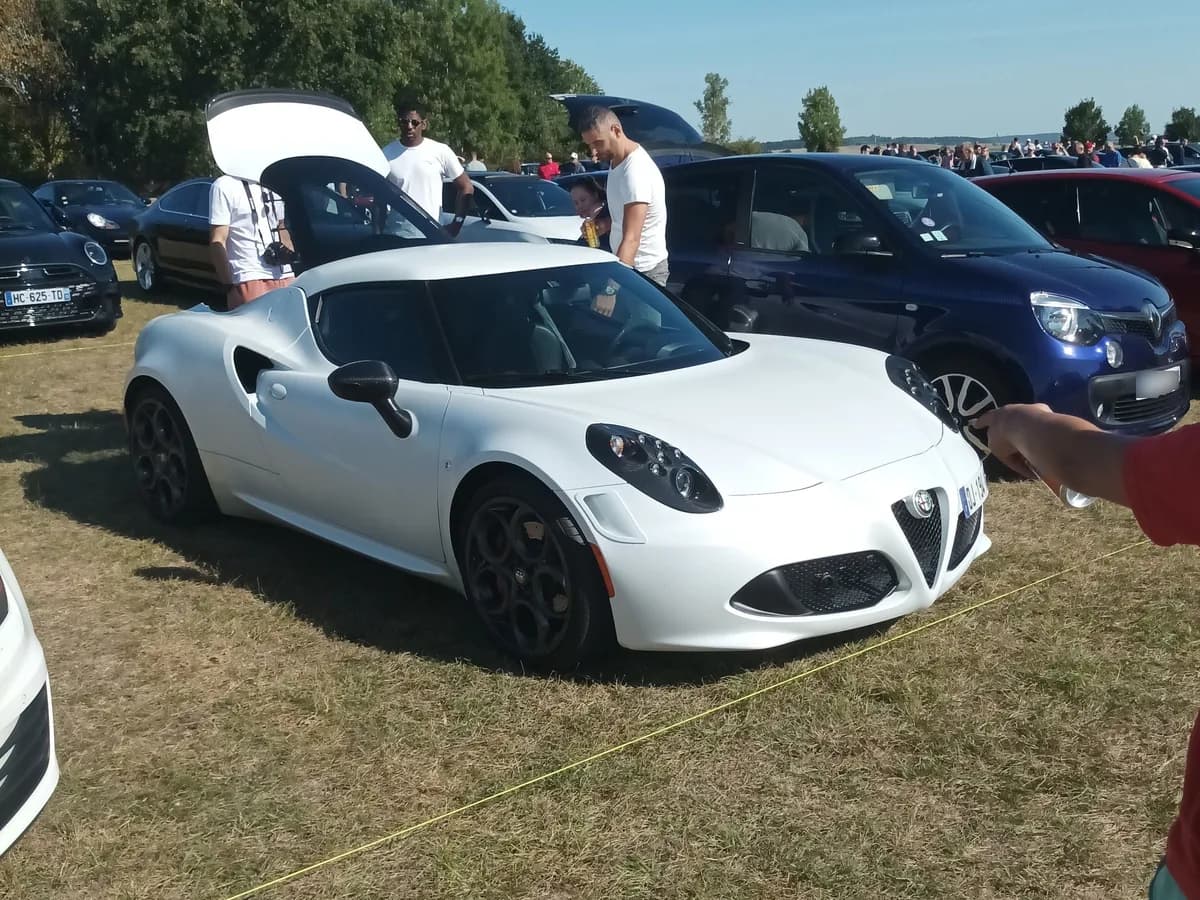
Shown in final production form at the 2013 Geneva Motor Show, the Alfa Romeo 4C is a two-seat sports car with a mid-mounted engine and rear-wheel drive. Its structure is built around a 65 kg carbon-fibre passenger cell, combined with aluminium subframes and an SMC composite body. Alfa Romeo focused on reducing mass rather than pursuing a large engine: the coupé was announced with a 895 kg dry weight and uses a direct-injection 1750 Turbo four-cylinder paired with the Alfa TCT twin-dry-clutch transmission. The 4C name refers back to Alfa Romeo’s sporting 6C and 8C designations. Within the model-year scope considered here, the coupé is represented by 2013 and the Spider by 2015. (media.stellantis.com)
Variants by year
2015
2013
Model summary
Data from the ScanRacer library, organized to compare versions quickly.
Model introduction
Shown in final production form at the 2013 Geneva Motor Show, the Alfa Romeo 4C is a two-seat sports car with a mid-mounted engine and rear-wheel drive. Its structure is built around a 65 kg carbon-fibre passenger cell, combined with aluminium subframes and an SMC composite body. Alfa Romeo focused on reducing mass rather than pursuing a large engine: the coupé was announced with a 895 kg dry weight and uses a direct-injection 1750 Turbo four-cylinder paired with the Alfa TCT twin-dry-clutch transmission. The 4C name refers back to Alfa Romeo’s sporting 6C and 8C designations. Within the model-year scope considered here, the coupé is represented by 2013 and the Spider by 2015. (media.stellantis.com)
History
The 4C story began with a concept unveiled at Geneva in 2011. Already close in spirit to the production car, the study previewed a compact sports car focused on the relationship between low weight and agility rather than comfort or practicality. The final version appeared at the same motor show two years later, with sales announced for 2013. Alfa Romeo presented it as an advanced sports car drawing on experience gained with the 8C Competizione. (media.stellantis.com) Alfa Romeo handled the design, while assembly took place at Maserati’s Modena factory. That partnership helped give the 4C its distinctive character: limited-volume production, a carbon-fibre central cell and composite body components were combined to keep mass down. At launch, Alfa Romeo stated that the facility could produce more than 1,000 cars per year. (media.stellantis.com) Early cars included the Launch Edition before the range broadened. The Spider arrived in 2015 with an open body and structural adaptations intended to maintain rigidity. The coupé also received updates involving suspension settings and reinforcement around the engine bay. The 4C remained on sale beyond the 2013 and 2015 model years considered here, but those two years provide a clear distinction between the coupé’s introduction and the Spider’s arrival. (autoexpress.co.uk)
Generations
The 4C is not divided into several clearly separate generations. It represents one compact sports-car line, previewed by the 2011 concept and produced from 2013 onward. The main body-style development was the arrival of the Spider in 2015; it complemented the coupé rather than introducing a new technical generation. Both versions retain the same basic formula: a turbocharged four-cylinder engine mounted behind the cabin, rear-wheel drive, two seats and the Alfa TCT twin-clutch transmission. (media.stellantis.com) The coupé is the original 4C body style. It uses a carbon-fibre central cell, front and rear aluminium structures and an SMC composite body. The Spider follows the same architecture, but its lack of a fixed roof required structural adaptations and resulted in a higher weight depending on specification and market. It is therefore best understood as a closely related body-style variant, not as a separate generation. (media.stellantis.com) Changes during the model’s career were mainly related to equipment, trim and chassis tuning rather than a fundamental redesign. Some cars received features such as faired-in front lamps, upgraded audio equipment or track-oriented options. Because equipment and model-year descriptions can differ between countries, identification should rely on the body style, fitted equipment and the vehicle’s documentation.
Key differences
The coupé and Spider share most of their mechanical specification and architecture, but their appearance and intended use are clearly different. The coupé has a fixed roof and a more enclosed profile, with the carbon-fibre central cell prominently visible inside. It is the lighter and original body style associated with the 4C’s launch. (media.stellantis.com) The Spider uses an open body introduced in 2015. Its removable roof and the reinforcement required for an open structure alter the cabin experience and can add weight. Equipment differences may also vary by market, including lighting, audio equipment and cooling-related options. These details should not be used on their own to date a car: an item may have been optional, revised or repositioned during the model’s career. (autoexpress.co.uk)
Photo recognition
The 4C is first identified by its very compact proportions: a low, wide and short body with a two-seat cabin positioned between the axles. The engine sits behind the occupants, while the rear wheels provide propulsion. Its sharply tapered nose, prominent side air intakes and muscular wings give it the appearance of a small road-legal competition car. Alfa Romeo quoted a length of under four metres and a width close to two metres. (media.stellantis.com) Inside, the carbon-fibre cell is an important clue. Its structure remains visible around the cabin instead of being hidden beneath extensive trim. The coupé has a fixed roof, while the Spider has an open roof arrangement and body-specific details. Early cars may also be identified by uncovered front lamp units, whereas later cars or some markets received faired-in headlights. (autoexpress.co.uk) For dependable identification, visual inspection should be supported by the manufacturer plate, vehicle identification number, production date and equipment list. Wheels, paint colours and optional features are not always sufficient to distinguish one model year from another.
Important versions
The coupé is the founding 4C body style and is represented here by the 2013 model year. It combines the original formula: fixed roof, two seats, a mid-mounted engine, rear-wheel drive and a carbon-fibre structure. The Spider, represented here by 2015, broadened the range with an open body and structural adaptations specific to that configuration. (media.stellantis.com) The Launch Edition is also significant in the model’s history. It covered early cars and included specific presentation and equipment details. Other options, including the Racing Pack, later added revised suspension settings, a sports exhaust and more performance-focused tyres, although availability depended on market and individual specification. (autoexpress.co.uk)
The name “4C” follows Alfa Romeo naming, with its rules and its exceptions. Decode a Alfa Romeo name
References
- World Première: Alfa Romeo 4CAlfa Romeo / Stellantis Media
- Alfa Romeo 4C: Excellence Made in ItalyAlfa Romeo / Stellantis Media
- Alfa Romeo 4C: excellence made in ItalyAlfa Romeo / Stellantis Media
- Used Alfa Romeo 4C (Mk1, 2014-2019) reviewAuto Express
- https://www.autocar.co.uk/car-review/alfa-romeo/4cautocar.co.uk
- https://www.topgear.com/car-reviews/alfa-romeo/4ctopgear.com
- https://www.caranddriver.com/reviews/a15109040/2015-alfa-romeo-4c-coupe-test-review/caranddriver.com
Technical specifications
Structured data available for versions linked to this model.
| Version | Power | Torque | Top speed | Drivetrain | Fuel |
|---|---|---|---|---|---|
| Base | 177 KW @ 6000 RPM 240 HP @ 6000 RPM 237 BHP @ 6000 RPM | 236 lb-ft @ 2100-3750 RPM 320 Nm @ 2100-3750 RPM | 160 mph (257 km/h) | Rear Wheel Drive / Alfa TCT (Dual Dry Clutch) 6 speed | Gasoline |
Frequently asked questions
- What years was the Alfa Romeo 4C produced?
- ScanRacer's referenced versions cover 2013 - 2015.
- How many Alfa Romeo 4C examples are documented on ScanRacer?
- 4 published scans from 3 members, with the latest photo added in August 2026.
- What is the power output of the Alfa Romeo 4C?
- The sourced technical data lists 177 KW @ 6000 RPM 240 HP @ 6000 RPM 237 BHP @ 6000 RPM.