
Land Cruiser
Introduced as the Toyota BJ in 1951, the Land Cruiser became one of the longest-running and most widely recognized four-wheel-drive vehicles in automotive history. Toyota adopted the Land Cruiser name in June 1954, then expanded the range to cover very different roles, including commercial transport, remote-area travel, rural work, and family use. The 20 and 40 Series established its international reputation, while the 70 Series retained a more explicitly heavy-duty and utilitarian character. At the same time, the 60, 80, 100, and 200 Series gradually combined off-road ability with greater space, refinement, and long-distance comfort. Introduced in 2021, the 300 Series continued the flagship station-wagon line with a separate frame and major structural and chassis revisions. Because body styles, engines, and equipment varied by market, the series designation is usually the most reliable starting point for identification.
Variants by year
2023
2021
2015
2011
2007
 C
C C
C1998
1990
1989
1987
1984
1980
1967
1960

1955
1953
Model summary
Data from the ScanRacer library, organized to compare versions quickly.
Model introduction
Introduced as the Toyota BJ in 1951, the Land Cruiser became one of the longest-running and most widely recognized four-wheel-drive vehicles in automotive history. Toyota adopted the Land Cruiser name in June 1954, then expanded the range to cover very different roles, including commercial transport, remote-area travel, rural work, and family use. The 20 and 40 Series established its international reputation, while the 70 Series retained a more explicitly heavy-duty and utilitarian character. At the same time, the 60, 80, 100, and 200 Series gradually combined off-road ability with greater space, refinement, and long-distance comfort. Introduced in 2021, the 300 Series continued the flagship station-wagon line with a separate frame and major structural and chassis revisions. Because body styles, engines, and equipment varied by market, the series designation is usually the most reliable starting point for identification.
History
The first Land Cruiser began as the Toyota Jeep BJ, a four-wheel-drive vehicle developed in 1951 at the request of Japan’s National Police Reserve. Its chassis was adapted from Toyota’s SB light truck, while power came from a 3.4-liter six-cylinder gasoline engine. The BJ was not selected for the original government requirement, but Toyota converted it for civilian use and began volume production in 1953. The Land Cruiser name was adopted in June 1954 because the Jeep name was a trademark associated with Willys-Overland. The 20 Series, launched in November 1955, represented a significant change. Its more civilian body and broad range of configurations helped Toyota expand Land Cruiser exports to North America and other overseas markets. The 40 Series followed in 1960 and established the model’s global reputation. It was offered in forms that included open-top bodies, utility vans, pickups, and long-wheelbase commercial derivatives. Diesel engines were added during the 1970s. In 1984, the 70 Series replaced the 40 Series, improving space, drivability, and comfort while retaining a distinctly durable layout. Toyota’s more road-oriented station-wagon branch evolved separately toward the 300 Series, introduced in 2021. Toyota reported cumulative Land Cruiser-family sales of approximately 11.3 million units at the end of June 2023, including the Lexus LX and GX.
Generations
Land Cruiser terminology does not fit neatly into a single conventional generation sequence because Toyota developed several parallel branches. The Heavy Duty lineage began with the 1951 BJ and continued through the 20 and 40 Series. In the ScanRacer catalogue, names such as 20-30, 40 Pickup, 40 Troop Carrier, 50, and 70 represent the move from basic utility vehicles toward a wider selection of body styles. Introduced in 1984, the 70 Series remains the clearest expression of the heavy-duty branch. Depending on the market, it has been offered as a pickup, SUV, van, troop carrier, or other commercial derivative, with several wheelbases. The Station Wagon branch followed a different path. The 50 and 60 Series introduced more room and greater comfort, followed by the 80, 100, and 200 Series. These vehicles generally placed more emphasis on long-distance travel, passenger capacity, and luxury equipment while retaining a separate frame. Introduced in 2021, the 300 Series replaced the 200 and adopted Toyota’s GA-F platform while continuing to use a body-on-frame architecture. Dates should be treated as market-dependent. A series may remain available longer in one region than another, and the same basic vehicle can receive different names, engines, or body configurations across countries.
Key differences
The most useful distinctions concern intended role rather than the series number alone. The 40 and 70 Series emphasize simplicity, durability, and commercial use; their narrow bodies and multiple wheelbase options are characteristic of that approach. The 60, 80, 100, and 200 Station Wagon models generally provide more width, passenger space, and equipment, with a gradual move toward greater road comfort. This division is only a guide because Toyota offered different specifications in different countries. The 70 Series retains a more utilitarian layout and appearance, while the 300 Series aims to combine traditional off-road capability with easier driving and newer systems. Toyota says the 300 uses a new development of the GA-F platform, with a stiffer frame and an approximately 200-kilogram weight reduction compared with the 200 Series. The Land Cruiser name alone is not enough to establish a specific engine or equipment level, however. The market, model year, and series or chassis code are needed for a reliable comparison.
Photo recognition
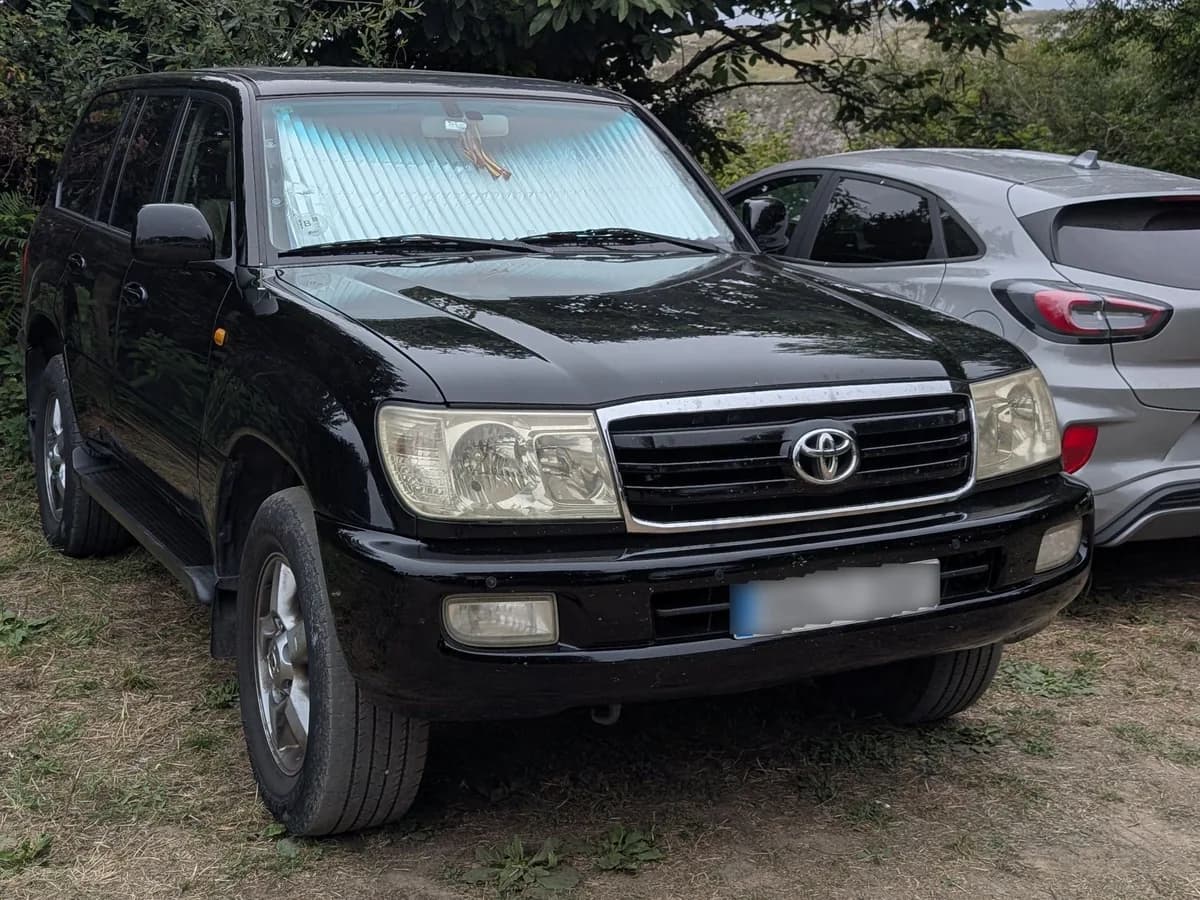
When identifying an older Land Cruiser, begin with the body shape and intended use. A 40 Series typically has very upright styling, separate front fenders, and a plainly utilitarian appearance. The 40 Pickup and Troop Carrier versions can usually be distinguished by their rear cargo body or extended roof and cabin arrangement. The 70 Series keeps the square, functional character of the 40 but uses a more modern cabin and a noticeably curved windshield. Pickup, SUV, and Troop Carrier names should not be treated as simple trim levels; they describe different body configurations. The Station Wagon models become visibly wider and more spacious from the 60 and 80 Series onward. The 80, 100, and 200 Series generally have a more family-oriented presentation, larger glazed areas, and greater interior volume. The 300 Series has more contemporary proportions, high-mounted lamps, and a more technical front-end design. Exterior details can still vary by market and model year. For a dependable identification, check the manufacturer plate, chassis code, number of doors, wheelbase, and body style rather than relying on badges alone.
Important versions
The key versions include the 1953 BJ, the direct ancestor of the civilian range; the 20 and 40 Series, which established the model internationally; and the 70 Series, introduced in 1984 for heavy-duty applications. In the Station Wagon branch, the 60, 80, 100, and 200 Series mark a gradual increase in passenger space, equipment, and road refinement. Introduced in 2021, the 300 Series is the modern successor to the large body-on-frame Land Cruiser line. The range also includes specialized forms such as the 40 Pickup, 40 Troop Carrier, and 70 Pickup. Availability, engines, and equipment varied substantially by country, so international comparisons should be made using the chassis code and market specification.
References
- Heavy Duty: Evolution of the Land CruiserToyota Motor Corporation
- Toyota Launches New Land CruiserToyota Motor Corporation Global Newsroom
- Toyota’s New Land Cruiser “250” Makes World PremiereToyota Motor Corporation Global Newsroom
- Land Cruiser ArchiveToyota GB Media
- https://www.auto-x.jp/en/blog/toyota-land-cruiser-buyers-guideauto-x.jp
- https://pressroom.toyota.com/land-cruiser-marks-six-decades-in-toyota-dealerships-and-in-owners-hearts/pressroom.toyota.com
- https://www.motortrend.com/news/toyota-land-cruiser-photo-history-gallerymotortrend.com
Technical specifications
Structured data available for versions linked to this model.
| Version | Power | Torque | Top speed | Drivetrain | Fuel |
|---|---|---|---|---|---|
| Base | 130.2 KW @ 3400 RPM177 HP @ 3400 RPM175 BHP @ 3400 RPM | 310 lb-ft @ 1400-2600 RPM420 Nm @ 1400-2600 RPM | 109 mph (175 km/h) | All Wheel Drive / 6-speed manual | Diesel |
Frequently asked questions
- What years was the Toyota Land Cruiser produced?
- ScanRacer's referenced versions cover 1953 - 2023.
- How many Toyota Land Cruiser examples are documented on ScanRacer?
- 4 published scans from 4 members, with the latest photo added in September 2026.
- What is the power output of the Toyota Land Cruiser?
- The sourced technical data lists 130.2 KW @ 3400 RPM177 HP @ 3400 RPM175 BHP @ 3400 RPM.