
9-3
The SAAB 9-3 arrived in 1998 as the successor to the new-generation 900, while retaining much of that car’s underlying architecture. Its first phase is identified by three- and five-door hatchback bodies and a distinctly Saab-like cabin, whereas the generation introduced for 2003 adopted a more conventional sedan profile. The range later expanded with a completely redesigned convertible and the SportCombi, a five-door wagon introduced for the 2006 model year. Across the period covered here, the 9-3 combined front-wheel drive with turbocharged four-cylinder engines and a design that changed substantially between its two main phases. Aero, Viggen, Convertible, Sedan, and SportCombi are key version names, although equipment and availability varied by market. Buyers and researchers should therefore use the model year, body style, engine, and market together when identifying a specific car.
Variants by year
2007

2005
2004
2003
1998
 R
RModel summary
Data from the ScanRacer library, organized to compare versions quickly.
Model introduction
The SAAB 9-3 arrived in 1998 as the successor to the new-generation 900, while retaining much of that car’s underlying architecture. Its first phase is identified by three- and five-door hatchback bodies and a distinctly Saab-like cabin, whereas the generation introduced for 2003 adopted a more conventional sedan profile. The range later expanded with a completely redesigned convertible and the SportCombi, a five-door wagon introduced for the 2006 model year. Across the period covered here, the 9-3 combined front-wheel drive with turbocharged four-cylinder engines and a design that changed substantially between its two main phases. Aero, Viggen, Convertible, Sedan, and SportCombi are key version names, although equipment and availability varied by market. Buyers and researchers should therefore use the model year, body style, engine, and market together when identifying a specific car.
History
Introduced in 1998, the first 9-3 was closely related to the new-generation 900 developed under General Motors’ influence. Saab did not present it as a simple badge change, however, claiming more than 1,100 revisions involving areas such as suspension, body structure, and safety. The car retained Saab’s H-family four-cylinder engine, front-wheel drive, and several distinctive ergonomic features, including an ignition lock associated with reverse gear and the Night Panel instrument-lighting function. Available body styles included three-door and five-door hatchbacks as well as a convertible. The second phase arrived for the 2003 model year. It used GM’s Epsilon platform and temporarily dropped the traditional hatchback in favor of a four-door sedan. A new-generation convertible followed for 2004, while the SportCombi arrived for 2006. This expansion gave the 9-3 a more practical family-oriented body without removing its recognizable Saab design cues. The performance-focused Viggen and later Aero versions are especially significant within the model’s history. The 1998-2007 period therefore covers both the final 9-3 closely tied to the 900 and the first half of the Epsilon-based generation.
Generations
For the period covered here, two main generations should be separated. The first, commonly called the OG 9-3, covers the cars introduced in 1998 and the transition period ending in 2003. It retains the basic body architecture of the new-generation 900. Its hatchback profile, rear pillars, and deeply Saab-oriented dashboard are the clearest visual clues. The convertible shares the technical basis of this phase, while the three- and five-door versions provide more utility than a conventional sedan. Petrol engines come from Saab’s H-family, and a diesel was also offered in selected markets. The second generation, introduced for 2003, represents a more substantial technical and visual break. The four-door sedan uses a lower, more conventional design, GM’s Epsilon platform, and a more refined body structure. Its convertible has a dedicated body design, while the SportCombi adds a rear liftgate to a wagon-shaped body. As a result, 2003-2007 cars can usually be separated from earlier 9-3s by their bodywork, dashboard, and overall packaging. Trim names alone are not always sufficient for identification: the market, model year, body style, and engine should be considered together.
Key differences
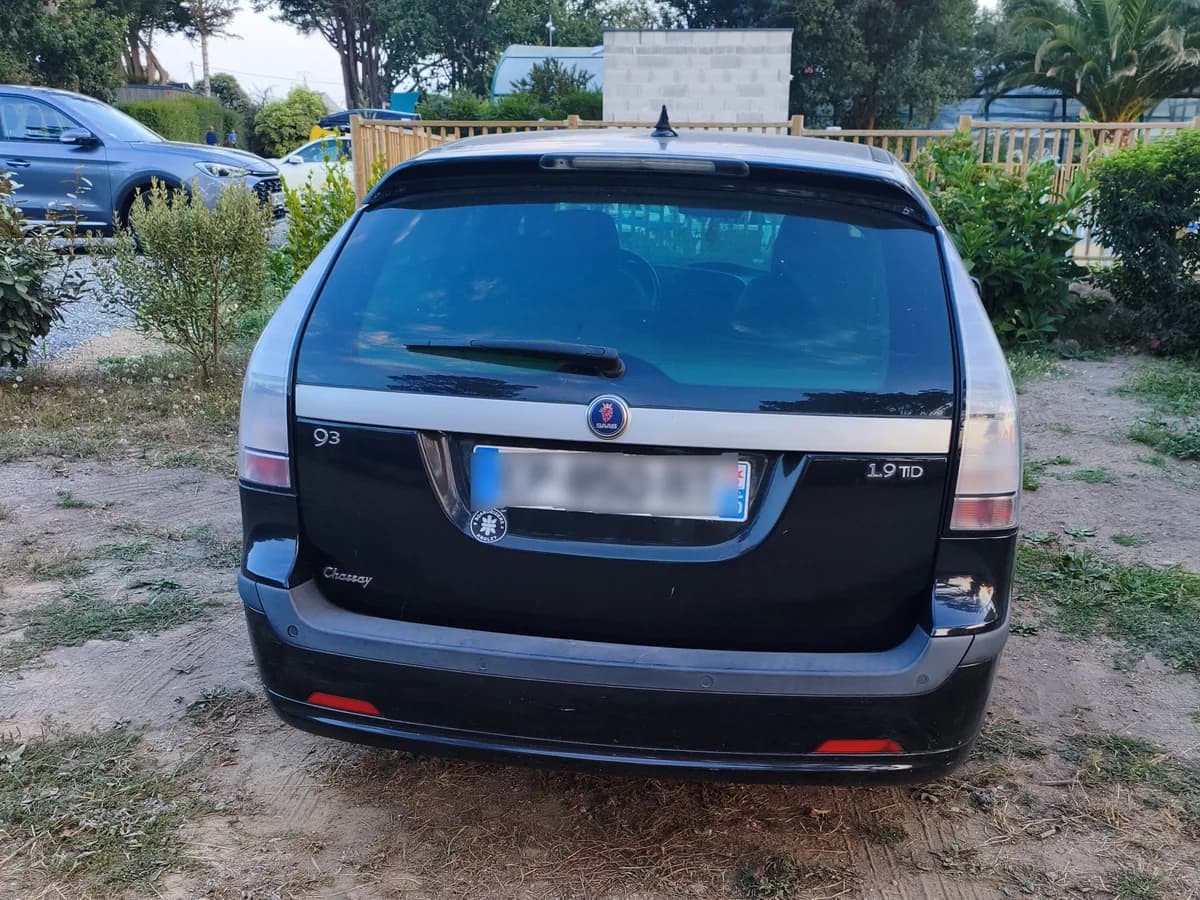
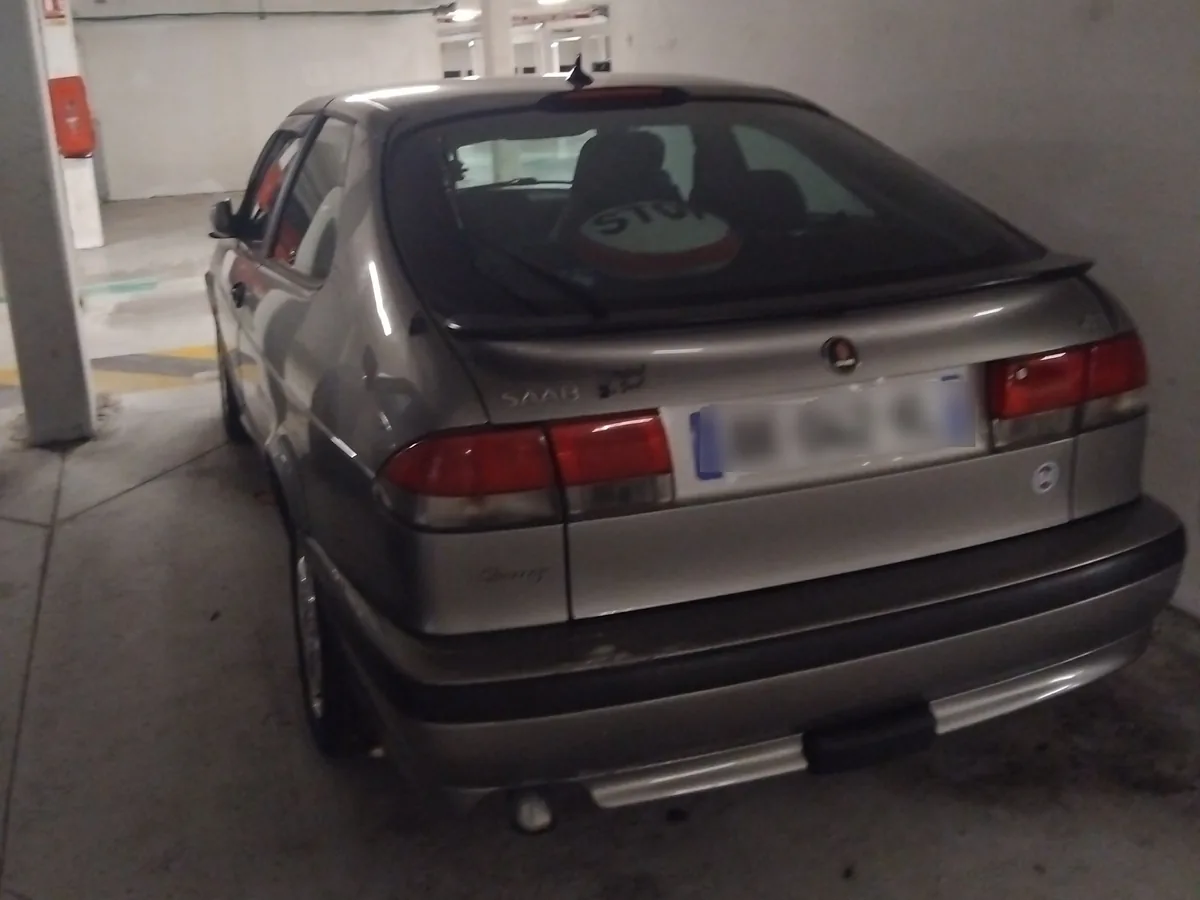
The clearest distinction is between the first generation’s hatchback body and the later generation’s sedan. On 1998-2003 cars, the rear license plate sits between the taillamps and the high-level brake light is mounted at the top of the rear window, both useful clues when separating a 9-3 from a closely related 900. The grille was also revised in a style closer to the larger 9-5. The 9-3 introduced for 2003 has more conventional bodywork, a different dashboard, and the Epsilon platform. The SportCombi is identified by its fifth door, sharply angled rear pillars, and high-mounted vertical taillamps. The later convertible should not be confused with the convertible derived from the first 9-3: its proportions, lights, and roof structure are different. Engines, transmissions, and trim equipment varied between countries, so the vehicle identification number remains the safest way to confirm an exact specification.
Photo recognition
To identify an early 9-3, start with the body shape: a three- or five-door hatchback generally indicates the 1998-2003 phase, while a four-door sedan belongs to the later generation. The early grille is closer in appearance to the 9-5 than to the 900, and the high-level brake light sits at the top of the rear window. The front head restraints incorporating Saab’s SAHR system provide another interior clue, although they should not be used alone. Inside, the ignition switch positioned near the gear lever and the Night Panel function are particularly useful Saab signatures. A Viggen may have dedicated bumpers, wheels, and trim, but modifications and replacement parts are common on surviving examples. Second-generation cars are identified by their sedan profile, more modern dashboard, and Epsilon-based layout. A SportCombi has a large rear liftgate and strongly angled rear pillars. Aero or Vector badges are helpful starting points, not definitive proof: a VIN check is still the best method for confirming the original engine, trim, and market specification.
Important versions
The Viggen is the best-known performance version of the first-generation 9-3. It received a more powerful turbocharged four-cylinder engine, transmission upgrades, and a firmer chassis, with production ending in 2002. Aero versions then occupied the upper-performance position in the range and could be offered with more than one body style, depending on the market. The Convertible is important across both generations, although its body structure and roof mechanism differ between them. The Sedan became the main form of the Epsilon-based generation from 2003 onward. The SportCombi, introduced for the 2006 model year, brought back a liftgate design in the form of a wagon. Trim names, engines, and standard equipment varied between countries, so comparisons should always specify both the model year and the market.
References
- Saab 9-3 historyThe SaabMuseum.com
- Saab 9-3 buyer’s guideClassics World
- 2003 Saab 9-3 First DriveCar and Driver
- Saab 9-3 SportCombiCar and Driver
- 2005 Saab 9-3 safety ratingsInsurance Institute for Highway Safety
- Saab 9-3 brochures and model literatureAuto-Brochures.com
- https://www.consumerreports.org/cars/saab/9-3/2007/overviewconsumerreports.org
Frequently asked questions
- What years was the SAAB 9-3 produced?
- ScanRacer's referenced versions cover 1998 - 2007.
- How many SAAB 9-3 examples are documented on ScanRacer?
- 4 published scans from 4 members, with the latest photo added in September 2026.