
Wraith
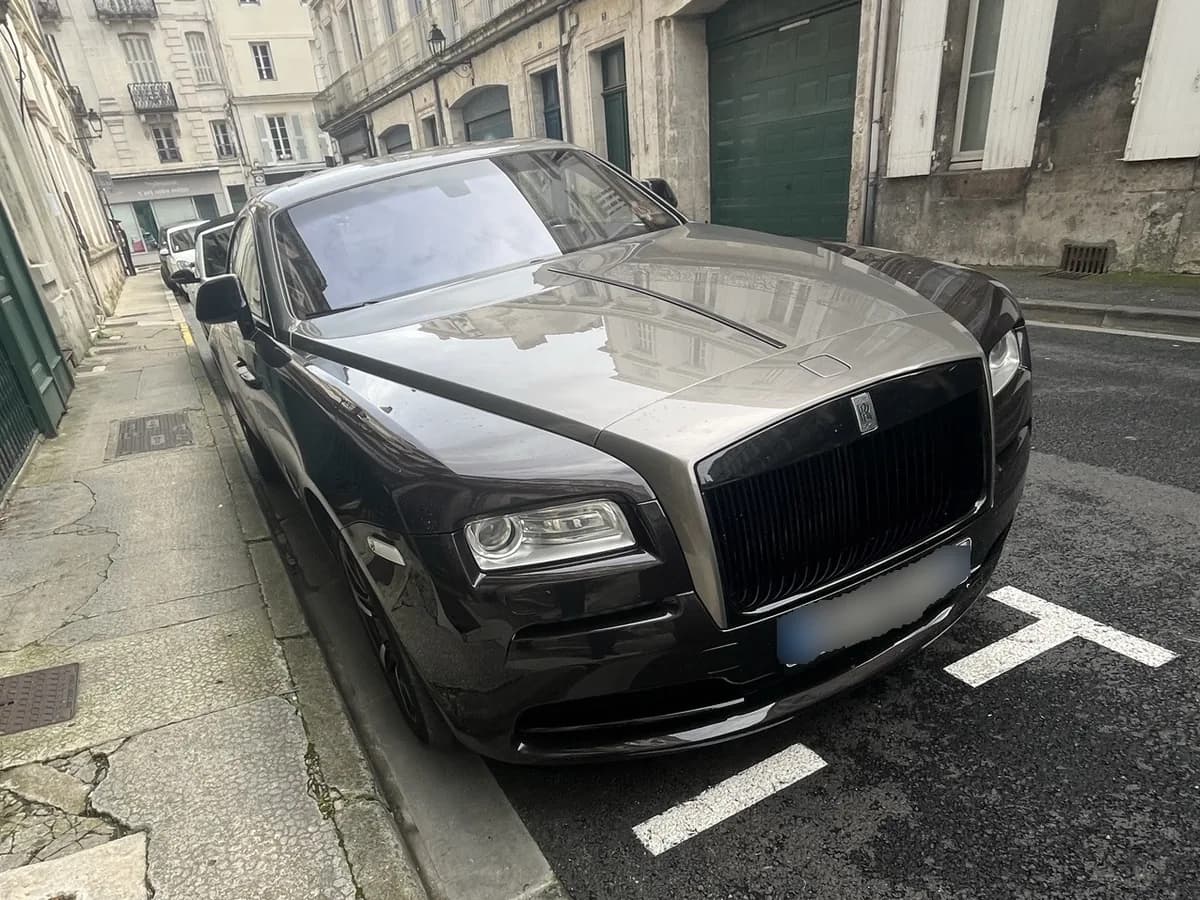
The Rolls-Royce Wraith name refers to two very different automobiles separated by more than seven decades. The first Wraith appeared in 1938 as a Rolls-Royce rolling chassis intended to receive coachbuilt bodywork from an independent specialist. Built at Derby until 1939, it represented the final development of the marque’s smaller-horsepower line descended from the 20/25 and 25/30. In 2013, Rolls-Royce revived the name for a four-seat fastback coupé, shorter and more driver-focused than the Phantom limousine. The modern car combined a V12 engine, an eight-speed automatic transmission and extensive bespoke personalisation. ScanRacer data lists the Wraith across the stated 1938–2013 period, but those dates should not be read as one uninterrupted production run.
Variants by year
2013
1938
Model summary
Data from the ScanRacer library, organized to compare versions quickly.
Model introduction
The Rolls-Royce Wraith name refers to two very different automobiles separated by more than seven decades. The first Wraith appeared in 1938 as a Rolls-Royce rolling chassis intended to receive coachbuilt bodywork from an independent specialist. Built at Derby until 1939, it represented the final development of the marque’s smaller-horsepower line descended from the 20/25 and 25/30. In 2013, Rolls-Royce revived the name for a four-seat fastback coupé, shorter and more driver-focused than the Phantom limousine. The modern car combined a V12 engine, an eight-speed automatic transmission and extensive bespoke personalisation. ScanRacer data lists the Wraith across the stated 1938–2013 period, but those dates should not be read as one uninterrupted production run.
History
The first Wraith emerged in the late 1930s, when Rolls-Royce still primarily supplied rolling chassis rather than complete bodies. Its engineering continued the development begun with the 20/25 and 25/30, while adding changes intended to improve ride quality and road behaviour. The 4,257cc inline-six belonged to that established mechanical family, and independent front suspension was one of the model’s notable technical features. Customers then commissioned bodywork from specialist firms such as Hooper, Park Ward and James Young, which explains the wide range of surviving body styles. Production took place during a period quickly disrupted by the outbreak of the Second World War, leaving the Wraith as a relatively scarce pre-war Rolls-Royce. The Hellenic Motor Museum records 492 examples and notes that most received saloon bodies, while a smaller number were completed as more flowing coupés or convertibles. Rolls-Royce’s own historical material describes the 1938 Wraith as the endpoint of its smaller-horsepower model line.
Generations
The 1938–1939 Wraith is the first generation. It used a separate chassis built by Rolls-Royce in Derby and supplied to independent specialists for completion. Its 4.25-litre inline-six, independent front suspension and coachbuilt bodies place it firmly within the pre-war Rolls-Royce tradition. Differences between surviving cars therefore often relate more to the coachbuilder, interior arrangement and body design than to a clearly defined sequence of factory trim levels. The second Wraith was introduced in 2013. Rolls-Royce presented it as a four-seat fastback coupé powered by a V12 engine and paired with a ZF eight-speed automatic transmission. The published output was 624 bhp with 800 Nm of torque, while the company highlighted Satellite Aided Transmission, which could use GPS information to anticipate bends, junctions and changes in road direction. The modern Wraith also featured rear-hinged coach doors, a low roofline and an extensively finished cabin. It is therefore not a direct technical continuation of the 1938 car, but a later revival of the same historic name.
Key differences
The two Wraiths differ fundamentally in construction and purpose. The 1938 model was a rolling chassis supplied for independent coachbuilt bodywork, most often in saloon form but also as a coupé or convertible. It used a naturally aspirated inline-six and pre-war chassis engineering. The 2013 model was a complete modern grand-touring coupé. It received a twin-turbocharged V12, an eight-speed automatic transmission and extensive electronic equipment. Its fastback body, rear-hinged coach doors and lower driving position make it relatively easy to identify. The name should also not be confused with the Silver Wraith, a separate post-war Rolls-Royce model. A shared badge therefore does not indicate a common platform, continuous production or a direct technical lineage between the two generations.
Photo recognition
Identifying a 1938–1939 Wraith requires examining the body and chassis rather than looking for one fixed silhouette. Several independent coachbuilders completed the cars, so a sharply styled saloon is common, but open bodies and coupés also exist. A 4,257cc inline-six, separate chassis and clearly pre-war construction provide stronger clues than the shape of the wings alone. The modern Wraith is easier to recognise through its fastback coupé profile, long bonnet, rear-hinged coach doors and upright Rolls-Royce grille. Its four-seat cabin, low roofline and Bespoke details, including the optional star-like headliner, further support identification. Black Badge cars and named collection editions should be treated as special versions of the modern Wraith rather than separate generations. Chassis records, body plates and historical documentation remain important when identifying an early car because coachbuilt examples can differ substantially in appearance.
Important versions
For the early Wraith, the main distinctions concern coachbuilt body styles, including saloons, coupés, convertibles and touring configurations. The 1938–1939 car was not divided into modern-style trim levels, so the coachbuilder and body specification are often more significant than a factory grade. The Wraith introduced in 2013 was offered as the standard coupé and in Black Badge form, with the latter adopting a more performance-focused character and distinctive presentation. Black Badge Wraith Black Arrow was a limited collection car created near the end of the coupé’s career and inspired by the Thunderbolt land-speed-record vehicle. It should be treated as a special edition of the modern Wraith, not as a separate model generation.
References
- Wraith Press KitRolls-Royce Motor Cars PressClub
- Rolls Royce Wraith Sports SedanHellenic Motor Museum
- Black Badge Wraith Black ArrowRolls-Royce Motor Cars
- https://www.classic.com/m/rolls-royce/wraith/1st-gen/classic.com
Technical specifications
Structured data available for versions linked to this model.
| Version | Power | Torque | Top speed | Drivetrain | Fuel |
|---|---|---|---|---|---|
| — | 624 ch | — | — | boîte automatique ZF à huit rapports | — |
Frequently asked questions
- What years was the Rolls-Royce Wraith produced?
- ScanRacer's referenced versions cover 1938 - 2013.
- How many Rolls-Royce Wraith examples are documented on ScanRacer?
- 11 published scans from 11 members, with the latest photo added in August 2026.
- What is the power output of the Rolls-Royce Wraith?
- The sourced technical data lists 624 ch.