
Corniche
Introduced in 1971, the Rolls-Royce Corniche was a two-door grand tourer developed from the Silver Shadow coupé and convertible designs built by Mulliner Park Ward. It retained a front-engine, rear-wheel-drive layout and Rolls-Royce’s familiar 6¾-litre V8, while placing greater emphasis on silence, comfort and hand-finished luxury than on published performance figures. Fixed-head coupé and convertible body styles shared the Corniche name during the first part of its career, although coupé production ended in the early 1980s. Corniche II, III and IV updates then introduced gradual changes to safety equipment, suspension, fuel delivery and transmission. A separate late-1990s convertible, commonly catalogued as the Corniche V, revived the name and represented the final stage of Crewe-built Rolls-Royce automobile production.
Variants by year
1999
1971
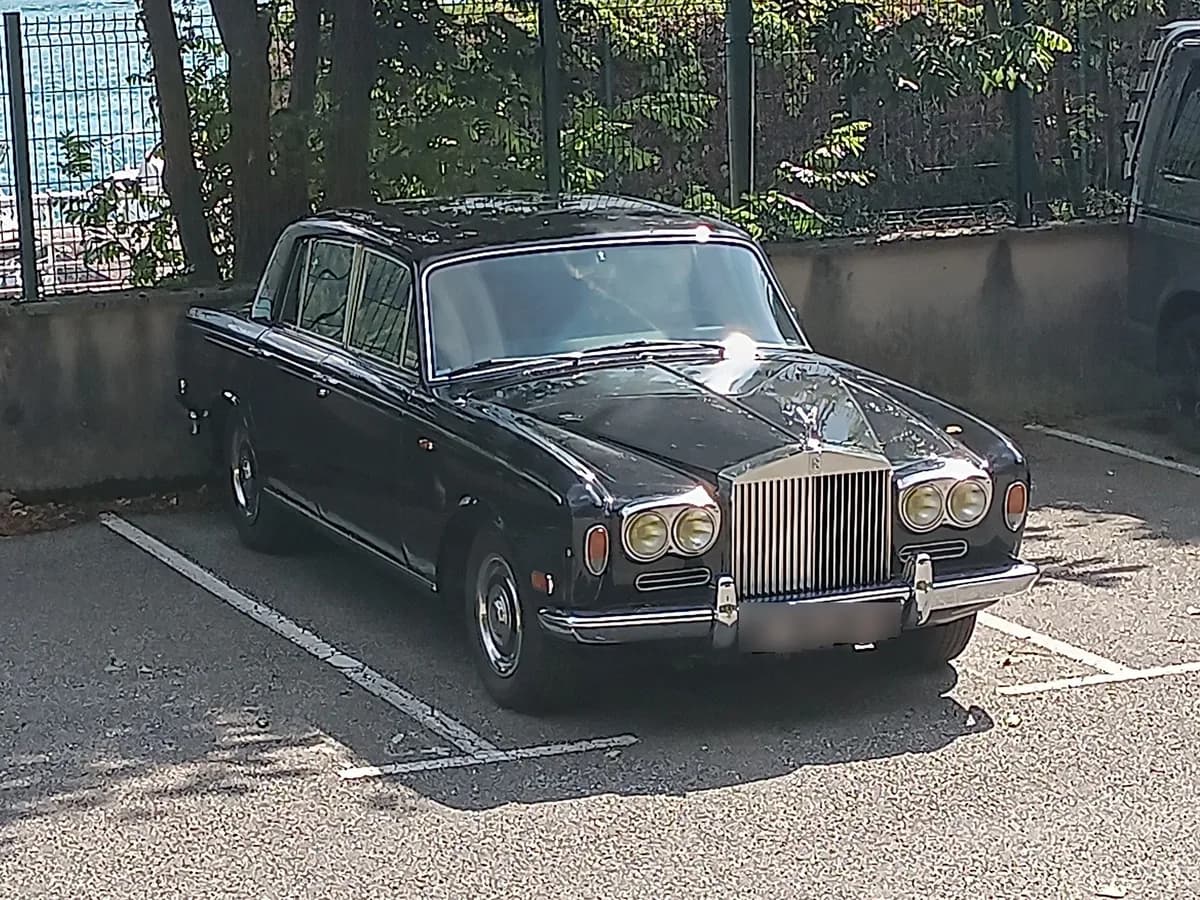
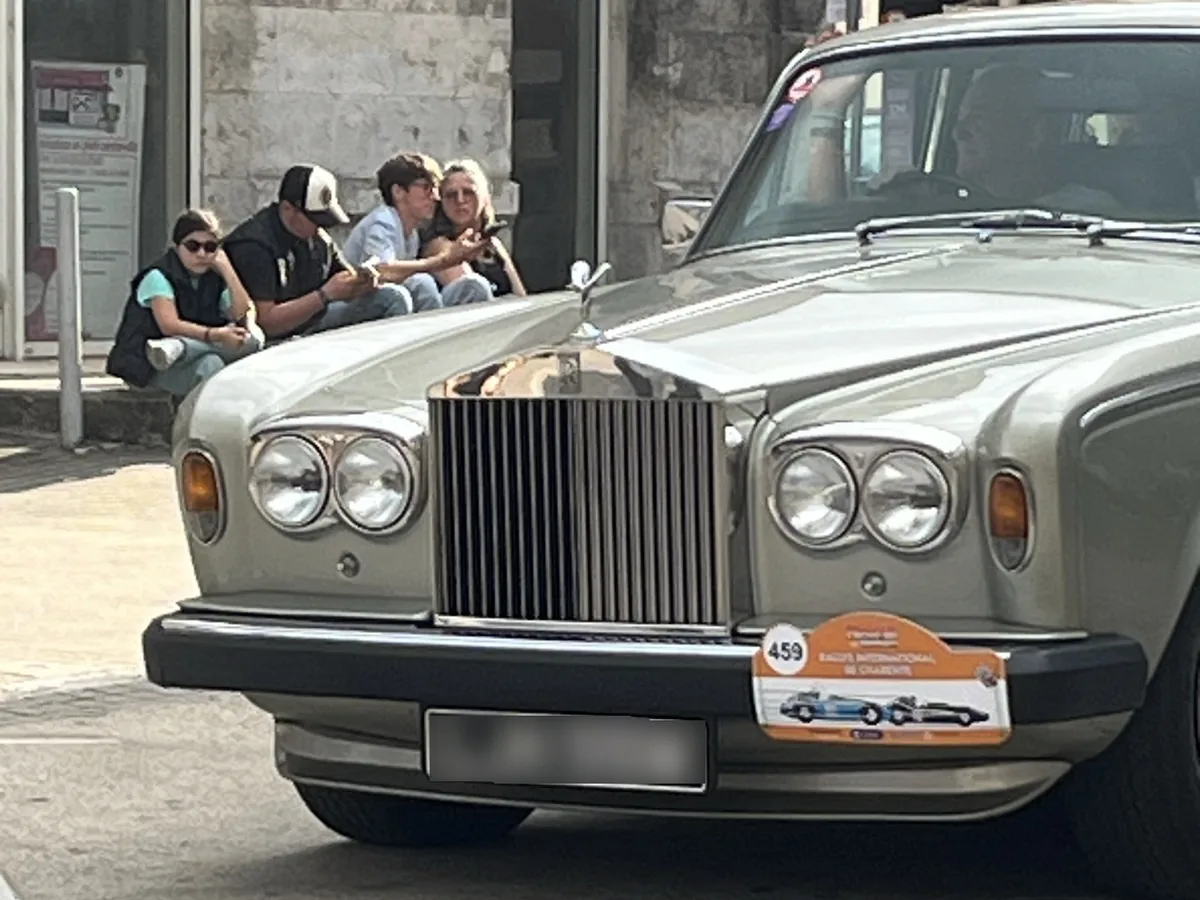
Model summary
Data from the ScanRacer library, organized to compare versions quickly.
Model introduction
Introduced in 1971, the Rolls-Royce Corniche was a two-door grand tourer developed from the Silver Shadow coupé and convertible designs built by Mulliner Park Ward. It retained a front-engine, rear-wheel-drive layout and Rolls-Royce’s familiar 6¾-litre V8, while placing greater emphasis on silence, comfort and hand-finished luxury than on published performance figures. Fixed-head coupé and convertible body styles shared the Corniche name during the first part of its career, although coupé production ended in the early 1980s. Corniche II, III and IV updates then introduced gradual changes to safety equipment, suspension, fuel delivery and transmission. A separate late-1990s convertible, commonly catalogued as the Corniche V, revived the name and represented the final stage of Crewe-built Rolls-Royce automobile production.
History
The Corniche name appeared in March 1971 on the two-door versions of the Silver Shadow, whose bodies were built by Mulliner Park Ward. It was therefore not a complete technical break, but a distinct identity for a more exclusive body style than the standard saloon. The model was offered as a fixed-head coupé and a four-seat convertible, using a 6,750cc V8, independent suspension and a General Motors automatic transmission. The name referred to the scenic coastal roads of the French Riviera and suited Rolls-Royce’s intended image of effortless grand touring. Detail changes and mechanical improvements followed over the years, including revisions to fuel delivery, steering, rear suspension and safety equipment. Coupé production ended after 1981, while the convertible continued through the Corniche II, III and IV updates. Early cars were associated with the Mulliner Park Ward workshops in London; production later moved to Crewe in the early 1990s. After the first series ended in 1995, the name returned on a substantially newer convertible introduced from 1999.
Generations
The first period, commonly grouped under the Corniche I designation, covers the models derived from the Silver Shadow. Coupé and convertible shared the same broad mechanical foundation, but their body styles and intended use were clearly different. The fixed-head coupé disappeared in the early 1980s, while the convertible continued. Corniche II refers to an update strongly associated with North American markets from the mid-1980s and later used elsewhere. The Corniche III, introduced in 1989, brought visible bumper and wheel changes together with improvements to safety systems and engine management. The Corniche IV, launched in 1992, is harder to distinguish externally but introduced significant equipment changes, including a four-speed automatic transmission, adaptive suspension and a glass rear window. The final cars of this line included the limited Corniche S, fitted with a turbocharged engine. The Corniche V, appearing from 1999, was a much more substantial development: a dedicated, larger convertible related to the Bentley Azure platform. Generation terminology can vary between markets and catalogues, so the I–IV sequence should be read as a progression of series rather than a succession of entirely new platforms.
Key differences
The clearest differences begin with body style. A Corniche coupé has a fixed roof and a more formal profile, while the convertible uses a folding soft top and has a stronger grand-touring character. On first-series cars, model-year changes may affect bumpers, wheels, fuel delivery, suspension or equipment without radically altering the overall shape. The Corniche III is more easily identified by its body-coloured bumpers and updated equipment. Corniche IV introduced more meaningful mechanical revisions, notably a four-speed automatic transmission and a glass rear window. The Corniche S was a rare turbocharged end-of-run variant. The Corniche V should be treated as a separate chapter: it was convertible-only, larger, newer and visually less closely related to the Silver Shadow than the Corniche I–IV cars. In practice, chassis records, build documentation and market specification are often more reliable than appearance alone when identifying an individual car.
Photo recognition
To identify an early Corniche, first confirm that the car is a two-door Rolls-Royce rather than a Silver Shadow saloon. Cars built before 1971 can look very similar to early Corniches but normally carried a different commercial designation. The coupé is identified by its fixed roof, while the convertible has a folding soft top and a continuous body line behind the doors. The Pantheon grille, long bonnet, substantial proportions and richly trimmed wood-and-leather cabin establish the model family, but they cannot reliably determine the exact series. Bumpers and wheel designs can help identify later updates, although they are not conclusive because restorations and replacements are common. To distinguish a Corniche IV from a Corniche III, look for details such as the glass rear window and newer safety and convenience equipment. A Corniche V is substantially longer and more modern in appearance; its integrated soft-top design and different proportions make it easier to separate from the Silver Shadow-based cars.
Important versions
Corniche I is essential to understanding the model: it covers the Silver Shadow-based coupé and convertible and established the name’s long career. The convertible is the body style most closely associated with the Corniche’s Riviera image, while the coupé has a more restrained and formal presence. Corniche III brought an important modernization of equipment and appearance. Corniche IV added more substantial mechanical improvements and a glass rear window. The Corniche S, produced in very small numbers at the end of the first production run, is especially notable for its turbocharged engine. Finally, the Corniche V, listed in ScanRacer from 1999, is a separate convertible from the I–IV lineage and represents the nameplate’s final modern interpretation.
References
- The Sky’s the Limit. The Rolls-Royce Corniche ConvertibleBMW Group Classic
- Rolls-Royce, 1971, Corniche, Mulliner, Park WardMuseo Nicolis
- Rolls-Royce Corniche 1971–1995 ReviewHonest John Classics
- 1975 Rolls-Royce Corniche Fixed Head CoupéChristie’s
- The Rolls-Royce Without a Role: The Corniche VHagerty UK
- https://www.adac.de/rund-ums-fahrzeug/autokatalog/marken-modelle/rolls-royce/corniche/adac.de
Frequently asked questions
- What years was the Rolls-Royce Corniche produced?
- ScanRacer's referenced versions cover 1971 - 1999.
- How many Rolls-Royce Corniche examples are documented on ScanRacer?
- 7 published scans from 7 members, with the latest photo added in September 2026.