
PJ Deluxe
The 1935 Plymouth PJ Deluxe introduced a major redesign of Plymouth’s passenger-car range. Identified by the PJ engineering code, it used a more rounded body, an X-type frame and improved weight distribution compared with the preceding models. Its 201.3-cubic-inch L-head inline-six is commonly listed at 82 horsepower, although some technical references quote 85 hp depending on the rating convention used. Most Deluxe versions rode on a 113-inch wheelbase and were offered as coupes, a rumble-seat coupe, a convertible coupe, and two- or four-door sedans. Within Plymouth’s 1935 range, the Deluxe represented the better-equipped passenger-car series, competing in the affordable American market against contemporary Ford and Chevrolet models. Its combination of fresh styling, hydraulic brakes and practical body choices made the PJ an important prewar Plymouth.
Variants by year
1935
Model summary
Data from the ScanRacer library, organized to compare versions quickly.
Model introduction
The 1935 Plymouth PJ Deluxe introduced a major redesign of Plymouth’s passenger-car range. Identified by the PJ engineering code, it used a more rounded body, an X-type frame and improved weight distribution compared with the preceding models. Its 201.3-cubic-inch L-head inline-six is commonly listed at 82 horsepower, although some technical references quote 85 hp depending on the rating convention used. Most Deluxe versions rode on a 113-inch wheelbase and were offered as coupes, a rumble-seat coupe, a convertible coupe, and two- or four-door sedans. Within Plymouth’s 1935 range, the Deluxe represented the better-equipped passenger-car series, competing in the affordable American market against contemporary Ford and Chevrolet models. Its combination of fresh styling, hydraulic brakes and practical body choices made the PJ an important prewar Plymouth.
History
The 1935 model year represented a clear break for Plymouth. As part of the Chrysler organization, the brand replaced the squarer appearance of its 1934 cars with smoother fenders, rounded body contours and a more contemporary profile. The engine was moved farther forward, improving weight distribution and creating more useful room for passengers. A reinforced X-type frame and extensively integrated body construction also helped lower the center of gravity. Plymouth promoted the result as a more stable, spacious and modern car for the affordable market. The PJ Deluxe retained a 201.3-cubic-inch L-head inline-six, but cooling, ignition and several internal details were revised for 1935. Reference sources generally place output in the 82-to-85-horsepower range, reflecting differences in technical rating conventions. A three-speed manual transmission with synchronizing equipment was used, and four-wheel hydraulic brakes were a significant feature in this price class. Deluxe body styles included sedans, Touring sedans, coupes and a convertible coupe. Contemporary production figures indicate roughly 250,000 PJ Deluxe cars, making the series one of Plymouth’s most commercially successful redesigns of the prewar period.
Generations
The Plymouth PJ Deluxe belongs to a short sequence of model-year engineering codes. For 1935, PJ identifies the extensively redesigned Plymouth range, with the Deluxe positioned as its better-equipped passenger-car series. It was not a multi-year generation using the same code: Plymouth changed the Deluxe designation to P2 for the 1936 model year. The most useful comparison is therefore with the 1934 Plymouth rather than with several PJ model years. The 1935 car received smoother bodywork, revised engine placement and a strengthened frame design. Plymouth retained a broadly similar visual direction for 1936, but the series code changed and structural and body details were revised. A 1936 P2 can consequently resemble a 1935 PJ at a glance without being the same model series. For this model entry, one dated variant is recorded: the 1935 base version. That cataloging label should not be confused with the historical factory body nomenclature. Plymouth offered the PJ Deluxe in several distinct configurations, including sedans, Touring sedans, coupes and a convertible coupe. Identification should therefore combine the year, PJ designation, body style and vehicle serial information rather than relying on appearance alone.
Key differences
The PJ Deluxe is primarily distinguished from the PJ Business by its presentation level and selected chassis equipment. Specialist references describe additional exterior brightwork, including plated headlamps and taillamps, a chrome windshield frame and stainless-steel hood rings. The Deluxe also used comfort-oriented suspension and setup details, including a front stabilizer bar, while the Business versions were described as more basic and used different spring and shock arrangements. Body style creates major differences within the Deluxe series as well. A two-door sedan, Touring sedan, four-door sedan, rumble-seat coupe and convertible coupe have different profiles, weights and interior layouts. Long-wheelbase versions, including certain seven-passenger and Traveler sedans, are particularly easy to separate from the regular 113-inch-wheelbase cars. The basic mechanical specification remains shared across the PJ Deluxe family: a 201.3-cubic-inch L-head six-cylinder, three-speed manual transmission and four-wheel hydraulic brakes. Exact equipment should still be checked against the individual body and surviving factory documentation.
Photo recognition
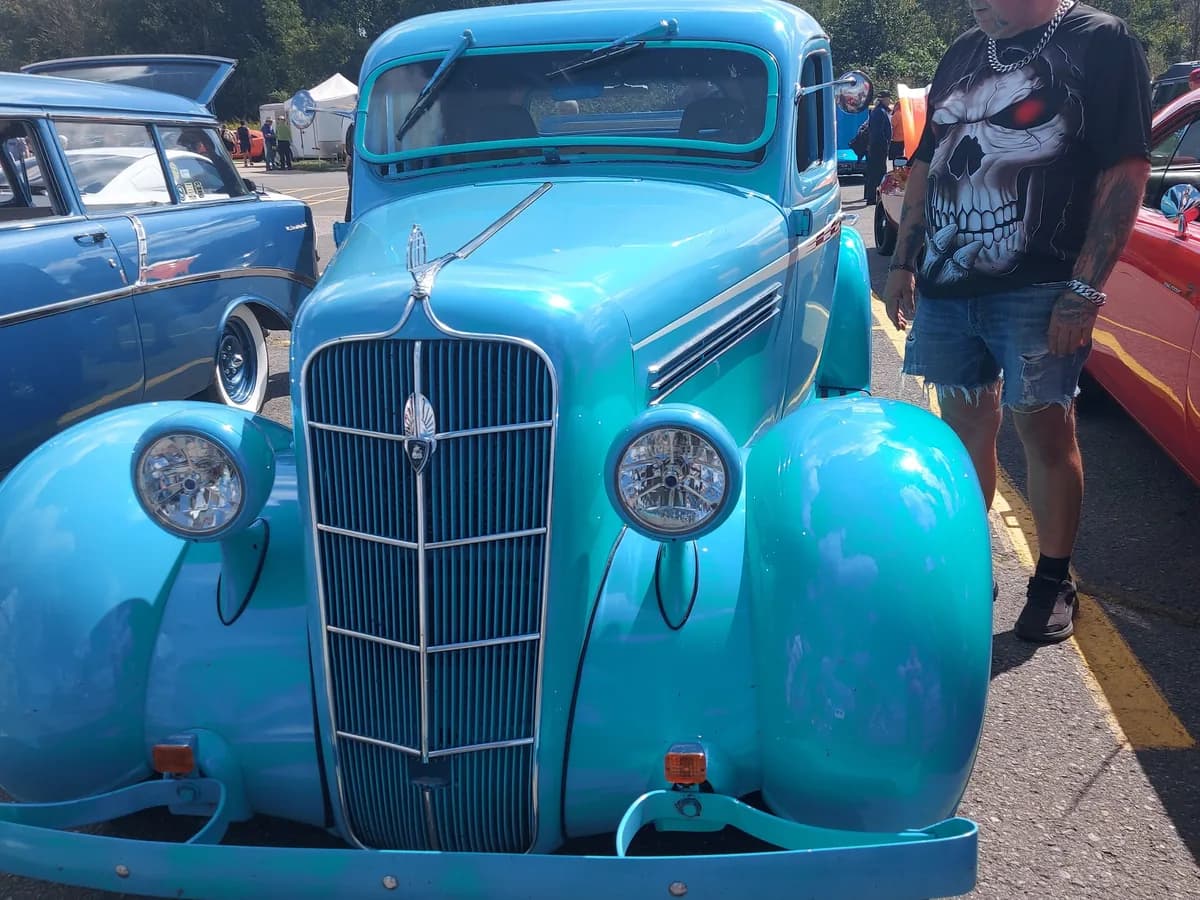
A 1935 Plymouth PJ Deluxe is first recognizable by its smoother, rounder appearance compared with the 1934 Plymouth. Integrated fenders, a long hood and an upright grille give the car the streamlined look associated with Plymouth’s 1935 redesign. Separate headlamps, hood trim rings and more extensive brightwork can help distinguish a Deluxe from a PJ Business, although restored cars may have replacement or non-original parts. Body configuration is another important clue. A Touring sedan has a more pronounced external luggage compartment, while a rumble-seat coupe has a shorter passenger compartment and a different roof profile. The convertible coupe is identified by its folding top and open body structure. Confirmation should come from documentation rather than appearance alone: inspect the serial plate, look for the PJ series designation and check the engine number, which is generally associated with a PJ prefix. Body code, wheelbase and trim details should be evaluated together when identifying an individual car.
Important versions
The 1935 PJ Deluxe range included several significant body configurations. Two- and four-door sedans served as the main family-car choices, while Touring sedans used a distinct body and external luggage treatment. The rumble-seat coupe offered a sportier profile, and the convertible coupe was considerably less common. Plymouth also built long-wheelbase variants, including a seven-passenger sedan and a very limited Traveler sedan. Within this library context, the available variant is labeled simply as “Base” for the 1935 model year. That label does not mean that Plymouth offered only one body style. It identifies the model-year entry, while historical factory records distinguish the individual sedan, Touring, coupe, convertible and long-wheelbase configurations, each with its own production volume and body details.
References
- 1935 Plymouth PJ Deluxe / Specs, Photos, Model DetailsAuto Museum Online
- 1935 Plymouth Deluxe SixHemmings
- 1935 Plymouth Deluxe BrochureThe Old Car Manual Project
- https://motor-car.net/plymouth/item/28180-plymouth-deluxe-pj-p6-35-38motor-car.net
- https://www.diyauto.com/index.php/manufacturers/plymouth/generations/deluxe-pjdiyauto.com
Frequently asked questions
- What years was the Plymouth PJ Deluxe produced?
- ScanRacer's referenced versions cover 1935.
- How many Plymouth PJ Deluxe examples are documented on ScanRacer?
- 1 published scan from 1 member, with the latest photo added in August 2026.