
Barracuda
Introduced on April 1, 1964, the Plymouth Barracuda reached showrooms several weeks before the Ford Mustang. Its original mission was to serve as a compact sporty coupe based on the Plymouth Valiant, distinguished by a fastback roof and an unusually large wraparound rear window. Over time, the model moved away from that compact-sporting formula and adopted a broader, more muscular character. For 1967, Plymouth launched a substantially redesigned Barracuda range with fastback, hardtop, and convertible body styles. The major transformation arrived for 1970, when the Barracuda moved to Chrysler’s E-body architecture and gained room for much larger performance engines. That generation produced the famous ’Cuda models, including versions equipped with Chrysler’s most powerful V8s. The 1971 and 1972 model years then reflect the beginning of the market’s shift away from large-displacement performance cars.
Variants by year
1972
1971
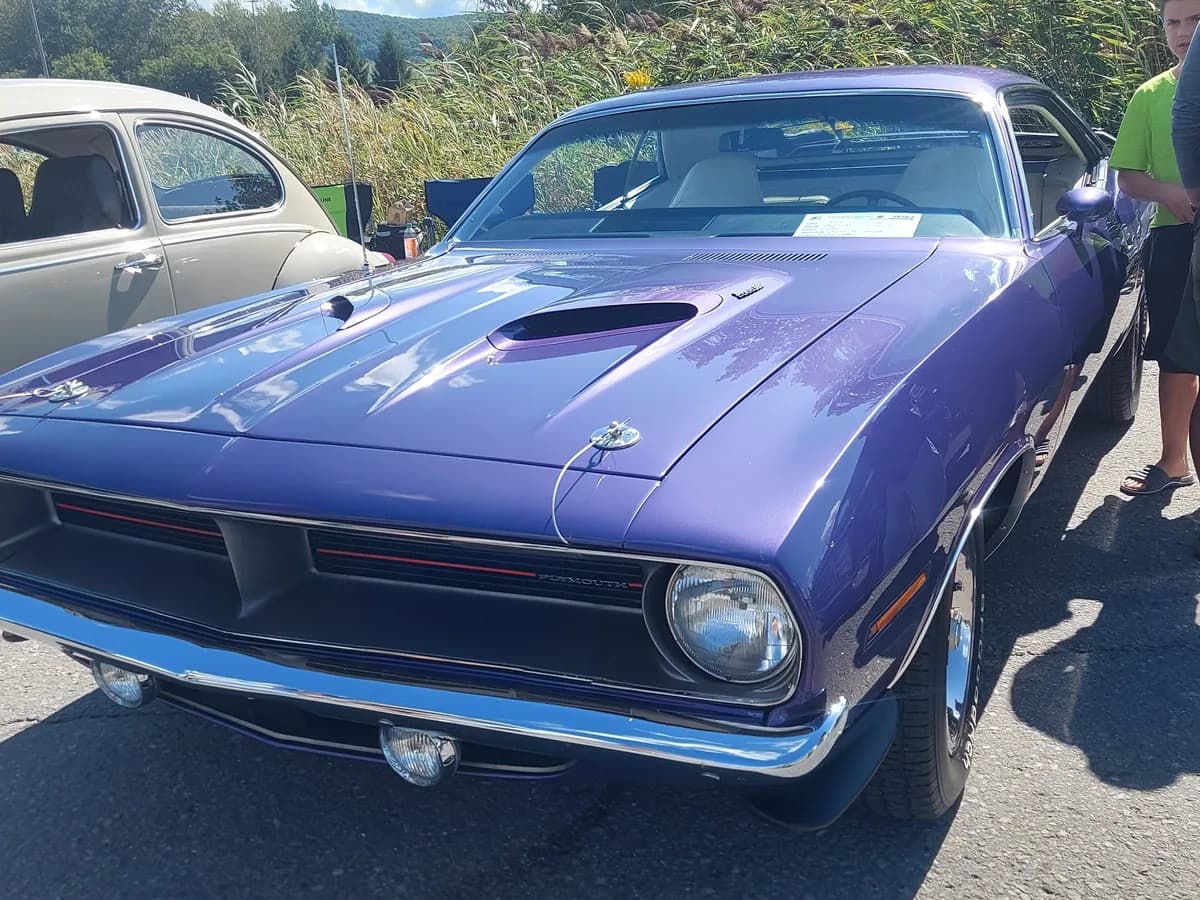
1970
 R
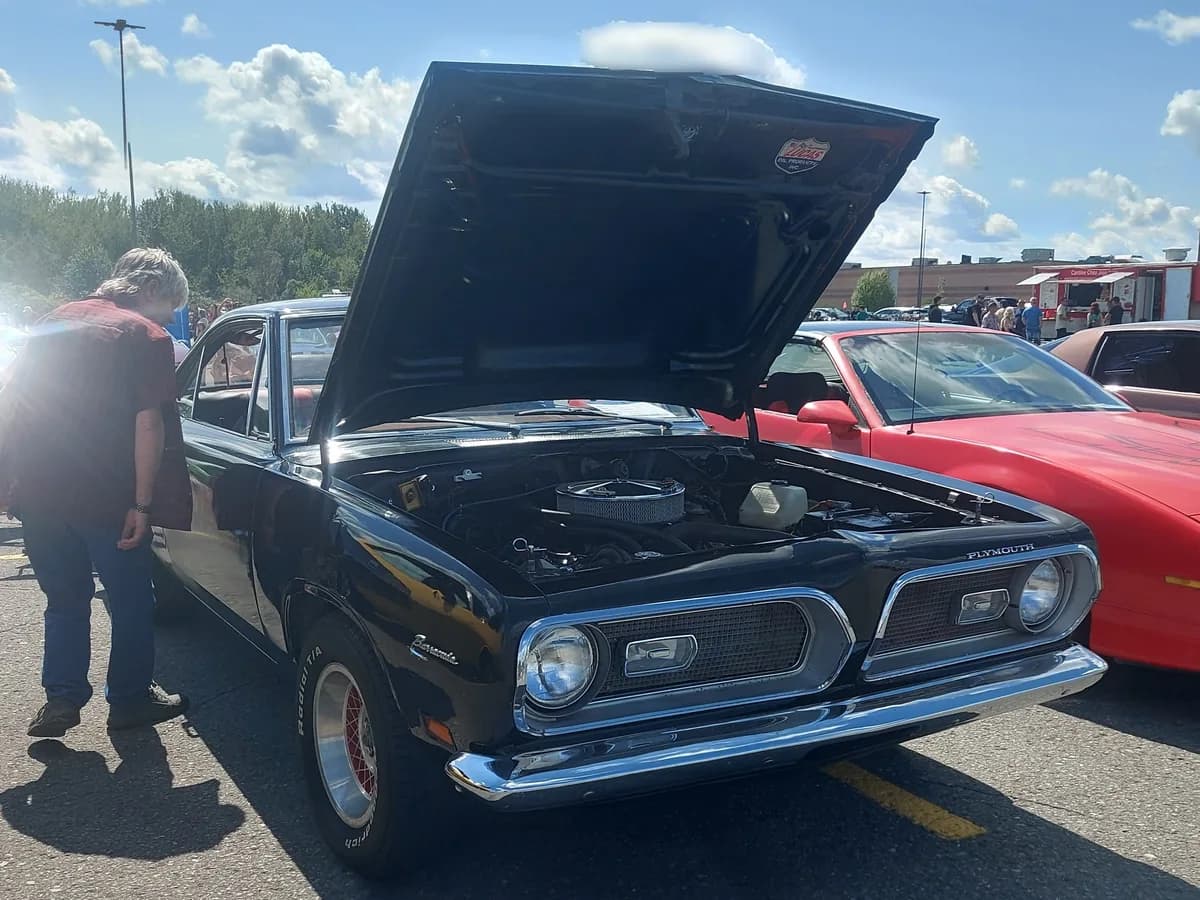
R1967
1965
1964
Model summary
Data from the ScanRacer library, organized to compare versions quickly.
Model introduction
Introduced on April 1, 1964, the Plymouth Barracuda reached showrooms several weeks before the Ford Mustang. Its original mission was to serve as a compact sporty coupe based on the Plymouth Valiant, distinguished by a fastback roof and an unusually large wraparound rear window. Over time, the model moved away from that compact-sporting formula and adopted a broader, more muscular character. For 1967, Plymouth launched a substantially redesigned Barracuda range with fastback, hardtop, and convertible body styles. The major transformation arrived for 1970, when the Barracuda moved to Chrysler’s E-body architecture and gained room for much larger performance engines. That generation produced the famous ’Cuda models, including versions equipped with Chrysler’s most powerful V8s. The 1971 and 1972 model years then reflect the beginning of the market’s shift away from large-displacement performance cars.
History
The Barracuda began as Plymouth’s quick response to the growing demand for youthful, sporty cars. The first generation used the Valiant’s A-body platform and was offered only as a fastback. Its large rear glass, liftback opening, and folding rear seat gave the car a distinctive appearance while retaining useful cargo flexibility. In 1964, the available engines remained compact-car choices, including the Slant Six and Chrysler’s new 273 V8. For 1965, Plymouth dropped the Valiant name from the model’s branding and increased its performance potential with the 273 Commando and the Formula S package. The 1967 model year introduced a second generation that remained within the A-body family but looked less like a Valiant. The fastback was joined by hardtop and convertible body styles, giving buyers more choice. The redesign broadened the Barracuda’s appeal, although it still struggled to match the Mustang’s sales success. Chrysler completely reworked the concept for 1970. The Barracuda moved to the E-body platform shared with the Dodge Challenger, and its larger engine bay could accommodate Chrysler’s biggest performance V8s. The ’Cuda models, 440 engines, and 426 Hemi established the car’s lasting muscle-car reputation. After 1971, changing regulations, higher insurance costs, and a shrinking performance market reduced output and model variety. Barracuda production continued through the 1974 model year.
Generations
The first generation covers the 1964 through 1966 model years. It is identified by its Valiant-derived A-body platform, single fastback body style, and unusually large wraparound rear window. The proportions remain those of a compact American car, while engine choices range from the Slant Six to the 273 V8. Early 1964 cars also retain Valiant-related identification details, which helps separate them from later model years. The second generation arrived for 1967 and continued through 1969. Its body was wider and visually more independent from the Valiant. Plymouth offered three principal body styles: fastback, hardtop, and convertible. This period also brought a stronger performance focus, including the Formula S package, while retaining the A-body foundation. The third generation began for 1970 and ran through 1974. Moving to Chrysler’s E-body platform changed the Barracuda’s proportions and purpose. The car became longer, wider, and capable of carrying Chrysler’s largest V8 engines. Early E-body cars were offered in coupe, hardtop, and convertible forms. For 1971, the front end received a major styling revision, while 1972 brought a less ambitious engine range and the end of convertible availability. Within the 1964-1972 span, these three stages explain the Barracuda’s major differences in appearance, engineering, and performance character.
Key differences
The most important differences involve the platform and body style. A 1964-1966 Barracuda is a compact A-body fastback with a very large rear window and close technical ties to the Valiant. The 1967-1969 cars are wider and available as fastbacks, hardtops, and convertibles, but they remain A-body vehicles. The 1970 model year represents a complete break. The move to the E-body platform gave the Barracuda a larger body and an engine bay designed to accept Chrysler’s biggest V8s. The Barracuda name should also be distinguished from ’Cuda, which identifies performance-oriented versions rather than every car sold as a Barracuda. The 1971 cars are especially recognizable by their revised front end and, on certain versions, the side gills behind the front wheels. For 1972, the convertible disappeared and the engine range became less powerful. These distinctions matter when identifying a car, evaluating a listing, or checking whether a restoration matches the original model year.
Photo recognition
To identify a 1964-1966 Barracuda, start with the fastback profile and its very large rear window, which slopes down toward a short decklid. Cars from 1964 may still carry Valiant-related identification details. The 1965 and 1966 cars received different exterior treatments, particularly around the grille and front fenders; a more pronounced egg-crate grille is a useful clue for 1966. A 1967-1969 Barracuda has a squarer body and can be a fastback, hardtop, or convertible. A 1967 fastback should not be confused with the first generation because the glass, fenders, and overall proportions are different. The 1970-1972 E-body cars are wider, with a more rearward cabin and a noticeably more substantial stance. The 1971 model uses a four-headlamp front end and, on certain versions, distinctive side gills behind the front wheels. The 1972 car returns to a single-headlamp arrangement and is no longer available as a convertible. Badges and stripes are often replaced during restoration, so the body shell, glass, and structural details are usually more dependable identification clues.
Important versions
The first historically important version is the 1964 Barracuda, which introduced the fastback concept and reached the market before the Mustang. The 273 Commando and Formula S package, offered from 1965, marked a significant step toward making the Barracuda a genuine compact performance car. For 1967, the arrival of hardtop and convertible body styles greatly expanded the range. The most famous transformation came in 1970 with the E-body and the ’Cuda models. Depending on configuration and model year, these cars could be equipped with 340, 383, 440, and 426 Hemi V8s. The 1970 model is especially significant for its styling and broad engine availability, while the 1971 car is recognized by its distinctive presentation and was the final E-body Barracuda convertible year. For 1972, the model’s historical importance lies more in its transition toward a less powerful lineup than in outright performance.
References
- Plymouth Barracuda History: From Valiant Beginnings to Hemi ’Cuda GloryMotorTrend
- 1964-1966 Plymouth BarracudaHemmings
- 1970-1974 Plymouth BarracudaHemmings
- 1964 Plymouth Barracuda BrochurePlymouth Division, Chrysler Corporation
- 1967 Plymouth Barracuda BrochurePlymouth Division, Chrysler Corporation
- https://journal.classiccars.com/2013/07/01/plymouth-barracuda/journal.classiccars.com
- https://www.fullysorted.com/research/models/plymouth/barracuda-e-bodyfullysorted.com
Frequently asked questions
- What years was the Plymouth Barracuda produced?
- ScanRacer's referenced versions cover 1964 - 1972.
- How many Plymouth Barracuda examples are documented on ScanRacer?
- 6 published scans from 3 members, with the latest photo added in September 2026.