
Fairlady Z
Launched in Japan in 1969, the Nissan Fairlady Z turned the Japanese sports coupe into an international nameplate. On several export markets, the first-generation car was sold as the Datsun 240Z, combining a long, low profile with grand-touring practicality and a price position below many European sports cars. The line later developed through the Fairlady Z, 280Z, 300ZX, 350Z, 370Z, and the seventh-generation Nissan Z. The versions represented here include the original Fairlady Z, the 280Z, 300ZX Coupe and Convertible variants, and the Z33-generation Coupe and Roadster. Names, body styles, and production years can differ between markets, so the generation code and body configuration are important when identifying an individual car.
What about the car you photographed?
Upload a photo to get a suggested make, model and likely year.
No account needed for the result · Publish only if you choose
Variants by year
Make: Nissan · Model: Fairlady Z
10 / 10 versions shown
2022
2010
2009
2003
2002
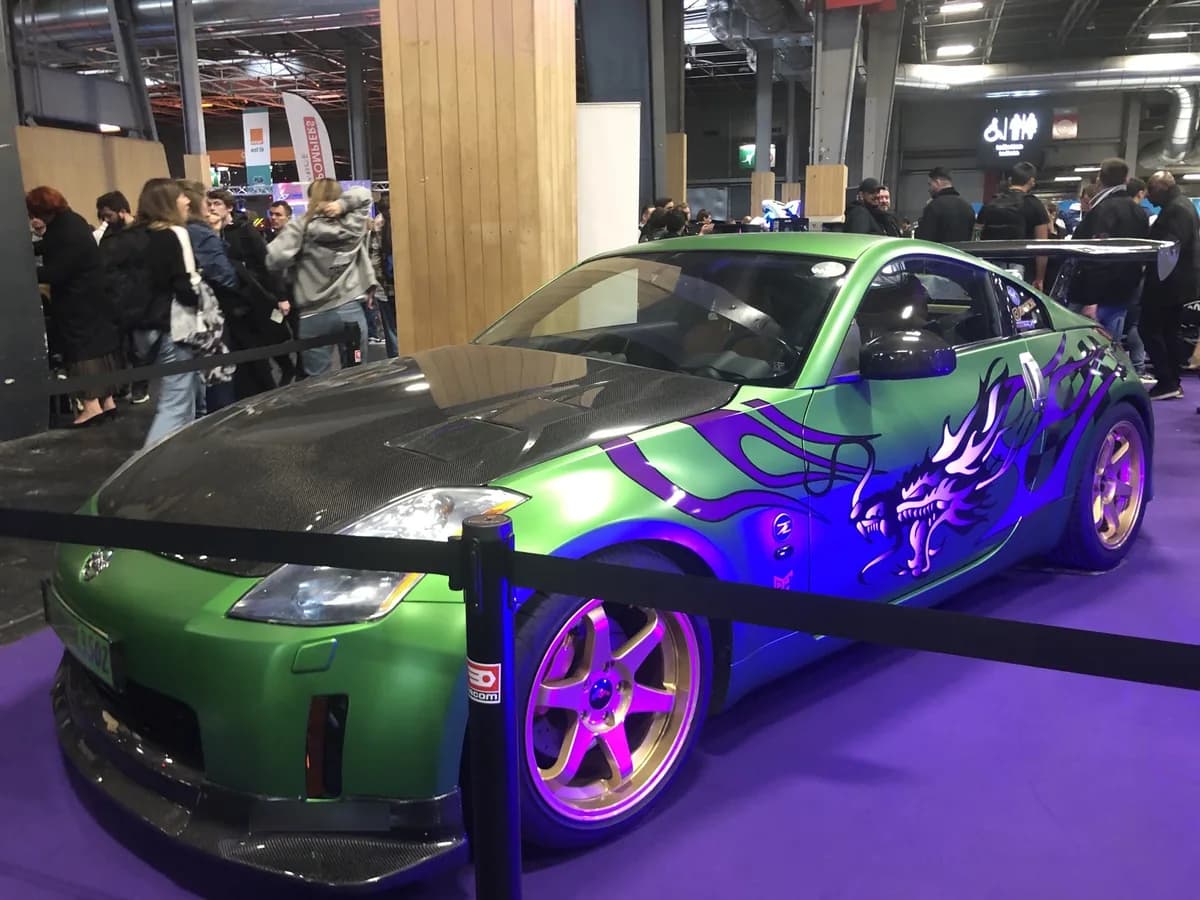
1989
1983
1978
1969

Nissan Fairlady Z photos
Model summary
Data from the ScanRacer library, organized to compare versions quickly.
Model introduction
Launched in Japan in 1969, the Nissan Fairlady Z turned the Japanese sports coupe into an international nameplate. On several export markets, the first-generation car was sold as the Datsun 240Z, combining a long, low profile with grand-touring practicality and a price position below many European sports cars. The line later developed through the Fairlady Z, 280Z, 300ZX, 350Z, 370Z, and the seventh-generation Nissan Z. The versions represented here include the original Fairlady Z, the 280Z, 300ZX Coupe and Convertible variants, and the Z33-generation Coupe and Roadster. Names, body styles, and production years can differ between markets, so the generation code and body configuration are important when identifying an individual car.
History
The Fairlady name predates the Z. Nissan began using it in 1961 for an open sports car intended in part to support the company’s commercial ambitions in North America. In 1969, Nissan introduced a new closed-body interpretation, the S30 Fairlady Z. It replaced the traditional roadster with a two-seat hatchback coupe designed for longer-distance touring. In export markets, the car was generally known as the Datsun 240Z. Nissan states that the Z family exceeded 520,000 units during its first eight years, helping establish a lasting influence on Japanese sports cars. The range then developed through the S130, Z31, and Z32 series. The 280Z belongs to the S130 period, while the 300ZX arrived with the Z31 generation in 1983 and became a more sophisticated, technology-focused sports car with the Z32 introduced in 1989. Z32 production ended in August 2000. After a break, the concept shown at the 2001 North American International Auto Show previewed the Z33, which went on sale in Japan and the United States in 2002. The following generation adopted the 370Z name before the Nissan Z designation returned. Nissan describes the latest car as the seventh-generation Z; it was revealed in 2021 and introduced for the 2022 model year.
Generations
The first generation, S30, began with the Fairlady Z launched in 1969 and included export derivatives sold as the Datsun 240Z. It is identified by a two-seat fastback body, a long hood, and vertical rear lamps. The S130 series, sold from the late 1970s into the early 1980s, developed the same concept; the listed 280Z belongs to this period. The Z31 appeared in 1983, introduced the 300ZX name, and brought a more angular design with V6 power on selected versions. The 1989 Z32 represented a major visual change. It was wider and lower, used pop-up headlamps, and was offered as a two-seat coupe, a 2+2, and a convertible depending on the market. The Z33, launched in 2002, revived the line after Z32 production ended. It used a modern V6 layout and was sold first as a coupe, followed by the Roadster. The Z34 continued the formula under the 370Z name with an evolution of the Z33 platform and styling. Finally, the Nissan Z revealed in 2021 opened the seventh generation for the 2022 model year. As a result, catalogue years may combine different commercial names and body styles under the broader Fairlady Z lineage.
Key differences
The most important distinctions involve body style, generation code, and sales market. The Fairlady Z and 280Z refer to early hatchback-based generations, while the 300ZX Coupe and Convertible belong to the Z31 or Z32 family depending on the vehicle’s exact code. A “2+2” designation identifies a longer-wheelbase body and cabin, separate from the two-seat coupe. The Z33 stands apart through its modern V6 configuration and the availability of a retractable-roof Roadster, a body style not offered with the original S30. Market naming also matters. Fairlady Z is the historic Japanese designation; Datsun 240Z and 280Z were used in export markets, while 300ZX, 350Z, and 370Z identify later periods or international versions. Equipment, engines, transmissions, and trim levels can differ by country. Without a build plate, exact model year, or chassis code, identification based only on the commercial name should therefore remain cautious.
Photo recognition
An S30 can usually be identified by its long, low shape, rear hatch, and vertical lamp clusters at each end. The 240ZG adds distinctive details such as an extended nose and bolt-on-style fender flares, but those features should not be assigned to every Fairlady Z. The S130-era 280Z has a more angular body and larger bumpers than the S30. The Z31 300ZX has a boxier profile and glasshouse typical of the 1980s. The Z32 is easier to separate through its very low, wide stance, pop-up headlamps, and broad horizontal rear lamps. The Z33 uses a rounder profile, a long hood, and a curved rear hatch; the Roadster has a retractable hardtop. For a dependable identification, check the chassis code, confirm the seating layout, study the headlamp shape, and compare bumper and lamp designs with the relevant model year.
Important versions
The ScanRacer context includes a Base entry spanning the model’s long history, the 1978 280Z, 1989 300ZX 2+2 and 2+0 Coupe variants, and the 1989 300ZX Convertible. The Z33 generation is represented by the Coupe, listed from 2002 to 2009, and the Roadster, listed from 2003 to 2010. These labels are useful for organizing research, but they do not replace a chassis code or the exact designation used in a particular market. The Fairlady Z name can therefore cover substantially different specifications depending on generation, body style, and region.
References
- Nissan Heritage Collection: Fairlady ZNissan Motor Corporation
- Fairlady Z-L (1970: S30)Nissan Motor Corporation
- Nissan Fairlady Z Version ST (2002: Z33)Nissan Motor Corporation
Frequently asked questions
- What years was the Nissan Fairlady Z produced?
- ScanRacer's referenced versions cover 1969 - 2022.
- How many Nissan Fairlady Z examples are documented on ScanRacer?
- 8 published scans from 8 members, with the latest photo added in October 2026.
What about the car you photographed?
Upload a photo to get a suggested make, model and likely year.
No account needed for the result · Publish only if you choose