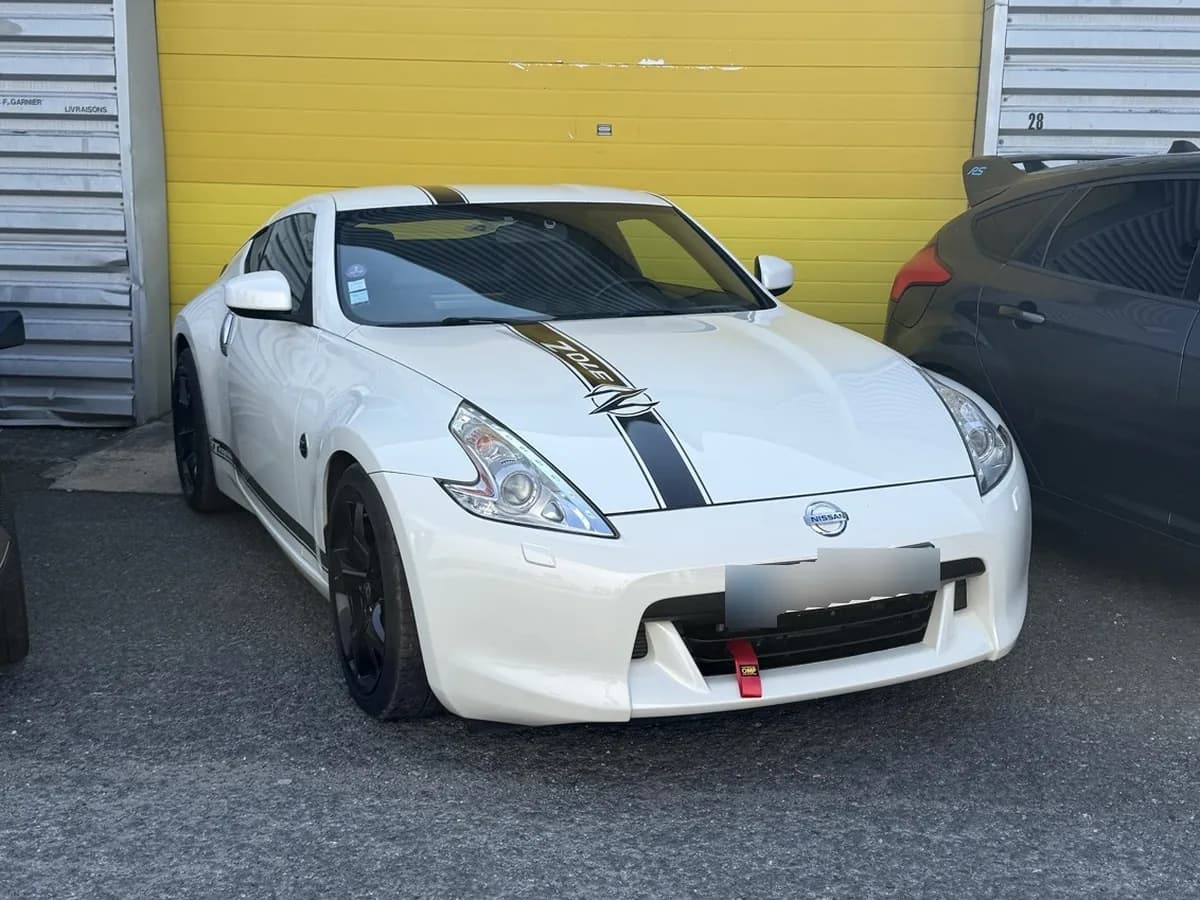
Nissan 370Z Coupé 2009
The 2009 Nissan 370Z Coupe introduced the Z34 generation and replaced the 350Z after six years on the market. Its name referred to a 3.7-liter V6 mounted at the front and driving the rear wheels. Compared with its predecessor, the car used a shorter wheelbase, a stiffer structure, and several aluminum components to help reduce weight. In the United States, buyers could choose between a six-speed manual gearbox and a seven-speed automatic. With two seats, a rear hatch, and a naturally aspirated engine, the 370Z retained the traditional sports-coupe layout while adding modern equipment, including SynchroRev Match on selected manual-transmission versions.
Curious about this car?
Explore 370Z, then try your own photo.
No account needed for the result · Publish only if you choose
History
The 370Z arrived at an important point in Nissan’s sports-car history. After the 300ZX ended production in 2000, Nissan revived its Z coupe with the 350Z in 2002. That model helped restore the Z name to the global lineup and sold more than 250,000 units, according to Nissan’s official history. The Z34 therefore had to extend an established formula without abandoning its identity. Revealed in 2008 for the 2009 model year, the 370Z received a comprehensively revised body, a shorter wheelbase, increased width, and a more developed interior. Nissan also increased the use of aluminum and shortened the wheelbase to improve agility. The coupe reached dealerships in early 2009, while the Roadster followed later as a 2010 model in the United States. The 370Z became the sixth generation of Nissan’s Z-car lineage.
Latest scans
Photos added by the community for this page.
Anecdotes
The Nissan 370Z received an unusual introduction. Nissan and Electronic Arts revealed the car inside the video game Need for Speed Undercover before its public debut at the Los Angeles Auto Show on November 19, 2008. The strategy connected the new coupe with both automotive enthusiasts and gaming culture. The virtual reveal came before the car reached U.S. dealerships in early 2009.
Production
The public sources consulted do not provide a sufficiently reliable worldwide production total specifically for the 2009 Nissan 370Z Coupe. Nissan does confirm that the Z34 directly succeeded the 350Z, which continued through December 2008, and that the new generation debuted in 2009. Any sales or production figure should therefore be tied to a defined market, body style, or reporting period before publication. Without a detailed manufacturer breakdown for this model year, a global production number would be misleading and is best left unstated.
Press reception
Automotive publications generally viewed the 2009 370Z as a successful development of the 350Z. Edmunds praised the V6’s output, the road manners, the improved ride, and the automatic throttle blipping offered with certain manual versions. Car and Driver highlighted the shorter dimensions, aluminum construction, and the tested car’s performance. Reviews also identified limitations consistent with the car’s design, including restricted rear visibility, modest cargo capacity, and a sometimes noisy cabin. The reception was therefore positive without presenting the 370Z as a broadly practical vehicle. Its main appeal lay in its driving enjoyment, traditional rear-wheel-drive layout, and competitive performance for the price.
Evolution
Variants
The 2009 range varied by market, but U.S. documentation identifies the 370Z and 370Z Touring versions. Touring equipment added a more upscale cabin, including leather seating, power adjustments, and a Bose audio system depending on configuration. The Sport Package could add a viscous limited-slip differential, forged 19-inch wheels, upgraded brakes, aerodynamic extensions, and SynchroRev Match with the manual gearbox. A seven-speed automatic transmission was also available. These names should not automatically be applied to every country: equipment levels, power ratings, and trim combinations could differ between markets. The NISMO 370Z was a separate performance-oriented derivative rather than merely an equipment package applied to every standard coupe.

References
- All-New 2009 Nissan Z Makes Its World Debut in EA's Need for Speed UndercoverNissan News
Supports the 2008 virtual reveal, Los Angeles debut date, early-2009 U.S. launch, and Z34 redesign context.
- Nissan Z: 50 years of excitementNissan Global
Supports the Z-car lineage, 350Z production history, 370Z debut in 2009, 3.7-liter engine, and dimensional evolution.
- 2009 Nissan 370Z Review & RatingsEdmunds
Supports U.S.-market power, transmission choices, equipment, strengths, limitations, and overall press assessment.
- Tested: 2009 Nissan 370ZCar and Driver
Supports the front-engine layout, two-seat hatchback body style, aluminum components, dimensional changes, and road-test context.
- 2009 Nissan 370Z First TestMotorTrend
Supports the 332-hp V6, rear-wheel drive, SynchroRev Match, six-speed manual, and measured technical specifications.
- https://www.cars.com/research/nissan-370z-2009/consumer-reviews/cars.com
Source found by OpenAI web search for this vehicle page.
- https://www.motortrend.com/reviews/2009-nissan-370z-5motortrend.com
Source found by OpenAI web search for this vehicle page.
- https://www.motortrend.com/reviews/2009-nissan-370z-4motortrend.com
Source found by OpenAI web search for this vehicle page.