
370Z
Introduced for the 2009 model year, the Nissan 370Z marked the arrival of the Z34 generation and directly replaced the 350Z Z33. Its name referred to the new 3.7-liter V6, mounted in a front-engine, rear-wheel-drive sports car. Nissan offered two main body styles: the Coupe, unveiled at the Los Angeles Auto Show in November 2008, and the Roadster, launched in North America in September 2009. The 370Z brought a revised structure, a shorter wheelbase, and a cabin designed more deliberately around the driver. In the United States, its VQ37VHR engine produced 332 horsepower and could be paired with either a six-speed manual or a seven-speed automatic transmission. The Z34 therefore represented a substantial engineering redesign, not merely a cosmetic refresh of the outgoing 350Z.
What about the car you photographed?
Upload a photo to get a suggested make, model and likely year.
No account needed for the result · Publish only if you choose
Variants by year
Make: Nissan · Model: 370Z
2 / 2 versions shown
2009
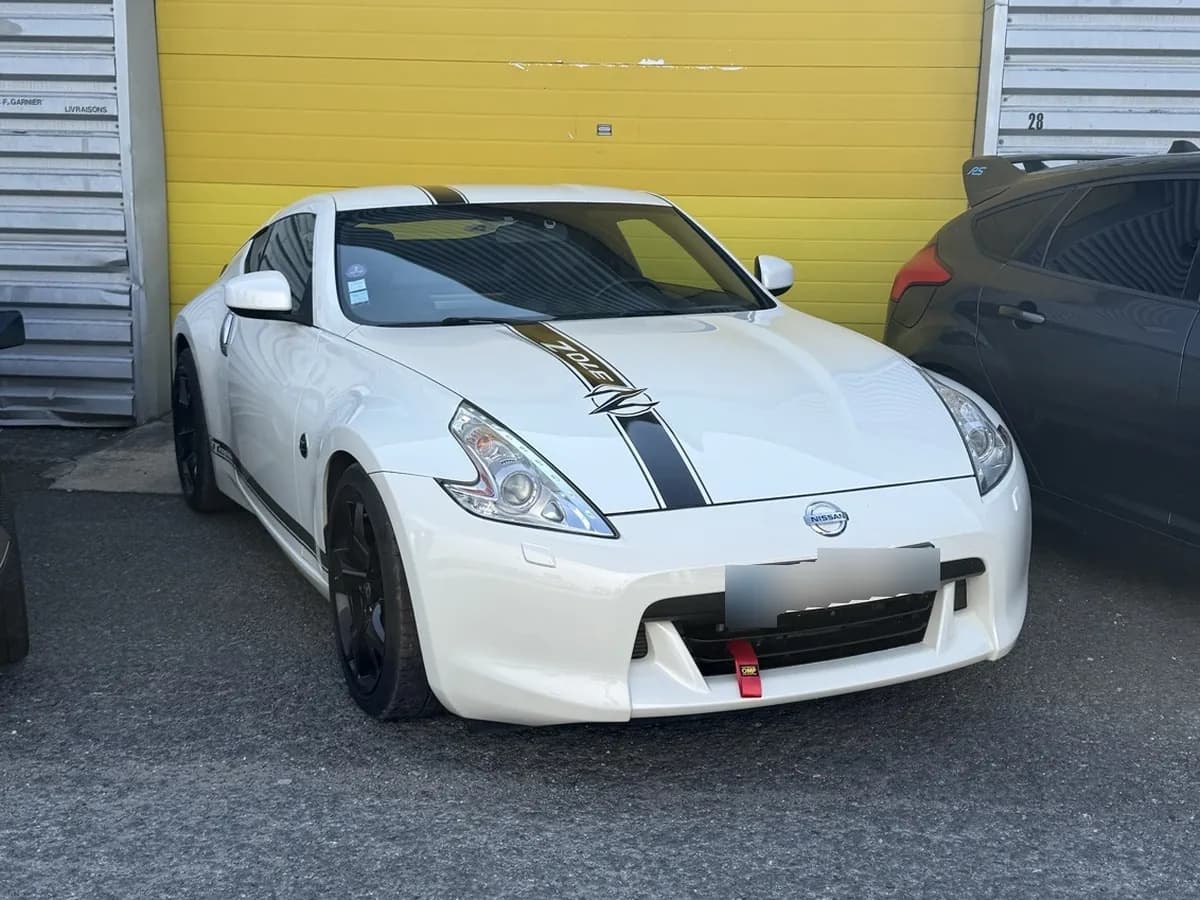

Nissan 370Z photos
Model summary
Data from the ScanRacer library, organized to compare versions quickly.
Model introduction
Introduced for the 2009 model year, the Nissan 370Z marked the arrival of the Z34 generation and directly replaced the 350Z Z33. Its name referred to the new 3.7-liter V6, mounted in a front-engine, rear-wheel-drive sports car. Nissan offered two main body styles: the Coupe, unveiled at the Los Angeles Auto Show in November 2008, and the Roadster, launched in North America in September 2009. The 370Z brought a revised structure, a shorter wheelbase, and a cabin designed more deliberately around the driver. In the United States, its VQ37VHR engine produced 332 horsepower and could be paired with either a six-speed manual or a seven-speed automatic transmission. The Z34 therefore represented a substantial engineering redesign, not merely a cosmetic refresh of the outgoing 350Z.
History
The Nissan 370Z belongs to a sports-car lineage that Nissan traces back to the 240Z of 1969. After the 300ZX Z32 ended production in 2000, Nissan revived the Z family with the 350Z in 2002. That car carried the Z33 designation and used a 3.5-liter VQ-series V6. Nissan states that more than 250,000 350Z cars were sold during a six-year run, which ended in December 2008. The Z34 then arrived as a comprehensive redesign rather than a minor update. The 370Z Coupe was shown in November 2008 for an early-2009 market launch. Its engine grew to 3.7 liters and adopted VVEL technology, while the car gained a more compact body and greater use of aluminum for selected panels. Nissan shortened both the wheelbase and overall length, but increased the width to improve stability and give the car a more planted stance. The Roadster joined the range during 2009. In North America, its launch took place in September of that year. The 370Z consequently became the sixth generation of Nissan’s Z sports car, known as the Fairlady Z in Japan and as the 370Z in many international markets. For the 2009 range, the two essential body styles are therefore the fixed-roof Coupe and the open-top Roadster.
Generations
The 370Z belongs to the Z34 generation, which Nissan identifies as the sixth generation of its Z sports car. It replaced the 350Z Z33, but the change involved much more than installing a larger engine. Nissan revised the structure, exterior dimensions, suspension, and interior layout to create a shorter, wider, and more rigid sports car. Compared with the Z33, the wheelbase was reduced by 100 mm and overall length by 69 mm, while width increased by 33 mm, according to Nissan. The Coupe used aluminum for the hood, door panels, and hatchback, helping reduce weight. Its 3.7-liter VQ37VHR engine featured Nissan’s VVEL system, which varies valve lift and opening timing. In the 2009 North American specification, the engine was rated at 332 horsepower. The Z34 retained the core Z formula: two seats, a front-mounted engine, rear-wheel drive, and a driver-focused character. It also introduced SynchroRev Match for the six-speed manual transmission, while a seven-speed automatic was available depending on specification. The Roadster shared the same basic mechanical platform but required additional structural reinforcement and body-specific adaptations. The Coupe and Roadster are therefore different body versions within the same generation, with their main distinctions involving roof design, rigidity, and weight rather than separate generations.
Key differences
The 370Z Coupe and Roadster share the Z34 generation’s 3.7-liter VQ37VHR V6, rear-wheel-drive layout, and core mechanical architecture. The Coupe has a fixed roof and a fastback-style hatchback body, generally allowing a lighter and more rigid structure. The Roadster replaces the roof with a powered soft top and uses additional reinforcement around areas such as the pillars and side sills to offset the loss of a fixed roof. Both body styles remain strictly two-seat cars and use comparable transmission choices. The 2009 Coupe was available with a six-speed manual or a seven-speed automatic transmission. The Roadster followed the same basic mechanical formula, although equipment and trim details could vary by market. For identification purposes, the most dependable distinction is the body shape: a fixed roof and rear hatch for the Coupe, versus a retractable soft top and a separate trunk for the Roadster.
Photo recognition
The Z34 370Z is first recognized by its short, wide stance, long hood, and rear-set cabin. At the front, boomerang-shaped headlights and a low grille distinguish it from the earlier 350Z. The side profile features an arched roofline, pronounced rear haunches, and a small side window whose shape echoes earlier Z cars. At the rear, boomerang taillights frame a broad dark panel and a hatchback on the Coupe. The “370Z” badge is useful, but it does not by itself identify the trim level. Cars equipped with the Sport Package could receive 19-inch RAYS forged wheels, larger sport brakes, a viscous limited-slip differential, and SynchroRev Match when fitted with the manual transmission. These are trim or package features, not separate body styles. The Roadster is immediately identifiable by its retractable soft top, separate trunk, and slightly different body proportions. For a reliable identification, combine the headlight and taillight shapes with the presence of a rear hatch or soft top. Wheels, spoilers, and bumper details can vary by equipment package and should not be used as the sole basis for determining the model version.
Important versions
For the 2009 model year, the two essential body styles are the Coupe and Roadster. The Coupe was the launch form of the Z34, with a fixed roof, rear hatch, and structure suited to sporting use. The Roadster followed with a powered soft top, separate trunk, and body-specific reinforcement. Within those body styles, Nissan offered different equipment levels depending on the market. In North America, the Coupe was sold in forms including the 370Z and Touring, with a Sport Package available. That package could add RAYS forged wheels, Nissan Sport Brakes, a viscous limited-slip differential, and SynchroRev Match. The NISMO 370Z was a separate high-performance derivative in the U.S. range, but it should not be treated as a third body style: it remained based on the Coupe.
References
- All-New Nissan 2009 370Z Coupe PricingNissan North America via The Auto Channel
- 2009 Nissan 370Z Coupe BrochureNissan North America
- 2009 Nissan 370Z Roadster technical releaseNissan North America
- https://www.nissanusa.com/content/dam/Nissan/us/vehicle-brochures/2019/2019-nissan-370z-roadster-brochure-en.pdfnissanusa.com
- https://www.cars.com/research/nissan-370z-2009/specs/cars.com
- https://www.cars.com/articles/2009-nissan-370z-power-numbers-revealed-1420663265301/cars.com
- https://www.motordesktop.com/nissan/2009-nissan-370z/motordesktop.com
- https://www.autoweek.com/news/auto-shows/a2019541/roadster-nismo-models-fill-out-nissan-370z-lineup-new-york-auto-show/autoweek.com
Frequently asked questions
- What years was the Nissan 370Z produced?
- ScanRacer's referenced versions cover 2009.
- How many Nissan 370Z examples are documented on ScanRacer?
- 15 published scans from 14 members, with the latest photo added in September 2026.
What about the car you photographed?
Upload a photo to get a suggested make, model and likely year.
No account needed for the result · Publish only if you choose