
Lancer Evolution
Launched in October 1992, the Mitsubishi Lancer Evolution was developed from the compact Lancer to meet the demands of Group A rallying. Mitsubishi paired it with a turbocharged 4G63 four-cylinder engine, permanent four-wheel drive, and a viscous-coupling center differential, drawing on experience gained with the Galant VR-4. Across the numbered Evolution I through IX models, the formula gradually gained stronger body structures, more sophisticated drivetrain control, improved aerodynamics, and greater performance. The versions represented here cover the 1992-2007 period, including both sedan and wagon body styles. The 2005 Lancer Evolution Wagon is an especially unusual derivative: it combined the driving hardware of the Evolution IX with the more practical rear body of the Lancer Wagon. (mitsubishi-motors.com)
What about the car you photographed?
Upload a photo to get a suggested make, model and likely year.
No account needed for the result · Publish only if you choose
Variants by year
Make: Mitsubishi · Model: Lancer Evolution
5 / 5 versions shown
2007

2005

2001
1996
1992
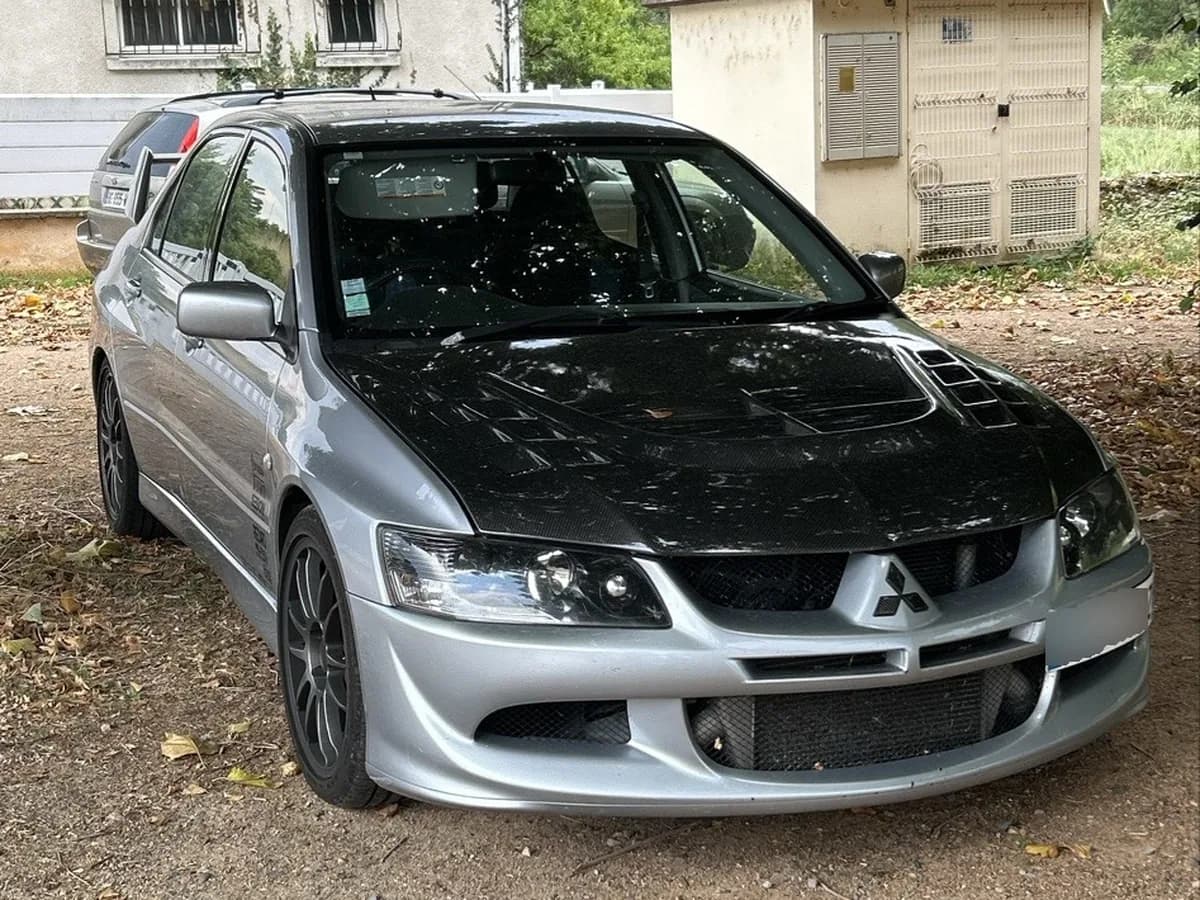
Mitsubishi Lancer Evolution photos
Model summary
Data from the ScanRacer library, organized to compare versions quickly.
Model introduction
Launched in October 1992, the Mitsubishi Lancer Evolution was developed from the compact Lancer to meet the demands of Group A rallying. Mitsubishi paired it with a turbocharged 4G63 four-cylinder engine, permanent four-wheel drive, and a viscous-coupling center differential, drawing on experience gained with the Galant VR-4. Across the numbered Evolution I through IX models, the formula gradually gained stronger body structures, more sophisticated drivetrain control, improved aerodynamics, and greater performance. The versions represented here cover the 1992-2007 period, including both sedan and wagon body styles. The 2005 Lancer Evolution Wagon is an especially unusual derivative: it combined the driving hardware of the Evolution IX with the more practical rear body of the Lancer Wagon. (mitsubishi-motors.com)
History
The Lancer Evolution emerged as Mitsubishi looked for a compact rally car that could succeed the larger Galant VR-4. The first version, introduced in 1992, placed a turbocharged 4G63 engine and four-wheel-drive hardware derived from that experience into a Lancer body. Its purpose was closely tied to Group A homologation: Mitsubishi needed a production car sufficiently related to the competition machine. (mitsubishi-motors.com) The early generations concentrated on improving traction, suspension response, tires, and high-speed stability. With the Evolution IV, introduced in 1996 on a new Lancer platform, Mitsubishi created a more advanced package that included the Active Yaw Control system on selected versions. The Evolution V and VI then developed wider tracks, stronger braking, revised aerodynamics, and further chassis improvements. This period coincided with Tommi Mäkinen’s four consecutive World Rally Championship drivers’ titles from 1996 to 1999, as well as Mitsubishi’s 1998 manufacturers’ championship. (caranddriver.com) The Evolution VII introduced a new Lancer base at the beginning of the 2000s. The Evolution VIII then brought the family officially to the United States for the 2003 model year. Launched in 2005, the Evolution IX was the first in the series to use MIVEC variable valve timing on the 4G63 engine. That same year, Mitsubishi introduced the Evolution Wagon, a practical performance derivative built around the mechanical character of the Evolution IX. (media.mitsubishicars.com)
Generations
The Lancer Evolution generations are defined less by a change of concept than by continuous technical development. The Evolution I, II, and III represent the first phase: they use the compact Lancer body and turbocharged 4G63 engine while progressively improving suspension geometry, four-wheel-drive behavior, and aerodynamic support. The Evolution III is particularly recognizable by its redesigned aerodynamic components. (caranddriver.com) The Evolution IV arrived on a new Lancer platform and introduced a wider-looking body with more ambitious drivetrain electronics. The Evolution V and VI continued that direction with wider tracks, more prominent fenders, and equipment intended to improve traction when accelerating out of corners. The Evolution VI is strongly associated with Mitsubishi’s dominant period in the World Rally Championship. (caranddriver.com) The Evolution VII, VIII, and IX used newer Lancer foundations and placed greater emphasis on body rigidity, refinement, and electronic control systems. The Evolution VIII represented the family’s official arrival in the United States. The Evolution IX added MIVEC variable valve timing to the 4G63 and revised the engine, transmission, and braking package. In 2005, the Evolution Wagon transferred the Evolution IX’s technical identity into a reinforced station-wagon body. (media.mitsubishicars.com)
Key differences
Differences between versions primarily concern body style and equipment level. The sedan is the traditional Lancer Evolution shape. Competition-oriented trims such as the RS generally emphasize lower weight and a more limited equipment list, while GSR and MR versions add more comfort features and chassis refinements. Exact specifications vary by model year and market, so cars carrying the same name should not be compared without checking their market origin. (caranddriver.com) The clearest distinction in the period covered here is the Evolution Wagon, launched in Japan in September 2005. It combined Evolution IX running gear with the rear body of the Lancer Wagon, reinforced to maintain body rigidity. The manual-transmission version used the turbocharged 4G63 MIVEC engine, while a five-speed automatic was also available. The Base and Sedan variants listed in the ScanRacer context should be treated as catalog classifications: by themselves, they do not establish a specific mechanical trim or equipment package. (mitsubishi-motors.com)
Photo recognition
Identifying a genuine Lancer Evolution starts with checking whether the body style, model year, and mechanical specification make sense together. The most useful clues include four-wheel drive, the turbocharged 4G63 engine used by Evolutions I through IX, five- or six-speed manual transmissions depending on version, and distinctive suspension and braking hardware. A Lancer body with a large wing or aggressive bumpers is not proof of authenticity: replicas and modified cars are common. (caranddriver.com) Evolution I through III models have a relatively compact, angular appearance. The IV through VI are often recognized by wider fenders, more substantial bumpers, and adjustable rear-wing designs. The VII through IX use a more modern Lancer silhouette; the Evolution IX can be distinguished by its body details, MIVEC engine, and trim-specific equipment. The 2005 Wagon is especially easy to identify because it combines an Evolution IX-inspired front end with the roofline and tailgate of a station wagon. For reliable verification, the vehicle identification plate, chassis number, original documentation, and delivery market should take priority over visual details alone. (mitsubishi-motors.com)
Important versions
Among the most significant versions, the Evolution I established the core formula of a turbocharged engine, four-wheel drive, and compact body. The Evolution IV through VI marked a major step in chassis and drivetrain development during Mitsubishi’s strongest period in international rallying. The Evolution VIII deserves particular attention because it officially reached the United States in 2003. Launched in 2005, the Evolution IX introduced MIVEC to the 4G63 engine. That same year, the Evolution Wagon added a reinforced station-wagon body and created a rare blend of sports-sedan performance and carrying capacity. In the ScanRacer context, the Base, Sedan, and Wagon entries cover parts of the 1992-2007 period, but their names should be understood as catalog categories rather than universal trim designations. (mitsubishi-motors.com)
References
- Car History: Mitsubishi Lancer EvolutionMitsubishi Motors
- 2003 Mitsubishi Lancer Evolution Press KitMitsubishi Motors North America
- 2006 Mitsubishi Lancer Evolution Press KitMitsubishi Motors North America
- Mitsu Metamorphosis: The History of the Mitsubishi Lancer EvolutionCar and Driver
- https://www.iseecars.com/car/mitsubishi-lancer-evolution/generationsiseecars.com
- https://www.autoselecta.com/mitsubishi-lancer-evolution-complete-guide/autoselecta.com
- https://www.motorsportmagazine.com/archive/article/january-2003/92/mitsubishi-lancer-evolution/motorsportmagazine.com
- https://media.mitsubishicars.com/en-US/releases/2003-lancer-evolution-press-kitmedia.mitsubishicars.com
Frequently asked questions
- What years was the Mitsubishi Lancer Evolution produced?
- ScanRacer's referenced versions cover 1992 - 2007.
- How many Mitsubishi Lancer Evolution examples are documented on ScanRacer?
- 15 published scans from 11 members, with the latest photo added in October 2026.
What about the car you photographed?
Upload a photo to get a suggested make, model and likely year.
No account needed for the result · Publish only if you choose