
Speedtail
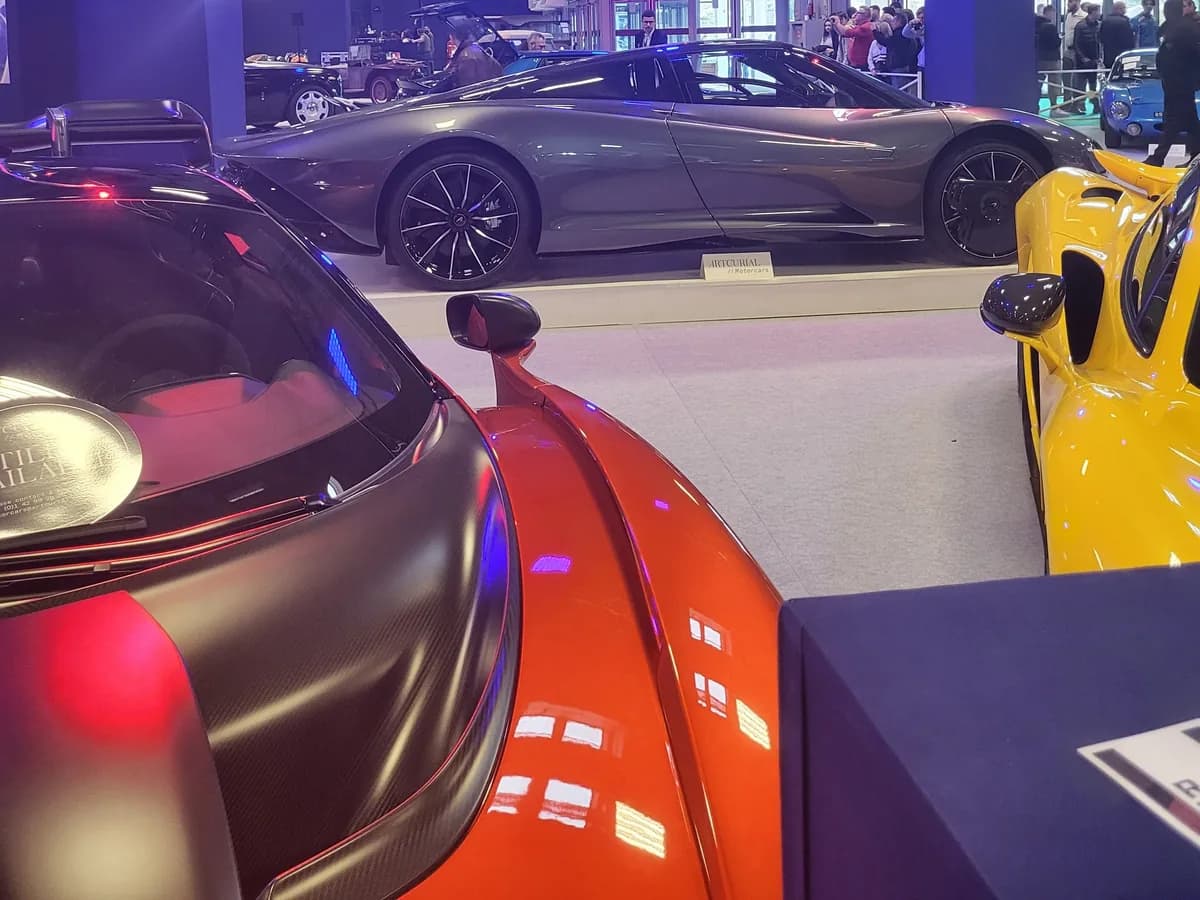
Presented as McLaren’s first “Hyper-GT,” the Speedtail combines an exceptionally long body, a petrol-electric hybrid powertrain, and a three-seat cabin with the driver positioned centrally. McLaren quotes peak output of up to 1,070 PS, while its stated maximum speed is 403 km/h, or 250 mph. The company also claims a 12.8-second run from rest to 300 km/h. Limited to 106 cars, the Speedtail revisits themes associated with the McLaren F1, most notably its central driving position, but applies them to a machine conceived with long-distance speed, comfort, and bespoke personalisation in mind. For the 2020 model year, the catalogue represented here contains one version, identified as Base. The result is not simply a faster sports car, but a distinctive interpretation of the high-speed grand tourer, with aerodynamic efficiency taking priority over conventional supercar styling. (website-staging.mclaren.com)
Variants by year
2020
Model summary
Data from the ScanRacer library, organized to compare versions quickly.
Model introduction
Presented as McLaren’s first “Hyper-GT,” the Speedtail combines an exceptionally long body, a petrol-electric hybrid powertrain, and a three-seat cabin with the driver positioned centrally. McLaren quotes peak output of up to 1,070 PS, while its stated maximum speed is 403 km/h, or 250 mph. The company also claims a 12.8-second run from rest to 300 km/h. Limited to 106 cars, the Speedtail revisits themes associated with the McLaren F1, most notably its central driving position, but applies them to a machine conceived with long-distance speed, comfort, and bespoke personalisation in mind. For the 2020 model year, the catalogue represented here contains one version, identified as Base. The result is not simply a faster sports car, but a distinctive interpretation of the high-speed grand tourer, with aerodynamic efficiency taking priority over conventional supercar styling. (website-staging.mclaren.com)
History
The Speedtail originated as Project BP23, the internal code name used during development. McLaren revealed the production car in October 2018 and positioned it at the top of its Ultimate Series range. From the outset, the company announced a strictly limited run of 106 cars, a figure chosen to echo the number of McLaren F1 road cars built during the 1990s. All examples had reportedly been allocated before production was due to begin at the end of 2019, with first deliveries planned for early 2020. (motorshow.me) Development involved a sequence of prototypes and test vehicles. McLaren used an early mule with a centrally mounted driving position to validate the unusual cockpit arrangement before representative prototypes were completed. High-speed testing ultimately confirmed the 403-km/h target at Florida’s Kennedy Space Center. The production car retained that speed-focused engineering while pursuing a different brief from a track-focused special: it also emphasised cabin space, premium materials, and extensive personalisation through McLaren Special Operations. (motorshow.me) The 2020 production run should therefore be understood as a limited series rather than a broad model range with multiple mechanical generations. Differences between individual cars are more likely to reflect customer-selected finishes, materials, and equipment than formally separate powertrain versions. That bespoke character is central to the Speedtail’s identity and helps explain why two examples can appear notably different despite sharing the same core specification.
Generations
The McLaren Speedtail is not divided into several known production generations. It is best understood as a single 2020 model produced in strictly limited numbers. Its main development story lies in the transition from experimental prototypes to the final production specification, rather than in successive commercial phases. The BP23 programme used test vehicles that incorporated some 720S-related elements, allowing McLaren to evaluate the central driving position and aerodynamic concepts before representative prototypes were built. Those development cars should not be treated as separate production versions. (autocar.co.uk) The finished car uses a carbon-fibre central structure, a three-seat cockpit, and a fastback body with an unusually extended rear section. Active aerodynamic surfaces are integrated into the rear bodywork instead of relying on a conventional fixed wing. Its powertrain combines a 4.0-litre twin-turbocharged V8 with an electric motor, producing figures reported between approximately 1,036 and 1,070 horsepower depending on the rating convention used by the source. McLaren also quotes maximum torque of 1,150 Nm. (website-staging.mclaren.com) For historical identification, it is therefore more accurate to describe the Speedtail as one limited 2020 series than as a model with multiple generations. Extensive exterior, interior, and MSO personalisation can make individual examples look very different, but those changes do not by themselves establish separate technical generations.
Key differences
The Speedtail’s most important distinction from more conventional McLaren models is its overall concept. Whereas a 720S uses a relatively compact body and a traditional two-seat supercar layout, the Speedtail has a longer silhouette, three seats, and a cockpit organised around the centrally placed driver. It also uses hybrid assistance, unlike the contemporary Sports Series and Super Series cars that generally relied on twin-turbocharged V8 power without an electric motor. Its aerodynamic strategy is equally distinctive. The Speedtail replaces conventional exterior mirrors with camera-based systems on relevant configurations and uses active rear surfaces integrated into the bodywork. These solutions are intended to reduce drag and help maintain stability at high speed. The car’s purpose is therefore broader than outright acceleration: it combines a high maximum speed with aerodynamic efficiency and a grand-touring emphasis. Published power figures differ slightly according to rating standards and unit conversions. For clarity, the most defensible headline figure is McLaren’s own 1,070-PS rating rather than an imprecise converted number. (website-staging.mclaren.com)
Photo recognition
The Speedtail is easiest to identify from its proportions. Its body is exceptionally long, low, and tapered, with a rear section that extends well beyond the cabin. The fastback profile differs clearly from a 720S, Senna, or Artura because the roof and rear body form a nearly continuous aerodynamic line. The lack of a large conventional rear wing is another useful clue. Active aerodynamic elements are built into the rear bodywork and can move to support high-speed stability and aerodynamic braking. (website-staging.mclaren.com) The cabin provides the strongest confirmation. The driver sits in the centre, with two passenger seats positioned behind and to either side, a layout that deliberately recalls the McLaren F1. Dihedral doors, a screen-heavy dashboard, and extensive glazing add to the car’s distinctive appearance. Depending on specification and market, camera systems may take the place of conventional side mirrors, so that detail is not universal. A reliable identification should combine the elongated profile, central cockpit, three-seat arrangement, and integrated rear aerodynamics rather than relying on paint colour alone. The Speedtail’s visual identity comes from the relationship between these features, not from a single badge or trim item.
Important versions
The Speedtail was offered as a limited series rather than as a conventional range with several mechanically distinct trim levels. In the nomenclature used here, the 2020 model year is represented by one version, identified as Base. That label should not be read as meaning a stripped-down car: every Speedtail already combines a hybrid powertrain, central driving position, three-seat cabin, and active aerodynamic technology. The main source of variation between individual cars is bespoke personalisation. McLaren Special Operations could tailor paint colours, cabin materials, upholstery patterns, and other finish details to each customer’s request. Those choices may make two cars look substantially different, but they do not automatically establish separate technical variants. With production limited to 106 examples, the specification of each individual car is often more significant for identification and collecting than a conventional trim hierarchy.
References
- McLaren Speedtail — official model overview and specificationsMcLaren Automotive
- McLaren Speedtail revealedMcLaren Automotive
- McLaren Speedtail development and prototype informationMcLaren Automotive
- 2020 McLaren Speedtail Review, Pricing, and SpecsCar and Driver
- 2020 McLaren Speedtail First LookMotorTrend
- McLaren Speedtail hybrid hypercar powertrain detailedAutocar
- https://www.automobile-catalog.com/car/2020/2975510/mclaren_speedtail.htmlautomobile-catalog.com
- https://www.automobile-catalog.com/make/mclaren/speedtail/speedtail/2020.htmlautomobile-catalog.com
Frequently asked questions
- What years was the McLaren Speedtail produced?
- ScanRacer's referenced versions cover 2020.
- How many McLaren Speedtail examples are documented on ScanRacer?
- 2 published scans from 2 members, with the latest photo added in August 2026.