
RX-8
Launched in April 2003, the Mazda RX-8 combined sports-coupe styling with four doors, four seats and a naturally aspirated RENESIS rotary engine. Its engineering package used a front-midship layout, near-50:50 weight distribution and rear-hinged freestyle doors to improve access to the back seats. The RENESIS was a twin-rotor rotary engine with two 654cc chambers, developed specifically for the RX-8 and distinguished by side intake and exhaust ports. Depending on market and transmission, early cars were advertised with outputs including 197 and 238 horsepower. Mazda later introduced changes to the RX-8’s styling, equipment and chassis, while maintaining the model’s distinctive rotary character. Production of the RX-8 ended in June 2012, making it the last purely rotary-powered Mazda production car of its period.
Variants by year
2009
2003
Model summary
Data from the ScanRacer library, organized to compare versions quickly.
Model introduction
Launched in April 2003, the Mazda RX-8 combined sports-coupe styling with four doors, four seats and a naturally aspirated RENESIS rotary engine. Its engineering package used a front-midship layout, near-50:50 weight distribution and rear-hinged freestyle doors to improve access to the back seats. The RENESIS was a twin-rotor rotary engine with two 654cc chambers, developed specifically for the RX-8 and distinguished by side intake and exhaust ports. Depending on market and transmission, early cars were advertised with outputs including 197 and 238 horsepower. Mazda later introduced changes to the RX-8’s styling, equipment and chassis, while maintaining the model’s distinctive rotary character. Production of the RX-8 ended in June 2012, making it the last purely rotary-powered Mazda production car of its period.
History
The RX-8’s development can be traced to the RX-EVOLV concept shown in 1999 and to a design and engineering model unveiled at the 2001 Detroit auto show. From the beginning, Mazda presented the project as a four-door, four-seat sports car powered by a rotary engine. The production model arrived in April 2003, with the RENESIS engine at the center of its technical identity. Mazda had begun producing the new engine in Hiroshima in January 2003. The rotary layout provided a compact, low-mounted power unit that supported the car’s front-midship packaging. The RX-8 also used rear-hinged rear doors without a conventional center pillar, helping passengers reach the back seats while preserving a sports-car profile. In the initial U.S. range, the six-speed manual version was rated at 238 horsepower, while the automatic model produced 197 horsepower. Mazda introduced several special editions and model updates that varied by country. In Japan, a refreshed RX-8 appeared in 2008 and included the performance-oriented Type RS. The Spirit R, launched in November 2011, became the final special edition. Mazda ended RX-8 production in June 2012, closing an important chapter in the company’s rotary-engine history.
Generations
The Mazda RX-8 was not officially divided into several generations; it remained one model line produced from 2003 to 2012. For identification purposes, however, it is useful to distinguish the early cars, often called Series 1 in enthusiast terminology, from the facelifted models introduced in Japan from 2008 and adopted in selected markets afterward. Early RX-8s used the original body design built around the freestyle rear doors, elongated front lamps and short rear deck. Their mechanical specifications depended on the country: manual and automatic transmissions were not always paired with the same power ratings or equipment levels. Mazda’s 2008 U.S. documentation lists 212 horsepower for the automatic version and 232 horsepower for the manual version. The facelift brought revised front and rear styling along with changes to equipment and chassis tuning. In Japan, the Type RS represented the more performance-focused interpretation of the updated car, while the Type E emphasized automatic transmission and grand-touring usability. These names should not be applied uniformly to every imported RX-8, because trim levels, approved engines and equipment packages varied between markets. A reliable identification therefore combines model year, market, transmission, trim badge and chassis details.
Key differences
Differences between RX-8s are mainly determined by market, model year and transmission. Early cars could be ordered with a six-speed manual or an automatic gearbox, and the two versions had different advertised outputs. Mazda’s 2004 U.S. specification sheet lists 238 horsepower for the manual and 197 horsepower for the automatic; the 2008 documentation lists 232 and 212 horsepower respectively. Those figures should not be applied automatically to Japanese or European cars. Equipment also varied by trim. Wheel sizes, brakes, suspension tuning, limited-slip differential availability, audio systems, upholstery and electronic aids could all change between versions. Performance-oriented models generally received more focused chassis and braking hardware, but the precise specification depended on the market. Facelifted cars added revised bodywork and updated tuning. When comparing two examples, the most reliable approach is to check the production year, engine and transmission specification, original market and trim level rather than relying only on the RX-8 badge. Imported cars may combine equipment that was never offered in another region.
Photo recognition
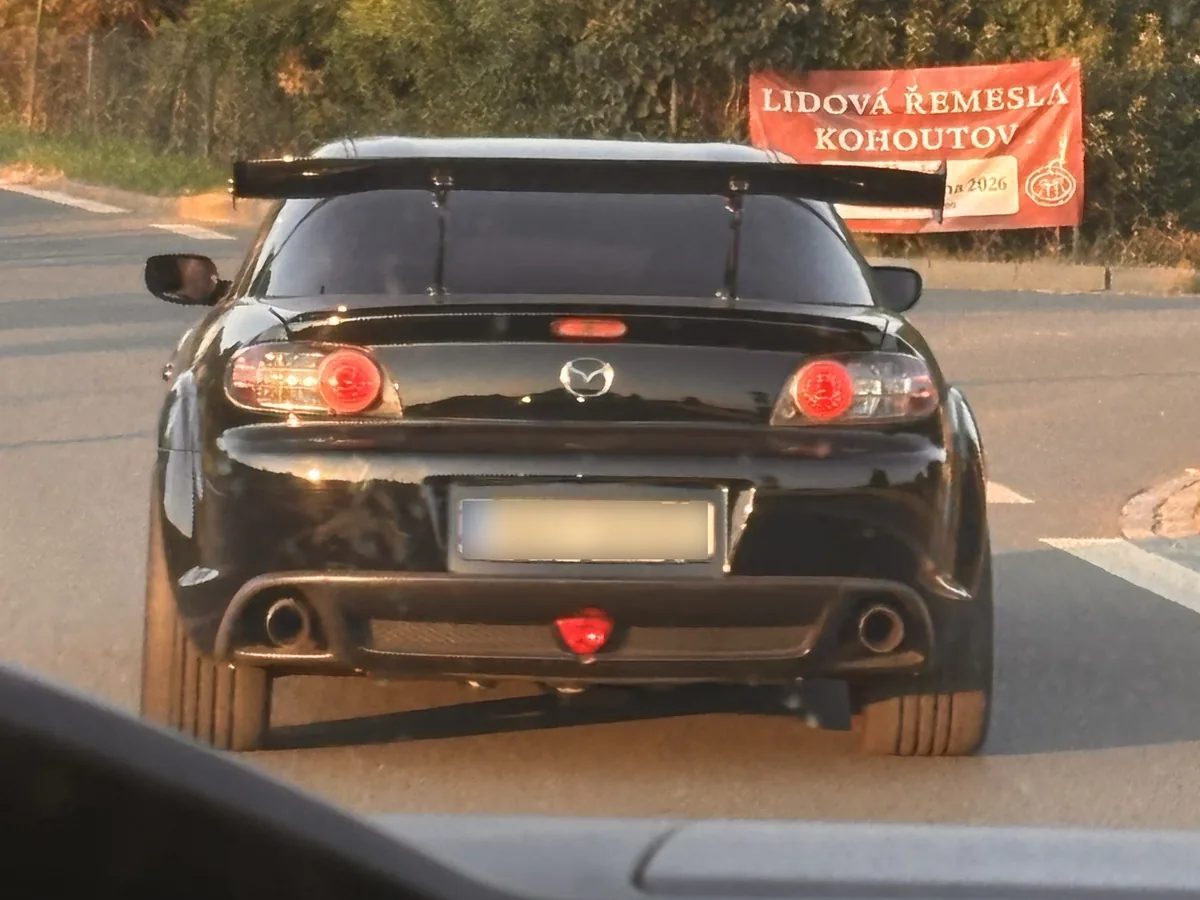
The RX-8 is easiest to recognize by its four-door sports-coupe body and small rear-hinged rear doors. These doors open backward behind the conventional front doors, and Mazda designed the arrangement without a visible center pillar, making it one of the car’s clearest identifying features. The body also has a low hood, short overhangs and a rear-set passenger compartment, proportions enabled in part by the compact rotary engine. To confirm an identification, look for the RX-8 badging, four-seat interior and sharply drawn shoulder line around the rear fenders. Early cars and facelifted models differ in the shape of the front fascia, headlamps and rear bumper. Sport-oriented versions may add larger wheels, a spoiler, stronger brakes or dedicated trim details, although these parts can also be fitted later. Type RS, Type E and Spirit R badges are particularly relevant to Japanese-market cars and should be checked against original documentation. VIN data, factory labels and period specifications are more dependable than appearance alone when identifying an imported example.
Important versions
The RX-8 range varied considerably between countries. Early production cars formed the core of the model, with manual or automatic transmissions and several equipment levels. In Japan, the Type E took a more comfort-oriented approach and was associated with an automatic gearbox, while the Type RS represented the performance-focused version of the facelifted car with dedicated chassis equipment. The Spirit R, launched in November 2011, was the final official special edition. It was based on the Type RS and Type E and added dedicated seats, wheels, trim and braking equipment depending on transmission. Other Japanese-market editions, including the Mazdaspeed Version, also appeared during the model’s life. Type S, Type E, Type RS and Spirit R therefore do not represent one universal global hierarchy: their availability and specification depend on market and model year. Buyers and researchers should confirm the original country, factory equipment and transmission before assigning a version name.
References
- RX-8 Opens Doors to Next Big Thing in Sports CarsMazda Newsroom
- 2004 Mazda RX-8 Technical SpecificationsMazda USA Newsroom
- 2008 Mazda RX-8 Specification DeckMazda USA Newsroom
- Refreshed Mazda RX-8 on Sale in JapanMazda Newsroom
- Mazda RX-8 SPIRIT R Coming to Japan in November 2011Mazda Newsroom
- https://news.mazdausa.com/vehicles-2008-Mazda-RX-8news.mazdausa.com
- https://news.mazdausa.com/download/2010-RX-8-specs.pdfnews.mazdausa.com
Frequently asked questions
- What years was the Mazda RX-8 produced?
- ScanRacer's referenced versions cover 2003 - 2009.
- How many Mazda RX-8 examples are documented on ScanRacer?
- 4 published scans from 4 members, with the latest photo added in September 2026.