
6
Introduced in Japan as the Atenza in May 2002, the Mazda 6 replaced Mazda’s long-running Capella and 626 family while becoming one of the key models in the brand’s early-2000s revival. From the outset, it was positioned as a mid-size family car offered in different markets as a four-door sedan, five-door liftback or hatchback, and wagon. The Mazda 6 subsequently developed through three full generations, with Mazda consistently emphasizing steering response, styling and everyday usability. The third generation, unveiled in 2012, brought the model into Mazda’s Kodo design and Skyactiv technology era. Production for the Japanese domestic market was scheduled to end in 2024, closing a model line that had remained in production for more than two decades. (newsroom.mazda.com)
Variants by year
2024
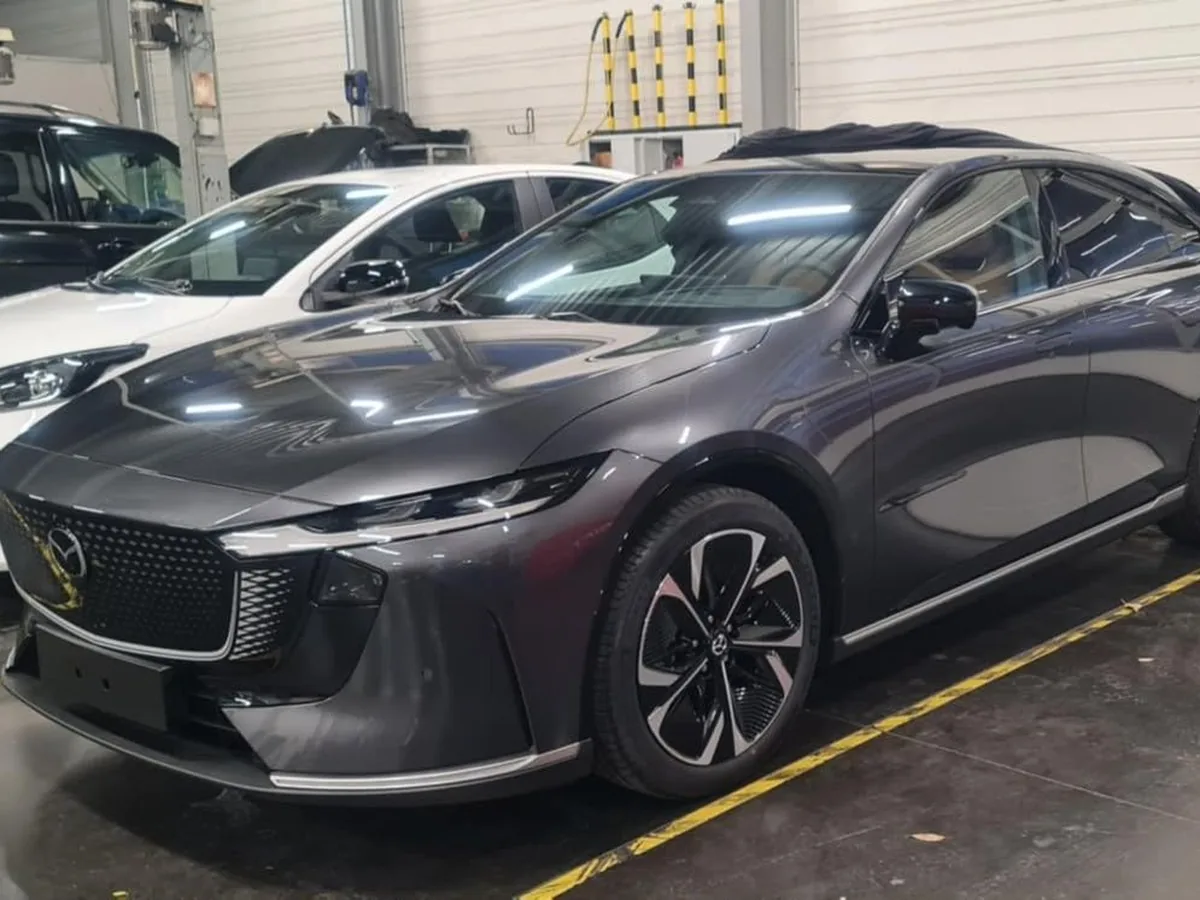
2018
 CC
CC2012
2008

2002
Model summary
Data from the ScanRacer library, organized to compare versions quickly.
Model introduction
Introduced in Japan as the Atenza in May 2002, the Mazda 6 replaced Mazda’s long-running Capella and 626 family while becoming one of the key models in the brand’s early-2000s revival. From the outset, it was positioned as a mid-size family car offered in different markets as a four-door sedan, five-door liftback or hatchback, and wagon. The Mazda 6 subsequently developed through three full generations, with Mazda consistently emphasizing steering response, styling and everyday usability. The third generation, unveiled in 2012, brought the model into Mazda’s Kodo design and Skyactiv technology era. Production for the Japanese domestic market was scheduled to end in 2024, closing a model line that had remained in production for more than two decades. (newsroom.mazda.com)
History
The first Mazda 6 appeared in Japan in May 2002 as the Atenza, while the Mazda 6 name was used in overseas markets. Mazda described it as an all-new car built around a new platform and new engines, intended to express the company’s “Zoom-Zoom” brand message. The launch range was notable for its body-style variety: sedan, five-door liftback and wagon versions were offered, although exact specifications and names differed by market. (newsroom.mazda.com) The second generation was announced in 2007 and reached customers from 2007 or 2008 depending on the region. It retained the model’s family-car practicality and driver-focused positioning while bringing revised styling, improved perceived quality and expanded safety equipment. Mazda reported in 2010 that worldwide production had reached two million vehicles after eight years and six months, underlining the Mazda 6’s importance within the company’s global product range. (newsroom.mazda.com) The third generation was unveiled in 2012. It combined Mazda’s Kodo design language with Skyactiv technology, introducing a new body, region-dependent petrol and diesel engines, and systems such as i-Eloop brake-energy regeneration and i-Activsense driver assistance. In January 2024, Mazda announced the end of domestic Japanese sales for the sedan and wagon, with production scheduled to conclude during spring 2024. (newsroom.mazda.com)
Generations
The first generation, produced from 2002, is identified by relatively compact proportions, generous glass areas and an unusually broad body-style range. Depending on the market, buyers could choose a sedan, a five-door liftback or a wagon. It corresponds to the Sedan-Liftback and Tourer Wagon variants shown in the ScanRacer context for the 2002-2008 period. Mechanical specifications varied substantially between regions, so market- and model-year-specific information should be checked before drawing technical conclusions. (newsroom.mazda.com) The second generation, introduced from 2007-2008, adopted a longer-looking shape and a more mature design. Sedan and wagon body styles remained central, while five-door availability became more market-dependent. In the ScanRacer context, this period is represented mainly by Sedan and Tourer Wagon variants, with available records extending to 2018. (newsroom.mazda.com) The third generation, unveiled in 2012, stands out through Mazda’s Kodo design language, sharper body surfacing and a more upscale cabin presentation. It used the Skyactiv engineering approach and received successive updates to styling, powertrains and equipment during its long production run. Mazda positioned it as a flagship model in the mid-size family-car segment rather than as a purely utilitarian sedan. (newsroom.mazda.com)
Key differences
The clearest differences are found first in body shape and exterior design. The first generation is the easiest to associate with a five-door liftback or a wagon featuring relatively upright surfaces. The second generation looks longer and more cohesive, with a more restrained presentation. The third generation is identifiable through Kodo cues: a visually extended hood, more sculpted sides and slimmer-looking front lighting. (newsroom.mazda.com) Underneath, the generations should not be compared by engine size or output alone because engines, transmissions and equipment changed by market. The third generation is nevertheless distinct for applying Mazda’s Skyactiv philosophy, lightweight body engineering and, on selected versions, brake-energy regeneration and driver-assistance technologies. North American cars can differ significantly from European or Japanese examples, so a specification should always be tied to a market and model year. (newsroom.mazda.com)
Photo recognition
To identify a first-generation car, look for the broad body-style range: sedan, five-door liftback or wagon, combined with a more angular design. Rear lamps are positioned at the outer ends of the body or tailgate area depending on the version. Japanese-market examples may carry the Atenza name, while Mazda 6 is the usual export designation. (newsroom.mazda.com) The second generation generally has softer surfacing, larger-looking proportions and a wider front end. The wagon has an elongated roofline and a distinct rear load area, while the sedan retains a separate trunk. Bumpers, lamps, wheels and badges changed with facelifts and market specifications, so those details are less reliable than checking the model year and body code together. (newsroom.mazda.com) The third generation is the easiest to recognize through its Kodo design: a low nose, long hood, taut side panels and a cabin set farther rearward. Later cars may have different grilles, lighting signatures and trim details, particularly after the substantial 2018 update and the Japanese-market 2022 anniversary edition. (news.mazdausa.com)
Important versions
The first generation deserves particular attention for its body-style variety: sedan, five-door liftback and wagon versions served different practical needs while sharing the same family-car foundation. The second generation is significant for its more mature design and for retaining a strong wagon presence. The third generation represents the major technology shift, introducing Kodo, Skyactiv and, depending on the market, systems such as i-Eloop and i-Activsense. (newsroom.mazda.com) Among later versions, the 2018 Mazda 6 is notable for the scale of its design, trim and equipment improvements. In Japan, the 2022 Mazda6 20th Anniversary Edition marked two decades of the Atenza/Mazda6 nameplate. The ScanRacer context also lists an “e” variant for 2024; that label should be treated as a catalog variant rather than sufficient evidence of a specific powertrain without an associated technical record. (news.mazdausa.com)
References
- Two Millionth Mazda6 Comes off the LineMazda Motor Corporation
- All-new Mazda6 to Debut at the 2007 Frankfurt Motor ShowMazda Motor Corporation
- All-New Mazda6 Sedan World Premiere at 2012 Moscow Motor ShowMazda Motor Corporation
- 2012 Paris Motor Show Press Conference SpeechMazda Motor Corporation
- 2018 Mazda6 Engineering and Design BookMazda North American Operations
- Mazda6 Product Improvement and 20th Anniversary EditionMazda Motor Corporation
- Mazda6 Domestic Japanese Sales EndingMazda Motor Corporation
Technical specifications
Structured data available for versions linked to this model.
| Version | Power | Torque | Top speed | Drivetrain | Fuel |
|---|---|---|---|---|---|
| Base | 129 KW @ 4500 RPM175 HP @ 4500 RPM173 BHP @ 4500 RPM | 310 lb-ft @ 2000 RPM420 Nm @ 2000 RPM | 139 mph (224 km/h) | Front Wheel Drive / 6-speed manual | Diesel |
Frequently asked questions
- What years was the Mazda 6 produced?
- ScanRacer's referenced versions cover 2002 - 2024.
- How many Mazda 6 examples are documented on ScanRacer?
- 3 published scans from 3 members, with the latest photo added in August 2026.
- What is the power output of the Mazda 6?
- The sourced technical data lists 129 KW @ 4500 RPM175 HP @ 4500 RPM173 BHP @ 4500 RPM.