
4200GT
The Maserati 4200GT is a V8-powered grand tourer developed as the successor to the 3200GT and sold in Coupé and Spyder body styles. Its 4.2-litre naturally aspirated engine, from the Ferrari-Maserati engine family, replaced the earlier car’s 3.2-litre twin-turbo V8 and helped define Maserati’s renewed direction in the early 2000s. Designed by Giorgetto Giugiaro at Italdesign, it retained a front-engine, rear-wheel-drive layout and genuine four-seat practicality, while offering either a six-speed manual gearbox or the paddle-operated Cambiocorsa automated manual transmission. The range later gained the GranSport, a more focused derivative with revised engine calibration, suspension, aerodynamics and interior equipment. Within the ScanRacer coverage, the family includes the Spyder, Coupé, GranSport Coupé, 420 Super MonoPosto and GranSport Spyder variants.
What about the car you photographed?
Upload a photo to get a suggested make, model and likely year.
No account needed for the result · Publish only if you choose
Variants by year
Make: Maserati · Model: 4200GT
5 / 5 versions shown
2006
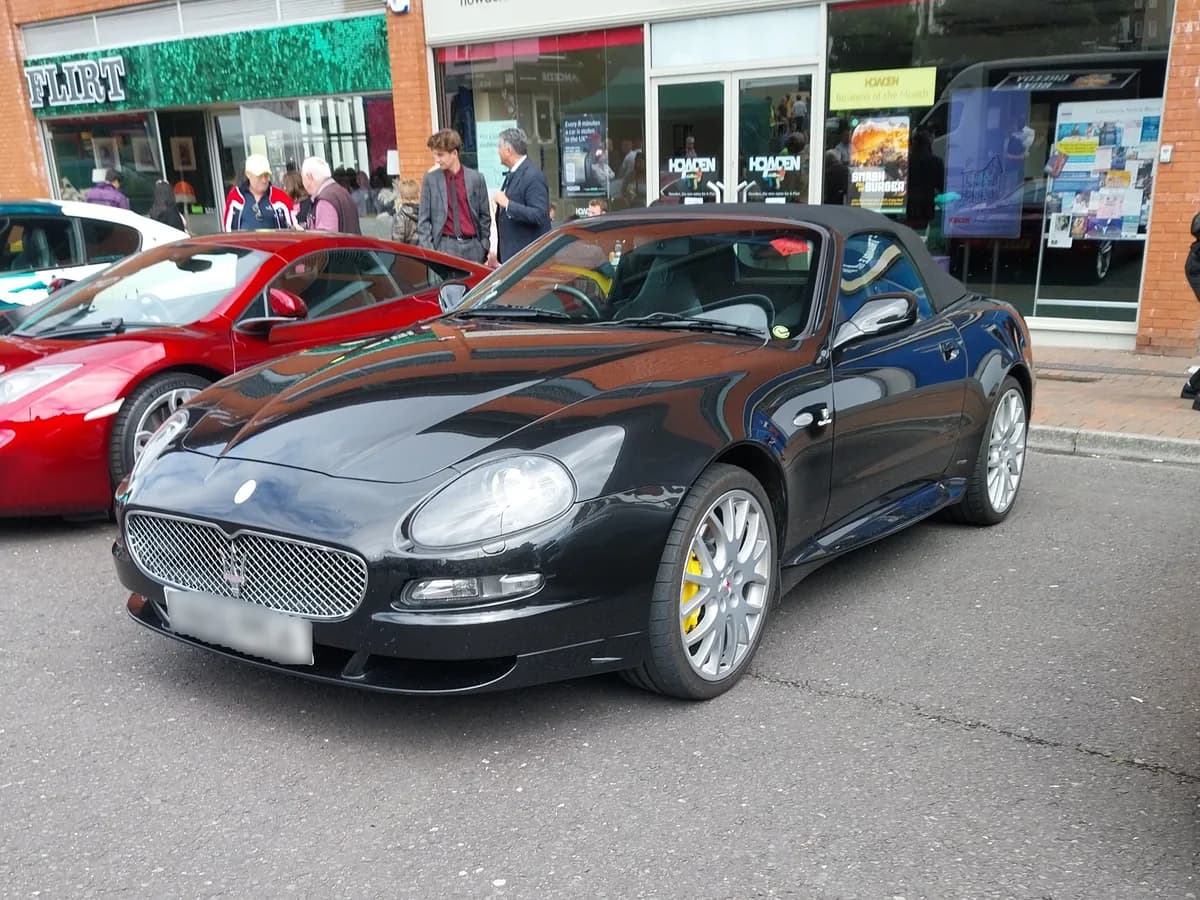
2004
2003
2002

2001
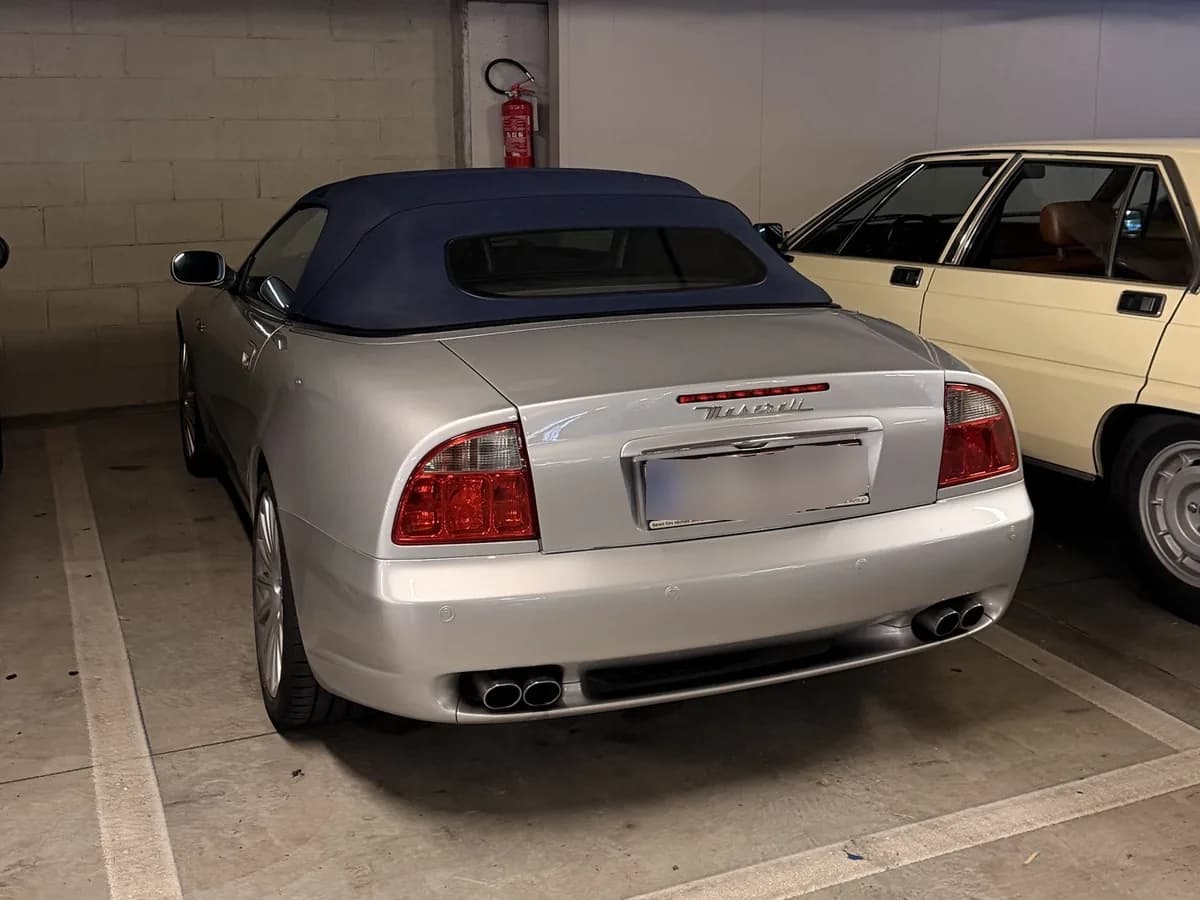
Maserati 4200GT photos
Model summary
Data from the ScanRacer library, organized to compare versions quickly.
Model introduction
The Maserati 4200GT is a V8-powered grand tourer developed as the successor to the 3200GT and sold in Coupé and Spyder body styles. Its 4.2-litre naturally aspirated engine, from the Ferrari-Maserati engine family, replaced the earlier car’s 3.2-litre twin-turbo V8 and helped define Maserati’s renewed direction in the early 2000s. Designed by Giorgetto Giugiaro at Italdesign, it retained a front-engine, rear-wheel-drive layout and genuine four-seat practicality, while offering either a six-speed manual gearbox or the paddle-operated Cambiocorsa automated manual transmission. The range later gained the GranSport, a more focused derivative with revised engine calibration, suspension, aerodynamics and interior equipment. Within the ScanRacer coverage, the family includes the Spyder, Coupé, GranSport Coupé, 420 Super MonoPosto and GranSport Spyder variants.
History
The 4200GT emerged during the transition that followed the 3200GT. Maserati unveiled the Spyder at the 2001 Frankfurt Motor Show, with the Coupé introduced shortly afterwards for international markets. The new car retained the broad Giugiaro design theme, but replaced the 3200GT’s distinctive boomerang rear lamps with more conventional lighting. The major change was mechanical: the 3.2-litre Maserati twin-turbo V8 was replaced by a naturally aspirated 4.2-litre V8 producing approximately 390 hp, depending on version and market. The revision also brought more sophisticated electronics and the Cambiocorsa automated manual gearbox, offered alongside a conventional manual transmission. The 4200GT also supported Maserati’s return to the North American market after a period away. In 2004, Maserati introduced the GranSport at the Geneva Motor Show. It received a 400-hp engine calibration, revised Cambiocorsa control logic, 19-inch wheels, retuned suspension, specific aerodynamic details and a sportier cabin. A GranSport Spyder followed, presented at Frankfurt in 2005. The years and variants represented by ScanRacer cover 2001 to 2006; that range should not be read as a complete statement of every production year in every international market.
Generations
The 4200GT is not best understood as a completely separate multi-generation family. It is principally a major development of the 3200GT within the M138 line. The first important stage was the Spyder, unveiled in 2001. It introduced the 4.2-litre naturally aspirated V8 to the open-bodied model and used a shorter wheelbase than the Coupé. The Coupé followed in 2002, combining a fixed roof with genuine four-seat accommodation. Both versions retained the essential grand-tourer formula of a front-mounted engine and rear-wheel drive. The next significant stage was the GranSport, launched in 2004. It was not a new generation, but a more sporting evolution of the Coupé. Maserati revised the engine output, transmission control software, suspension, wheels, bumpers, side skirts and interior trim. The GranSport Spyder later applied the same philosophy to the open body style. The 420 Super MonoPosto should be treated separately from the regular production versions. Available sources describe it as a highly unusual conversion based on a 4200 Spyder and inspired by the Maserati 320S concept, rather than as a normal factory body style. It is therefore included in the ScanRacer variant structure as a specific entry, but its status should be interpreted cautiously when comparing it with the Coupé, Spyder and GranSport models.
Key differences
The clearest distinction is between the Coupé and Spyder. The Coupé has a fixed roof and a body better suited to conventional grand-touring use, while the Spyder uses a folding roof and a shorter wheelbase. The GranSport is identified by its more sporting calibration, Maserati’s stated 400-hp output, revised suspension, 19-inch wheels, dedicated exterior details and improved Cambiocorsa control software. It retains the same basic architecture and engine capacity rather than representing a new mechanical generation. The transmission is another important dividing line. Some 4200GT cars use a six-speed manual gearbox, while others use the Cambiocorsa automated manual system with steering-wheel paddles. That difference can affect driving character, maintenance requirements and collector interest. The 420 Super MonoPosto should not be treated as merely another trim level: available auction and specialist sources describe it as a rare Spyder-based conversion with substantially different bodywork and equipment.
Photo recognition
To identify a 4200GT, start with the Giugiaro grand-tourer shape: a long bonnet, set-back passenger compartment, oval Maserati grille and four-seat cabin. The Coupé has a fixed roof, while the Spyder has a folding roof and subtly different proportions. Conventional rear lamps help distinguish the 4200GT from the 3200GT, whose boomerang-shaped lighting is one of its most recognisable features. A GranSport can usually be identified by its dedicated 19-inch wheels, more assertive bumpers, side skirts, enlarged grille and sportier interior. The stated 400-hp output alone is not enough to authenticate a car, so factory records and specification details should be checked. The transmission may be a six-speed manual or Cambiocorsa automated manual; steering-wheel paddles point to the latter, although the car’s documentation remains the more reliable confirmation. The 420 Super MonoPosto is considerably easier to separate from the production cars. It uses speedster-style bodywork, lacks a conventional windscreen, features a raised section behind the driver and has a lightweight competition-oriented presentation. It should be assessed as a special conversion rather than as a standard Maserati 4200GT trim level.
Important versions
The Spyder is the starting point of the 4200GT range in the ScanRacer data, combining the 4.2-litre naturally aspirated V8 with an open body. The Coupé, listed there for 2002, represents the most conventional four-seat grand-touring form. The 2004 GranSport Coupé is the most performance-focused regular production version in the listed family, with 400 hp, revised suspension, 19-inch wheels and aerodynamic changes. The GranSport Spyder extended that formula to an open body in 2006. The 420 Super MonoPosto, listed as a 2003 variant in the ScanRacer catalogue, should be described as a very rare Spyder-based special rather than as an ordinary factory trim. Its unusual bodywork and conversion history make it a separate point of interest for identification and provenance research.
References
- Maserati 4200GT (2002-2009) used car reviewRAC Drive
- 3200GT & 4200GT buyer's guideClassics World
Frequently asked questions
- What years was the Maserati 4200GT produced?
- ScanRacer's referenced versions cover 2001 - 2006.
- How many Maserati 4200GT examples are documented on ScanRacer?
- 7 published scans from 7 members, with the latest photo added in October 2026.
What about the car you photographed?
Upload a photo to get a suggested make, model and likely year.
No account needed for the result · Publish only if you choose