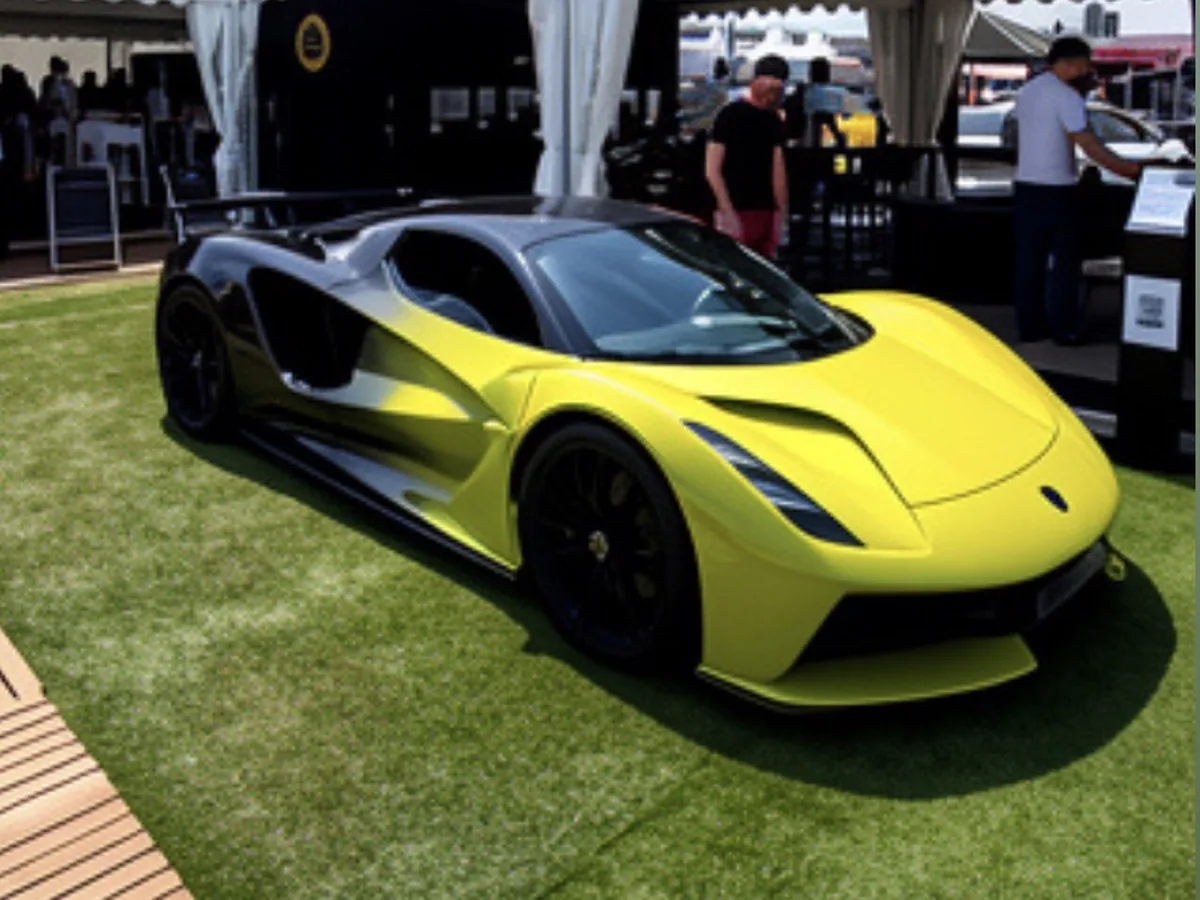
Lotus Evija 2023
Revealed in July 2019 under the Type 130 code name, the Lotus Evija is an all-electric hypercar designed, engineered and assembled at Hethel in the United Kingdom. Its layout combines a carbon-fibre monocoque, a centrally mounted battery and four electric motors driving all four wheels. Lotus announced a target output of 2,000 PS, an electronically limited top speed of 350 km/h and a production cap of 130 cars. The 2023 model year marks the Evija’s planned arrival in the range and the start of production announced by Lotus, although Lotus Technology later reported that customer deliveries began in 2024. The Evija therefore serves as a technology flagship, linking Lotus’s lightweight engineering tradition with high-output electric propulsion and advanced aerodynamic development. (media.lotuscars.com)
Curious about this car?
Explore Evija, then try your own photo.
No account needed for the result · Publish only if you choose
History
The Evija began as the Type 130 project, introduced by Lotus as an electric hypercar intended to open a new chapter for the marque. The Evija name was announced at the 2019 Goodwood Festival of Speed and was presented as carrying the meaning of “the first in existence” or “the living one.” A full world reveal followed in London later that month. From the outset, Lotus connected the new powertrain with familiar brand principles: low mass, aerodynamic efficiency and a strong emphasis on driver involvement.
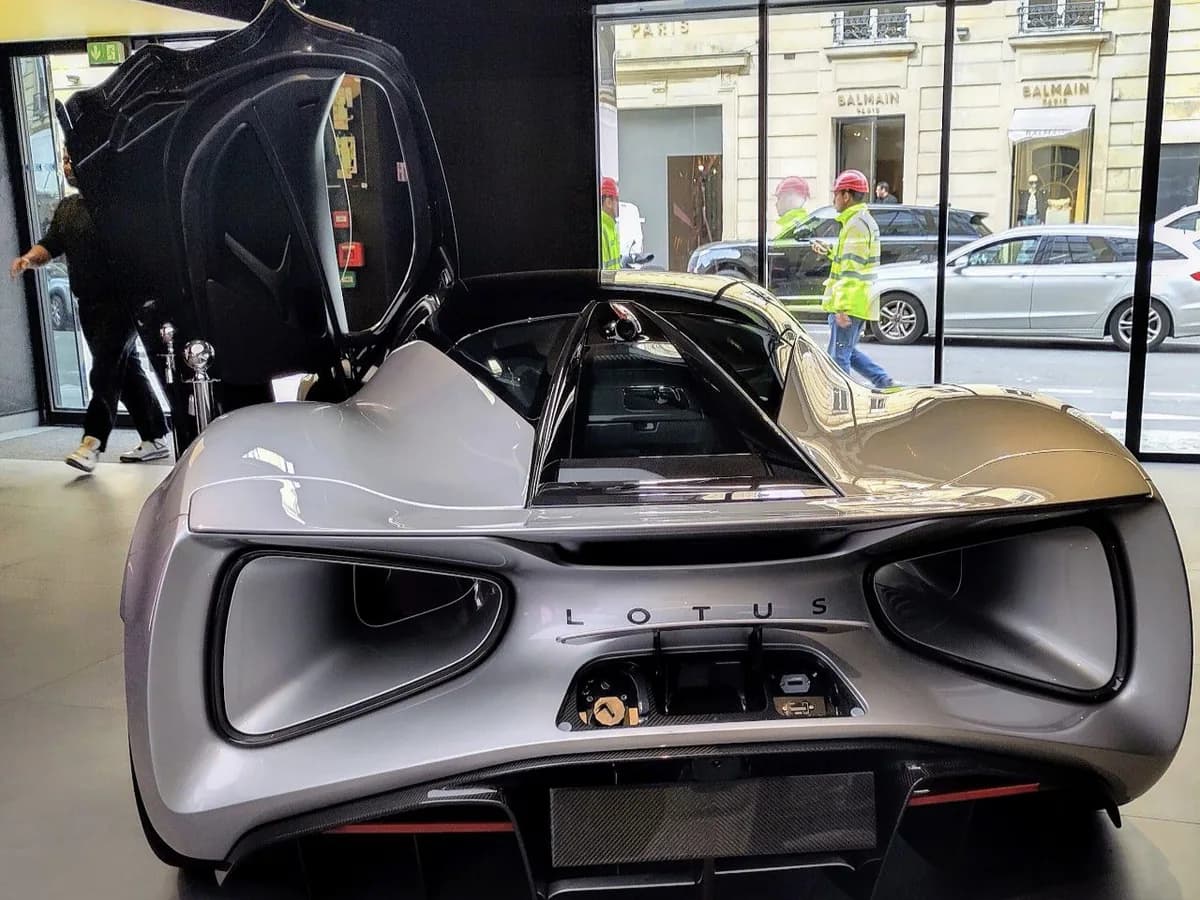
The car uses a one-piece carbon-fibre monocoque, which Lotus describes as a first for one of its road cars. Large Venturi tunnels run through the rear quarters, while an active rear wing and a Formula 1-inspired drag-reduction system work with the shaped underbody. The centrally mounted battery also echoes the packaging logic of Lotus’s mid-engined sports cars. The project took longer to reach customers than first planned: production was originally announced for 2020, later moved to 2023, and Lotus Technology reported that deliveries began in 2024. (media.lotuscars.com)
Latest scans
Photos added by the community for this page.
Anecdotes
The Evija name is generally pronounced “E-vi-ya” and refers to the ideas of life and being first in existence. The maximum production figure of 130 cars was chosen to echo the project’s Type 130 code name. Lotus also presented the Evija as its first road car with a full carbon-fibre monocoque and as the first production road car to use laser lighting technology for both main and dipped beams. (media.lotuscars.com)
Production
Lotus announced a maximum production run of 130 Evijas, a figure directly linked to the Type 130 project code. The cars were intended to be hand-built in a dedicated facility at the company’s historic Hethel site in England. The original plan called for production to begin in 2020, but the schedule was later revised toward 2023. That timing explains the model’s association with the 2023 model year, but it does not prove that every car was assembled or delivered during that calendar year. A Lotus Technology financial filing states that Evija deliveries began in 2024. The Fittipaldi special edition accounts for eight cars within the limited programme rather than representing a separate 130-car production run. (media.lotuscars.com)
Press reception
Press coverage of the Evija has focused mainly on its engineering ambition and exceptionally exclusive positioning. Car and Driver gave the 2023 model a 9/10 rating, praising the output of its four motors, its steering and braking systems without conventional electric assistance, and its status as the quickest Lotus yet evaluated by the magazine. The review also noted drawbacks associated with battery depletion during hard driving and the absence of a traditional mechanical engine sound. Available road impressions therefore portray the Evija as an extraordinary acceleration and technology exercise, but one defined by uncompromising choices. Such comments largely concern prototypes or development cars and should not be treated as a universal judgement of long-term reliability or everyday usability. (caranddriver.com)
Evolution
The Evija evolved mainly between the 2019 Type 130 concept and the production cars eventually delivered to customers. Lotus retained the project’s defining features: a carbon-fibre monocoque, rear Venturi tunnels, camera-based exterior vision systems and a four-motor electric powertrain. Development focused on chassis calibration, active aerodynamics, torque management and the packaging of the battery system.
The official technical information released at the car’s unveiling used the word “target” for several figures, including power, weight, range and acceleration. Those early announcements should therefore not automatically be treated as identical to every specification of a delivered car. In 2022, Lotus also introduced the Evija Fittipaldi, a commemorative limited edition based on the same technical foundation but distinguished by styling and details inspired by the Type 72 Formula 1 car. (media.lotuscars.com)
Variants
References
- Evija – Lotus Cars Media SiteLotus Cars
Supports the model history, Type 130 identity, electric architecture, target technical data, design features, Hethel production plan and 130-car limit.
- Lotus stuns Goodwood with hypercar sneak peek… and reveals its nameLotus Cars Media
Supports the 2019 naming announcement, Type 130 project background and original production timing.
- 2023 Lotus Evija Review, Pricing, and SpecsCar and Driver
Supports the 2023 model-year context, four-motor layout, single-speed transmission, all-wheel drive and press evaluation.
- Form 20-F for Lotus Technology Inc.Lotus Technology
Supports reported production specifications and the statement that Evija deliveries began in 2024.
- Lotus Evija Fittipaldi celebrates British firm's Formula 1 heritageAutocar
Supports the eight-car Fittipaldi edition, its Type 72 references and use of recycled historic Formula 1 aluminium.
- The Lotus Evija Fittipaldi Edition Uses Recycled Aluminum From an F1 CarRoad & Track
Supports the eight-unit production figure, commemorative purpose and expected 2023 deliveries of the Fittipaldi edition.
- https://www.prnewswire.com/news-releases/evija-lotus-unveils-worlds-most-powerful-production-car-300886013.htmlprnewswire.com
Source found by OpenAI web search for this vehicle page.
- https://www.lotus-cars.jp/news/news/lotus-evija/lotus-cars.jp
Source found by OpenAI web search for this vehicle page.